
Vandaag of morgen in huis

Kwaliteit gegarandeerd

Welkomstaanbiedingen ontgrendelen: GRATIS bezorging | Tot 80% korting | Gratis 30 dagen JoyPlus-proefperiode
Download de app
A knocked-over cup, muddy dog paws or a stain on the sofa: with a portable carpet cleaner you can tackle localised messes without hiring a big machine. But not every compact model will automatically suit your household. Some have a small water tank, a short hose or limited run time. Other product pages focus on wattage, which isn’t the same as suction power.
Joybuy Product Recommendation Officer helps you separate the most important specifications. That way you can choose a carpet cleaner for sofas, carpets, stairs or car interiors based on practical use at home.
A motor rating of, for example, 600 or 750 watts tells you how much electrical power the appliance uses. It does not, on its own, determine how well dirt and moisture are extracted. If this value is listed, also look at suction in kPa or Pa, the nozzle construction and how the dirty water is discharged.
A carpet cleaner with strong suction can leave a surface relatively dry, but the outcome also depends on the fabric, the amount of detergent and the speed at which you move the suction nozzle. Brands can measure performance in their own way. Only compare figures provided using the same measurement method.
A compact spot cleaner with a small clean-water tank is handy for one spilled cup of coffee. For multiple dining chairs, a corner sofa or a car interior, you may need to refill frequently. Always check separately:
A dual-tank design prevents clean and dirty water ending up in the same reservoir. It also makes filling, emptying and cleaning more straightforward.
Not every upholstery fabric is suitable for water, heat or steam. Check the textile care label and test the upholstery cleaner on an inconspicuous area first. For example, the product description of the ROUNY U2 Heat states that the appliance must not be used on fabrics that are not water-resistant.
Only use cleaning solutions that are suitable for the appliance and the material. Too much solution can leave residue and make extra rinsing necessary.
For a small stain, a good spray function, a brush and effective water pick-up matter more than a high wattage alone. A 3-in-1 system with spraying, brushing and suction helps remove liquid and loosened dirt in one pass.
Stated suction varies within this category. Product information includes:
Pa and kPa are the same type of unit; 1 kPa is 1,000 Pa. A higher number is a relevant comparison on paper, but it doesn’t on its own tell you how quickly an upholstery fabric will dry.
For everyday use, tanks of around 0.5 to 1.5 litres are often sufficient for spot cleaning. A long hose and a long cable are especially useful for stairs, sofas and cars. Note the difference between hose length and cable length: a machine can have a reach of several metres yet still require regular socket changes.
After use, you should empty and rinse the dirty-water reservoir. Allow tanks, hose and nozzle to dry completely before storing. Also look for:
A machine that’s awkward to clean may get used less often in practice, even if the technical specs look attractive.
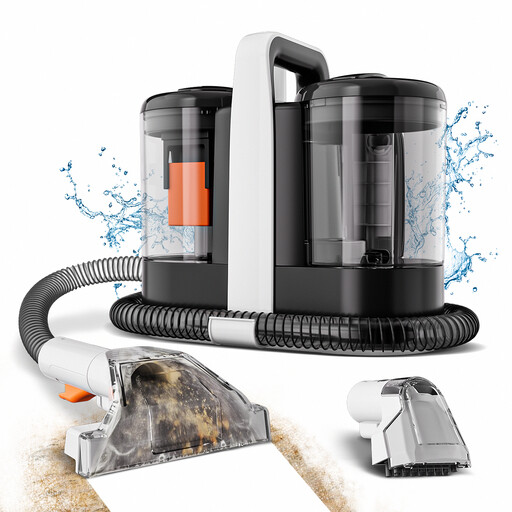
Why this fits the profile: This corded model is designed for spot cleaning carpets, sofas, mattresses and car interiors. The twin tanks and compact footprint suit households that don’t want to store a full-size carpet cleaning machine.
The product information lists both 15 kPa suction and a 1.5 litre clean-water tank plus a 0.8 litre dirty-water tank, so you can assess suction and capacity separately.
600 watts, 4.26 ft hose and 9.84 ft cable according to the product description; two brush heads included.
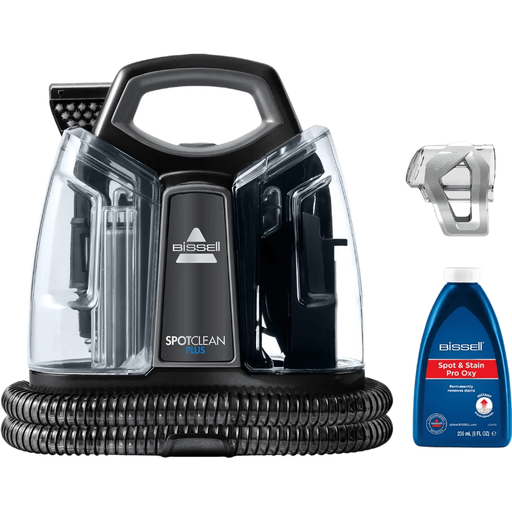
Why this fits the profile: A long hose is practical for stairs, car seats and corners where you don’t want to keep moving the machine.
The specs state a 2.2 metre hose, a 5 metre cable and separate tanks. Do check in advance whether 1.1 litres of clean water is enough for your task.
2.2 metre hose, 1.1 litre clean-water tank, 0.725 litre dirty-water tank and a HydroRinse tool according to the product data.
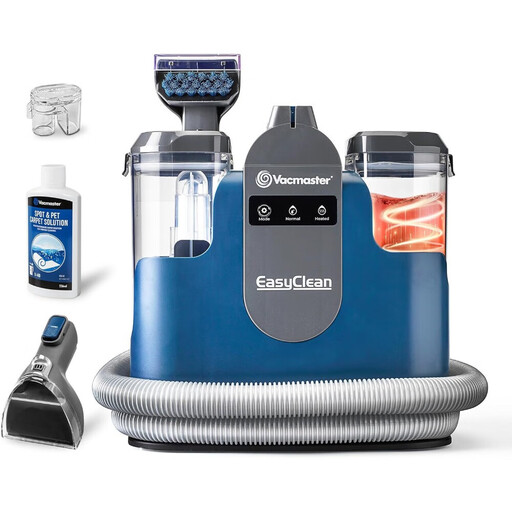
Why this fits the profile: The standard and heated cleaning modes are appealing for households with regularly soiled sofas, stairs, carpets or car interiors.
The heated function isn’t presented as universally suitable: the fabric and care label remain decisive. The two tanks reduce the chances of clean and dirty water mixing.
500 watts, 1.6 litre clean-water tank, 0.95 litre dirty-water tank and 1.8 metre hose according to the product specifications.
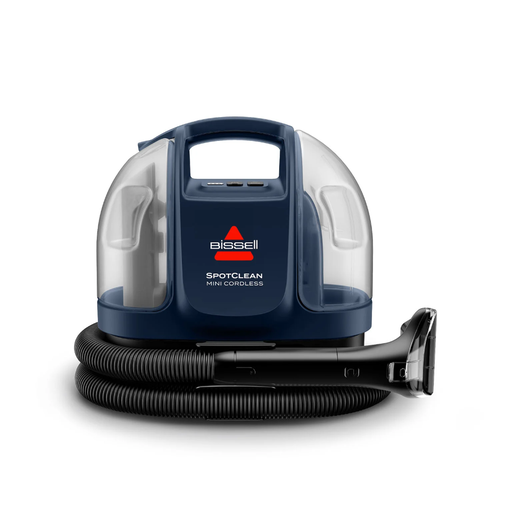
Why this fits the profile: With no cable, this compact upholstery cleaner is handy for quick spills, the car or areas without a nearby socket.
The run time is clearly stated as up to 20 minutes. That makes it clear in advance that this model is mainly intended for short cleaning sessions.
2.6 kg product weight, 0.5 litre clean-water tank, 0.43 litre dirty-water tank and 1.28 metre hose according to the product information.
We’ve compiled a complete, up-to-date list of products that fully meet these strict selection criteria and comply with current European safety regulations.
A carpet cleaner is mainly intended for spot or occasional cleaning. For large floor areas a bigger wet vacuum may be more practical, while a compact spot cleaner is handier for sofas, stairs and cars.
Often yes, as long as the upholstery is water-resistant and the care label permits wet cleaning. Test an inconspicuous area first. Use the spray function sparingly and remove excess moisture with several slow suction passes.
Service life depends on how often you use it, maintenance, filters and the hose. Empty and rinse the tanks after each use, clear any blockages and only store the machine once the parts are dry. Also check the warranty terms and the availability of replacement parts.
In addition to the purchase price, you pay for electricity, water and possibly detergent. A corded model uses power while cleaning; a cordless model needs charging after use. Per-use costs are generally modest, but consumption depends on cleaning time, tank capacity and how much solution you dose.
