
Vandaag of morgen in huis

Kwaliteit gegarandeerd

Welkomstaanbiedingen ontgrendelen: GRATIS bezorging | Tot 80% korting | Gratis 30 dagen JoyPlus-proefperiode
Download de app
A portable car tyre inflator is handy for everyday maintenance, low tyre pressure while you’re out and about, or use with bicycles, motorbikes and sports balls. However, not all compact pumps are suitable for car tyres. A model designed mainly to deliver a high volume of air, for example, may work perfectly well for an air bed but fail to build up enough pressure for a car tyre.
The following points will help you assess marketing claims and choose an electric tyre inflator that suits your needs.
A rating such as 150 PSI or 160 PSI sounds impressive, but on its own it tells you little about how quickly the pump will inflate a car tyre. Also check the airflow rate, measured in litres per minute, and the stated inflation time. A 150 PSI pump may be intended for bicycle tyres, balls and small top-ups, rather than inflating several completely flat car tyres.
Pay attention to the units shown on the display, too. In the UK, tyre pressure is often given in bar, while many pumps display PSI or kPa. A digital tyre inflator with selectable units saves you having to convert measurements while you’re out and about.
A cordless tyre inflator with a rechargeable battery is easy to carry, but how long it lasts depends on battery capacity, temperature and workload. A compact rechargeable tyre inflator may be suitable for a few top-ups, while inflating several flat car tyres requires considerably more power.
So check:
A tyre inflator with automatic shut-off stops when it reaches the pressure you’ve set, according to the product description. This helps prevent overinflation, but check the recommended tyre pressure for your car on the door jamb, fuel filler flap or in the owner’s manual first. The default setting on a pump isn’t right for every vehicle.
Also check that the hose fits securely onto the valve. Air leaks can increase inflation time and lead to an inaccurate pressure reading.
For a car, both pressure and airflow rate matter. A model with an airflow rate of 26 l/min, such as the Porbi Q19 and Q16, is designed for portability and occasional use. According to the product description, inflating a flat car tyre takes around 7 to 8 minutes, while topping it up may take around 30 seconds.
Brands may give inflation times based on specific conditions. According to the OSRAM product description, the TYREinflate 2000 can inflate a tyre in around 2 minutes. The actual time depends on tyre size, starting pressure, ambient temperature and the desired final pressure.
A portable compressor with a rechargeable battery is practical to keep in your boot or motorcycle luggage. For longer journeys, having a second power option is useful. According to the product description, the OSRAM TYREinflate 4000 can be charged via USB-C and powered from a 12V socket in the car.
Also consider the dimensions and weight. A 270-gram pump fits easily into a bicycle bag, while a heavier model may offer more capacity or extra connection options. Store a battery-powered air pump somewhere dry and charge it according to the instructions, even if you don’t use it often.
For an air pump for bicycles and motorbikes, the right valves and adapters are important. Check whether the set is suitable for:
A hose, ball needle and suitable adapters make the pump more versatile. A tyre inflator with LED lighting can also be useful when checking your tyres by the roadside in the dark. However, treat the light as an additional feature, not a replacement for proper road lighting.
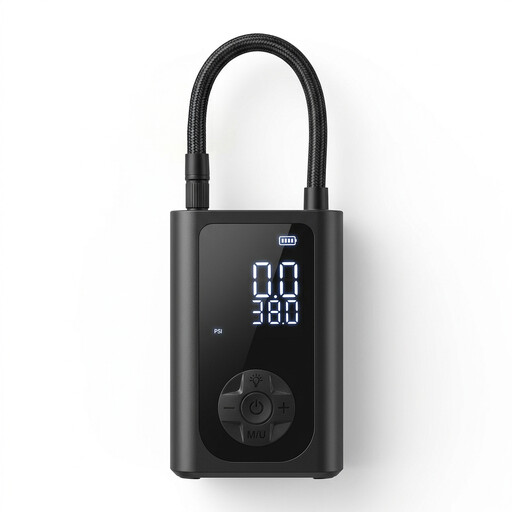
Why it suits this type of user: A compact entry-level option for drivers who mainly want to top up their tyre pressure, as well as inflate bicycle and motorbike tyres or balls.
The product description lists five modes, digital pressure measurement and an automatic setting for each type of use. The stated battery life is 25 minutes.
150 PSI, 26 l/min, USB-C, power bank function and LED lighting with steady and SOS modes.
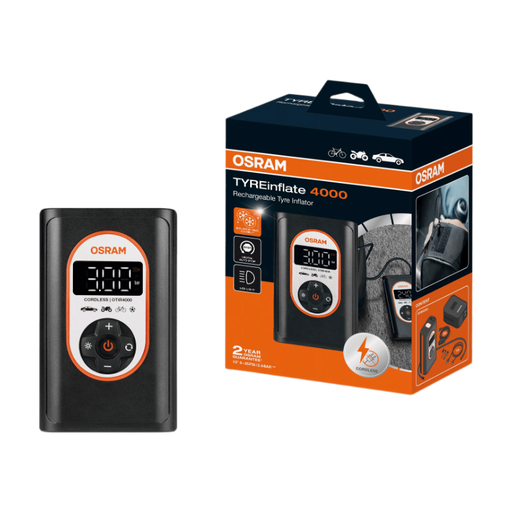
Why it suits this type of user: A good fit for anyone looking for a rechargeable device with an extra power option, memory functions and a metal housing for use with cars, motorbikes and bicycles.
As well as using its battery, this model can run from a 12V car socket if the battery charge is low, according to the product description.
Maximum working pressure of 8.3 bar, automatic shut-off, pressure memory for four vehicles, deflation valve and LED light.

Why it suits this type of user: An option for anyone who uses a pump for several purposes and values a larger battery and a wide adjustment range.
The product description lists a 7500 mAh battery, a manual mode and four pre-set programmes. Treat the stated operating time as a guide.
160 PSI, 35 l/min, display showing PSI, kPa and bar, LED modes and automatic shut-off.
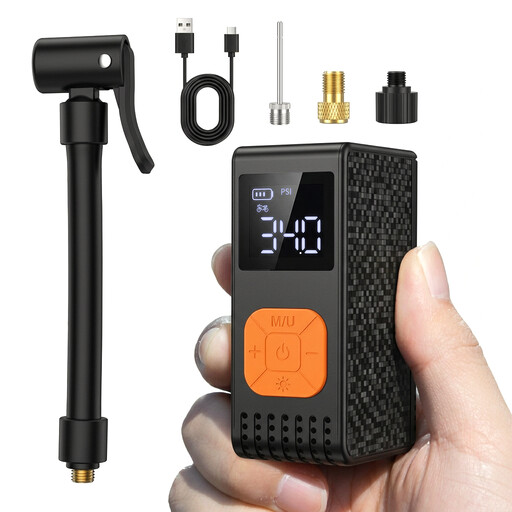
Why it suits this type of user: With its compact size and three modes, this model makes most sense for bicycle and motorbike tyres and sports balls.
The product description gives a specific inflation time for a bicycle tyre and clearly lists the available modes, helping you decide whether it’s suitable for your needs.
1600 mAh battery, USB-C charging, LED lighting, 40 W maximum power and dimensions of 52 × 43 × 85 mm.
We’ve put together a complete, up-to-date list of products that meet these strict selection criteria and current European safety regulations.
Use a compact air pump mainly for top-ups and emergencies. Large van tyres, lorry tyres and trailer tyres require a model with the right vehicle rating. Always check the product specifications.
It varies depending on the vehicle, load and tyre. Use the figure shown on the door jamb or fuel filler flap, or in the vehicle manual. The maximum PSI rating on the pump isn’t the recommended tyre pressure.
Some models can do this, but inflation time and battery life vary considerably. Check that the product description specifically mentions car tyres, and look at the stated inflation time, operating time and any recommended cooling breaks.
Its lifespan depends on charging cycles, storage temperature, how long it’s used in each session and how well it’s maintained. Charge the battery according to the manual, avoid running the pump continuously for long periods, and don’t store it for a long time when flat or in extreme temperatures.
