
Vandaag of morgen in huis

Kwaliteit gegarandeerd

Welkomstaanbiedingen ontgrendelen: GRATIS bezorging | Tot 80% korting | Gratis 30 dagen JoyPlus-proefperiode
Download de app
A portable car tyre inflator is useful if you have a slow puncture, are going on a road trip or want to check your tyre pressure at home. However, these devices vary considerably in ease of use, power supply and performance. A high PSI rating alone, for example, tells you very little about how quickly an inflator can actually top up a car tyre.
Pay particular attention to the connection, automatic shut-off, battery life and recommended operating time. Below, you’ll find out which features matter and which models suit different users.
A 150 PSI tyre inflator or a 160 PSI model may sound powerful, but this is usually the maximum pressure under specific conditions. The recommended tyre pressure for an ordinary car is generally much lower. More important factors are airflow, motor capacity and how long it takes to top up a tyre.
A high maximum pressure is relevant if you also want to use the same inflator for bike tyres, balls or other inflatables. Always check whether the manufacturer gives a realistic inflation time and whether the device is suitable for inflating several tyres in a row.
A cordless tyre inflator is easy to take with you, but a flat battery leaves it unusable. So check:
A hybrid model with both a battery and a 12V connection offers more flexibility on longer journeys.
A tyre inflator with automatic shut-off stops when its internal pressure sensor detects that the set pressure has been reached. This helps prevent over-inflation, but if in doubt, check the tyre pressure with a separate, easy-to-read gauge. You’ll find the recommended pressure on the sticker inside the door frame or fuel flap, or in your car’s manual.
A cordless model is compact and suitable for use at the roadside, on a bike or with a motorbike. A corded model usually uses the car’s 12V socket. This means the battery won’t run flat, but you’ll need access to the car socket.
When choosing a corded mini car compressor, check the length of the power cable and air hose. A long cable means you won’t have to keep moving the inflator while topping up all four tyres.
Airflow is often given in litres per minute. A higher figure can speed up inflation, but the actual rate also depends on tyre size, starting pressure and temperature. Check the recommended rest time, too. A compressor that needs to cool down after a few minutes is less suitable for inflating several large tyres in a row.
Use a portable air compressor on a flat, safe surface and let it cool down if the casing or hose becomes noticeably hot.
A digital tyre inflator is handy if you can switch between PSI, bar and kPa. Bar is often the most familiar unit for Dutch motorists. Also check that the inflator has the right valve connection:
A built-in LED light is useful in low light, but it’s no substitute for stopping somewhere safe or wearing high-visibility clothing.
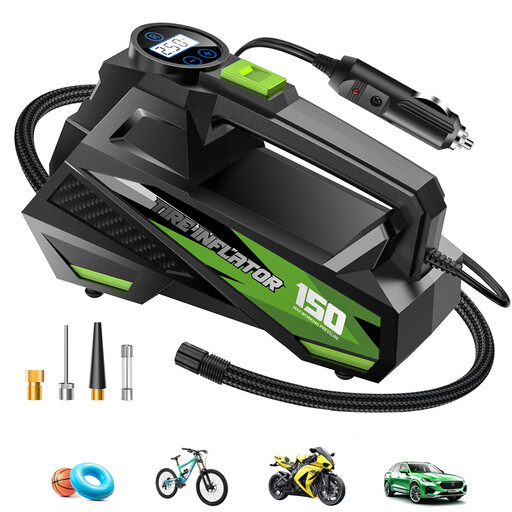
Why it suits this type of user: This corded model is a good choice if you want a straightforward inflator for your car, motorbike and bike, without having to maintain a battery. According to the product description, it has a long power cable for extra reach.
The 12V connection means you don’t have to rely on a pre-charged battery. Do check that the cable is long enough for your car.
Corded design, suitable for car, motorbike and bike tyres according to the product information.
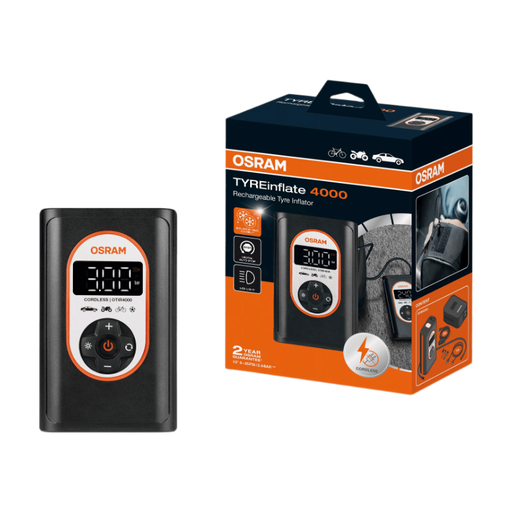
Why it suits this type of user: This model combines a battery with USB-C and 12V power options. According to the product description, it has a digital display, automatic shut-off, pressure memory for four vehicles and an LED light.
The dual power supply reduces the risk of the battery running flat while you’re on the road. After prolonged use, let the device cool down as directed in the product instructions.
Maximum working pressure of 8,3 bar, USB-C charging, plus included adapters and storage bag.

Why it suits this type of user: According to the product description, this cordless tyre inflator has a 7500 mAh battery, a maximum pressure of 160 PSI, four preset modes and a manual mode.
The digital display and automatic shut-off make the set pressure easy to monitor. The stated battery performance will still depend on tyre type and conditions of use.
35 litres per minute according to the product description, with modes for cars, motorbikes, bikes and balls.
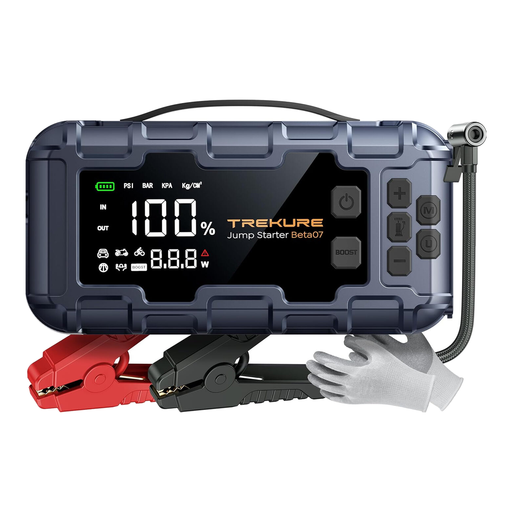
Why it suits this type of user: This is a jump starter, compressor, power bank and LED light in one. According to the product description, the compressor has a maximum pressure of 160 PSI and an airflow of 45 litres per minute.
You’re getting more than a high PSI rating: the stated airflow, pressure modes and display make its performance easier to check. Bear in mind that a multifunctional device will be heavier.
6000A peak current according to the product description, 45W USB-C and five preset pressure modes.
We’ve put together a complete, up-to-date list of products that meet these strict selection criteria and the current European safety regulations.
A compressor is designed to top up tyre pressure. If a tyre is losing air quickly, has a damaged valve or shows a visible crack, have it checked by a professional.
For most passenger cars, a range of around 30 to 50 PSI is sufficient, depending on the vehicle and tyre. An inflator rated at 150 PSI can also be used for other applications, but that maximum rating doesn’t mean you should inflate a car tyre to that pressure. Always follow your vehicle’s specifications.
That depends on the battery capacity, the inflator’s starting temperature and the size of the tyres. Check how many tyres it can inflate per charge and whether the model can also run from a 12V socket. Let the inflator cool down if the manufacturer recommends it.
A corded inflator draws power from the 12V socket. With a cordless model, your main cost is charging the battery; electricity costs are generally low when you’re just topping up your tyres. The more significant costs are likely to be battery wear, maintenance and replacing any accessories.
