
Vandaag of morgen in huis

Kwaliteit gegarandeerd

Welkomstaanbiedingen ontgrendelen: GRATIS bezorging | Tot 80% korting | Gratis 30 dagen JoyPlus-proefperiode
Download de app
A flat battery often strikes at the worst possible moment: in a car park, on a camping trip or just before you need to leave for work. With a portable car jump starter, you can try to start a 12V vehicle yourself, without relying on another driver or roadside assistance.
Yet many models look alike. A high amp rating doesn’t tell you everything about how well a jump starter will work in practice. A large battery capacity, power bank function or bright LED light can also distract from the most important question: is the car battery booster right for your vehicle and the way you plan to use it?
A rating such as 2000A or 8000A sounds impressive, but peak current alone doesn’t give you the full picture of a jump starter’s performance. Check which petrol and diesel engines the model is designed for, such as engines up to 6.0 litres diesel or 8.0 litres petrol. These figures come from the manufacturer’s product description and don’t guarantee compatibility with every vehicle or battery condition.
Most models in this category are designed for 12V lead-acid batteries. That doesn’t mean they’re suitable for 24V lorries, the high-voltage batteries in electric cars or every electric vehicle. Check your car’s handbook and the car jump starter’s specifications before you order.
A lithium-ion jump starter can slowly lose charge while in storage. A flat power bank won’t help if you break down. Check the charge level regularly and follow the maintenance schedule in the manual. Many product descriptions recommend recharging the model every three to six months if you’re not using it.
Other things to look out for include cables that are too short, fragile clamps and a lack of reverse-polarity protection. A jump starter with smart jump leads will generally give you a clear status indication or switch off the output if the clamps are connected incorrectly. Always check the specific features of the model you choose.
Start by checking these three details:
A compact model rated at around 800A to 1500A may suit a smaller car or motorbike. For an SUV, van, campervan or boat, a model with a higher stated capacity may give you more headroom. Don’t automatically choose the highest figure: check your engine size and vehicle handbook.
Look for features such as short-circuit protection, reverse-polarity protection, overheat protection, overload protection and spark-proof connection. These are technical safeguards, not a reason to skip the instructions.
Connect the red clamp to the positive terminal and, following the instructions, connect the black clamp to the negative terminal or a suitable unpainted metal earth point. Usually, you should only try to start the engine for a few seconds at a time, allowing the device to cool between attempts. Don’t use a jump starter with a damaged, leaking or frozen battery.
The mAh rating is mainly relevant to the number of possible starting attempts and charging other devices. Also consider:
Treat claims about operation at low or high temperatures as manufacturer specifications. According to the brands’ own product information, temperature limits vary by model.
The selection below is based on the stated starting current, engine compatibility, connections, safety features, size and extra functions.
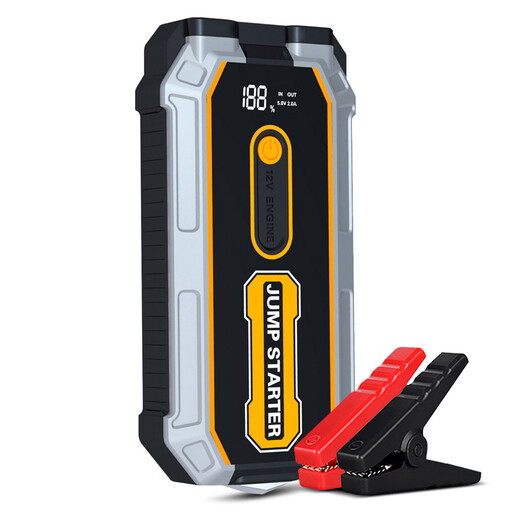
Why it suits this type of user: With a 1200A peak current, a stated capacity of 12800mAh and a compact design, this model is a practical emergency starter for drivers of cars, SUVs, motorbikes or boats.
The LCD screen shows the remaining charge, so you’re less likely to head out with a flat battery booster. The product information states that it supports 12V petrol and diesel vehicles.
330 grams, a 10W USB output, a three-mode LED light and a stated starting current of 600A, alongside a peak current of 1200A.
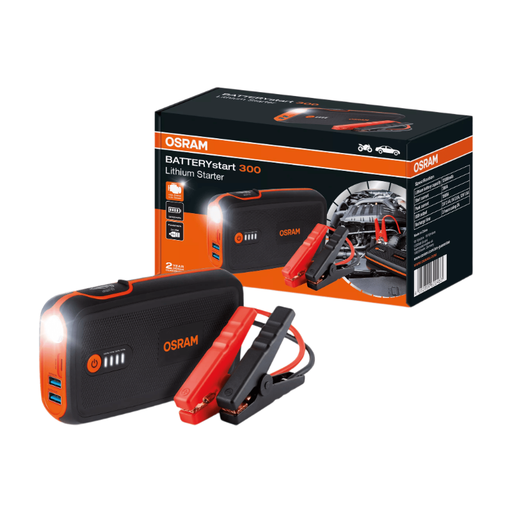
Why it suits this type of user: If you value a familiar brand, a power bank function and an additional 12V socket, this model offers a wider range of features for cars, motorbikes and light commercial vehicles.
The stated compatibility is specific: up to 8.0 litres for petrol engines and 4.0 litres for diesel. This makes it easy to compare the product’s limits with your own vehicle’s specifications.
16800mAh, two USB ports, a 12V output for devices such as a tyre inflator, and an integrated LED light. The stated weight is 1174 grams.
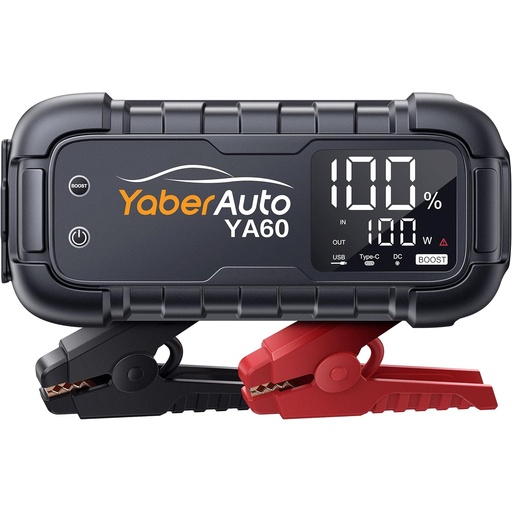
Why it suits this type of user: For SUVs, campervans, boats, vans and outdoor equipment, the high stated starting capacity, 150W DC output and multiple charging ports are useful features.
The product description lists protection against overloads, short circuits and reverse polarity, among other things. Always check the manual and 12V compatibility before use.
26800mAh, USB-C charging up to 65W, two USB-A outputs, a 150W DC output and a 600-lumen light with three modes.
We’ve put together a full, up-to-date list of products that meet these strict selection criteria and the applicable European safety regulations.
Don’t use the device with a leaking, swollen or frozen battery. If you’re unsure about the connection or the condition of the battery, it’s safer to seek professional help.
No. Check the voltage, battery type and maximum engine size. Most compact models are designed for 12V vehicles. A 24V system or an electric car with a high-voltage battery is generally outside their intended use.
That depends on storage, charge level, temperature and use. Follow the manufacturer’s maintenance instructions and recharge the device periodically. Store it somewhere dry, out of direct sunlight and not in an extremely hot car.
It can be useful if you want to charge phones, tablets, a camera or GPS equipment while you’re out and about. Still, compare the USB output, battery capacity and charging time. A power bank function doesn’t replace checking the starting current and vehicle compatibility.
