
Vandaag of morgen in huis

Kwaliteit gegarandeerd

Welkomstaanbiedingen ontgrendelen: GRATIS bezorging | Tot 80% korting | Gratis 30 dagen JoyPlus-proefperiode
Download de app
A flat 12V battery rarely happens at a convenient time. It can happen after a short journey, in cold weather or when a car has been left unused for a long time. With a portable car jump starter, you can often get going again yourself, without another car or immediate roadside assistance.
However, not every model is suitable for every vehicle. Marketing claims about thousands of amps, large battery capacities and “universal” compatibility can be confusing. So focus on the specifications that match your vehicle.
A figure such as 2.000A or 4.000A sounds impressive, but peak current does not tell you everything about how useful a jump starter will be in practice. Also check:
A powerful 12V jump starter designed for a large diesel engine may be unnecessarily heavy-duty for a small city car. Conversely, a compact model may not be up to the job for an SUV, van, motorhome or boat.
Jump starters with a power bank are often advertised with a capacity in mAh. This figure mainly indicates how much energy is available for USB devices and repeated starting attempts. On its own, it does not determine whether the device can start your engine.
Also check the difference between nominal capacity and usable capacity. For example, the Porbi S306 is listed with both 12.800mAh and a nominal output capacity of 7.200mAh. This is useful information for comparing different models more fairly.
Incorrectly connected clamps, short circuits and overheating can cause damage. Look for specific features such as:
According to the product descriptions, several models have multiple built-in safety features. This is a product specification, not a guarantee that incorrect use is risk-free. Always follow the instructions for your chosen model.
Choose a car battery booster based on your engine, not just the price. A model for petrol engines up to 6,0 litres may suit many cars and mid-sized SUVs, while a diesel engine generally needs more starting power.
For regular use with a van, motorhome, boat or tractor, for example, you could consider models with a higher stated engine compatibility. Also check that your vehicle really does have a 12V system. A 24V lorry is not suitable for a standard 12V jump starter.
You need to be able to reach your portable car jump starter when you need it. A compact model fits in the glove compartment or under a seat, while a heavier one is more likely to end up in the boot.
Check:
Do not leave the device permanently in a very hot car, and do not store it when fully discharged.
A portable emergency battery charger will only work if its internal lithium battery is sufficiently charged. Fully charge the jump starter before first use and check the battery level before long journeys.
Many product descriptions recommend topping up a model approximately every two to three months. This advice varies by manufacturer, so check the instruction manual supplied. Recharge the unit after attempting a start, too.
Extra features can be useful. A car jump starter with a torch helps when connecting the clamps in the dark. A USB output means you can also use the device as a power bank. A jump starter with a compressor combines jump-starting with topping up your tyres, but it is usually larger and heavier.
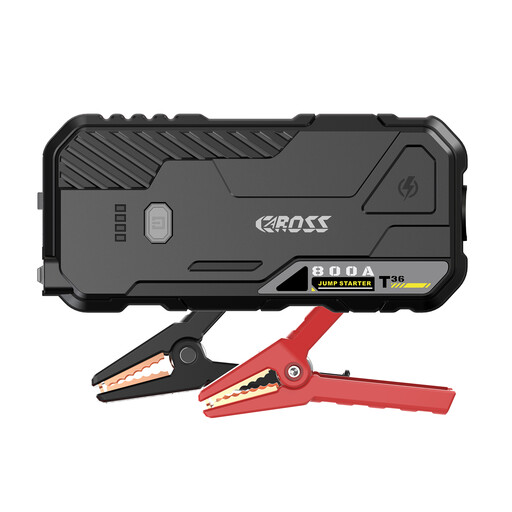
Why it suits this type of user: A relatively compact option for drivers with a standard 12V car who are mainly looking for a simple emergency jump starter to keep in the boot.
The product description lists an 800A peak current, a boost function for low voltage, a spark-proof design and reverse polarity protection. Check the exact engine limit in the manual before buying.
10.000mAh lithium battery, 18W charging, boost function and protective storage case.
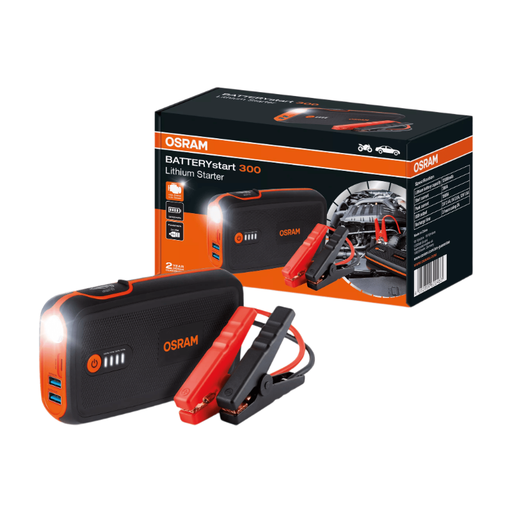
Why it suits this type of user: Ideal for drivers who want USB charging and a 12V socket for accessories as well as jump-starting.
The stated specifications include a 2.000A peak current, support for engines up to 8L petrol and 4L diesel, and CE marking. CE marking is no substitute for reading the instructions.
16.800mAh, two USB ports, 12V output, LED torch and a stated two-year warranty.
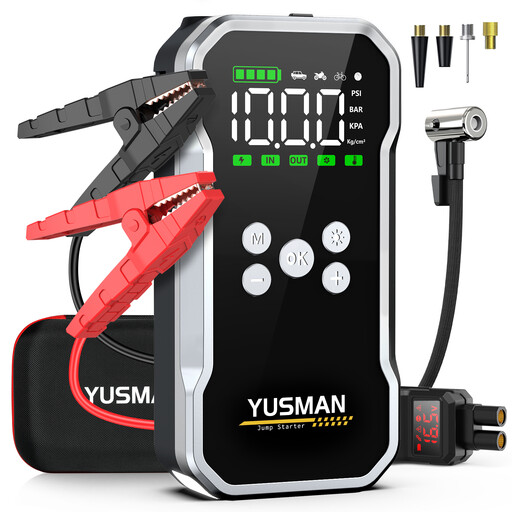
Why it suits this type of user: A handy choice for motorhome owners, long-distance journeys, outdoor enthusiasts and drivers who also want to carry a tyre inflator.
The features are clearly specified: a 150 PSI compressor, LCD display, smart clamps and several protection systems. Bear in mind that the compressor adds to the size and weight.
4-in-1 design combining a jump starter, power bank, LED light and compressor; the description states compatibility with 7L petrol and 7L diesel engines.
We’ve put together a complete, up-to-date list of products that meet these strict selection criteria and the applicable European safety regulations.
Do not use a portable car jump starter if there is a visible leak or the battery is damaged or frozen. If in doubt, calling a professional breakdown service is the safer option.
Its lifespan depends on storage temperature, charging frequency and usage. A lithium jump starter left flat in a hot car for months may lose capacity more quickly. Check the battery level every few months and follow the manufacturer’s maintenance advice.
Many models can, but the limits vary by product. Check the stated maximum engine capacity for petrol and diesel. Diesel engines often need more starting power. Also make sure that your vehicle uses a 12V battery.
That depends on how you use it. A combination device saves space and can charge phones, GPS devices and other USB products. A model with a compressor or extra sockets usually costs more. So compare only the features you actually need on the road.
