
Vandaag of morgen in huis

Kwaliteit gegarandeerd

Welkomstaanbiedingen ontgrendelen: GRATIS bezorging | Tot 80% korting | Gratis 30 dagen JoyPlus-proefperiode
Download de app
A flat battery rarely happens at a convenient time. You might be in a car park, on the roadside or at home after a cold night. With a portable car jump starter, you can try to get your vehicle started yourself in certain situations, without needing another car or traditional jump leads.
However, not every car jump starter is suitable for every vehicle. Marketing claims about thousands of amps, large battery capacities and “universal” compatibility can make it harder to choose. Watch out for these common pitfalls:
Most cars, motorbikes, SUVs, vans and many motorhomes use a 12V lead-acid battery. Check your vehicle’s handbook to be sure. A 12V jump starter is not designed for the high-voltage traction batteries in electric vehicles.
Also check whether you have a petrol or diesel engine. Diesel engines generally need more power to start. A model listed as suitable for petrol engines up to 8.0 litres and diesel engines up to 6.0 litres, such as the GOOLOO GP2000, is intended for different uses from a model designed for smaller engines.
The stated engine size is a guideline provided by the manufacturer. Cold temperatures, a worn battery, thick engine oil and mechanical problems can all affect starting.
Peak current, such as 1,200A, 2,000A or 4,000A, is a brief maximum figure. The normal starting current and actual vehicle compatibility are just as relevant. So don’t compare products based only on the biggest number on the packaging.
Also check:
A powerful car jump starter is a good choice when its specifications match your vehicle, not simply because its amp rating looks high.
A portable jump starter should come with clear connection instructions. Many manuals say to connect red to the positive terminal and black to a suitable unpainted metal earth point. Always follow the instructions for the device and your vehicle.
Useful safety features include:
An LCD display can show the remaining charge, so you won’t find out your jump starter is flat only when you need it. Store the device somewhere dry, out of direct sunlight and away from loose metal objects. Recharge it periodically as instructed in the manual. Storage times vary by model, and a long standby time doesn’t mean you can skip checking it.
The selection below is based on the listed product specifications, vehicle compatibility, connections, safety features and portability. Brands make their own performance claims, so always check the current product page and manual before buying.
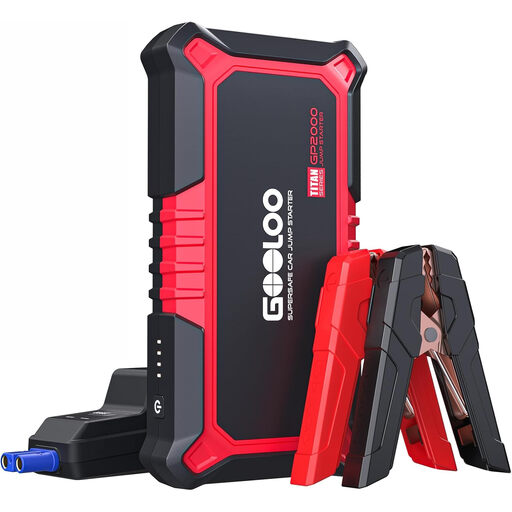
Why it suits this user: This model combines a stated peak current of 2,000A with support for petrol engines up to 8.0 litres and diesel engines up to 6.0 litres. At around 545 grams, its compact size makes it practical to keep in the car for everyday use.
The product specifications give a specific engine-size range, rather than making only a general claim about “universal” use. According to the product information, the smart cable includes several safety features.
USB outputs, a 400-lumen light with three modes and a manufacturer-stated standby time of up to 24 months.
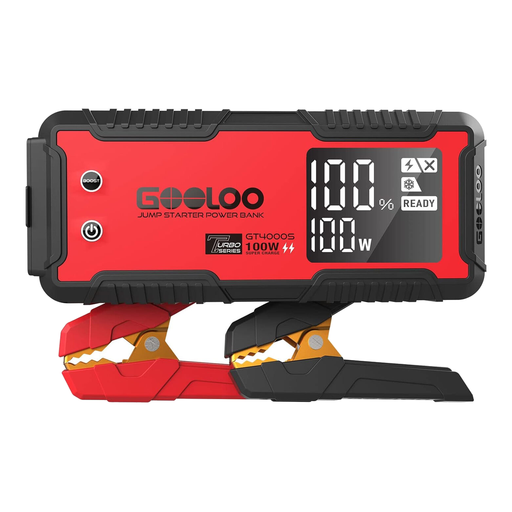
Why it suits this user: For drivers of larger SUVs, motorhomes or commercial vehicles, its stated capacity for engines up to 12.0 litres petrol and 10.0 litres diesel is worth considering. The device also supports 100W charging via USB-C.
According to the product description, the 3.2-inch screen shows the device status. This means you don’t have to rely as much on a small indicator light when connecting it.
Stated peak current of 4,000A, 100W two-way charging, three USB ports and a 15V/10A output for certain DC devices.
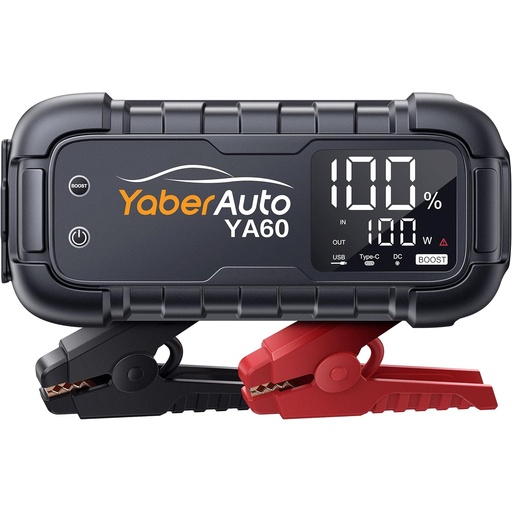
Why it suits this user: According to the product information, this model is designed for larger vehicles and intensive use, supporting petrol and diesel engines up to 12.0 litres. The 150W DC output may suit users with additional 12V equipment.
The technical specifications list more than just peak current: they also cover the cable type, charging power, DC output and temperature range. This makes it easier to compare the details.
According to the product information: 8,000A peak current, 65W fast charging, a 26,800mAh battery, 600-lumen lighting and ten safety features.
We’ve put together a complete, up-to-date list of products that meet these strict selection criteria and the applicable European safety regulations.
Don’t use the device if the vehicle battery is leaking, damaged or swollen. A car battery booster can help you start the car temporarily when the battery is flat, but it won’t fix a faulty battery, alternator or electrical problem.
That depends on the product specifications. Check the maximum engine size separately for petrol and diesel. For example, a model may be suitable for 8.0 litres petrol but only 6.0 litres diesel. Only use a car jump starter within its stated range.
Follow the instructions for your specific model. Some manufacturers recommend recharging periodically after a few months in storage. Also check the charge level before a long drive, holiday or winter. A jump starter power bank left unused in a hot car for a long time may lose capacity more quickly.
An LED light can help when connecting the device and improve visibility, but it’s no substitute for a warning triangle, high-visibility vest or breakdown service. If you break down in the Netherlands, always take the traffic conditions into account and stand as far behind the barrier as possible, or well clear of the carriageway.
