
Vandaag of morgen in huis

Kwaliteit gegarandeerd

Welkomstaanbiedingen ontgrendelen: GRATIS bezorging | Tot 80% korting | Gratis 30 dagen JoyPlus-proefperiode
Download de app
A flat car battery often happens at the worst possible moment: in a dark car park, during a camping trip or just before setting off for work. With a portable car jump starter, you can try to start a 12V vehicle yourself, without a second car and without traditional jump leads.
However, not every battery booster is suitable for every car. High amp figures on the packaging do not tell the whole story. You should also consider engine compatibility, safety features, storage and how you use the device.
A powerful 4000A jump starter sounds appealing, but the peak current must be suitable for the vehicle and the condition of the battery. A small petrol car generally has different requirements from a diesel campervan, van or tractor. Always check the stated maximum engine capacity for petrol and diesel.
A higher peak current is also no guarantee that every completely failed battery can be brought back into use. A jump starter is intended as an emergency car starter, not as a replacement for a worn-out battery or a professional battery charger.
Incorrectly connected clamps, short circuits and overloading can cause damage. Choose a lithium jump starter with smart jump leads and check which safety features are actually listed. Look for protection against reverse polarity, short circuits, overheating, overcharging and sparks.
A description such as “super safe” is not a technical standard in itself. Look at the specific features in the product information and always follow the instructions.
A portable battery booster gradually loses charge during storage. If you use it once and then leave it in the boot, you could find yourself with a flat jump starter when you need it. Check the charge level regularly. For example, GOOLOO recommends charging the GP4000 every two to three months when it has not been used for an extended period.
Store the jump starter in a dry place and within the specified temperature range. Do not leave it in a hot car or in freezing conditions for long periods.
Compare the peak current with your vehicle’s engine capacity:
The stated values come from the manufacturer’s product information. Actual starting performance can be affected by temperature, battery damage, cable connections and the condition of the engine.
Look for sturdy metal clamps, clear polarity markings and a cable module that can provide an error message. Protected jump leads reduce the risk of incorrect connection, but you still need to follow the instructions.
A typical procedure is:
Do not use the car jump starter if the cables, casing or connections show visible signs of damage.
A power bank for cars is useful for phones, tablets, GPS devices and sometimes laptops. Do not just look at the number of USB ports; also check the charging standards and supplied cables. A USB-C port does not automatically mean that every device will charge at high speed.
A built-in LED light with an SOS or flashing mode can be useful when working in the dark. For campervan owners, outdoor enthusiasts and lorry drivers, a storage case and a 12V or 15V output can be particularly practical. These features are useful, but they should not distract from the main purpose — safely starting a suitable vehicle.
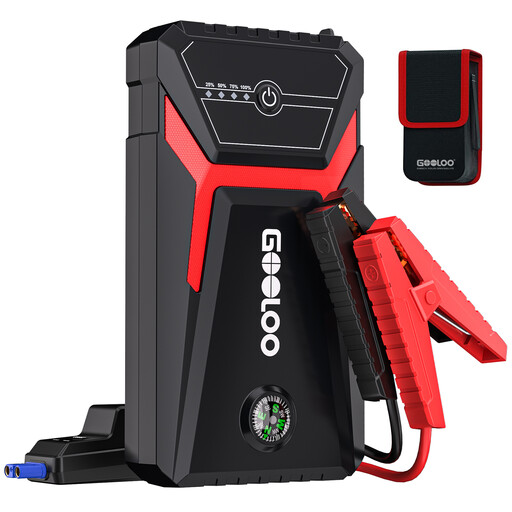
Why it suits this profile: According to the product description, this model delivers 1500A peak current and is intended for 12V vehicles with up to 6.0 litres of petrol engine capacity and 4.0 litres of diesel engine capacity. That makes it suitable for many everyday cars and motorbikes.
The specifications list separate engine limits. The manufacturer also states that it has ten protection features, including short-circuit and reverse-polarity protection.
Two USB outputs, a 400-lumen light with three modes and a stated weight of approximately 0.878 kg.
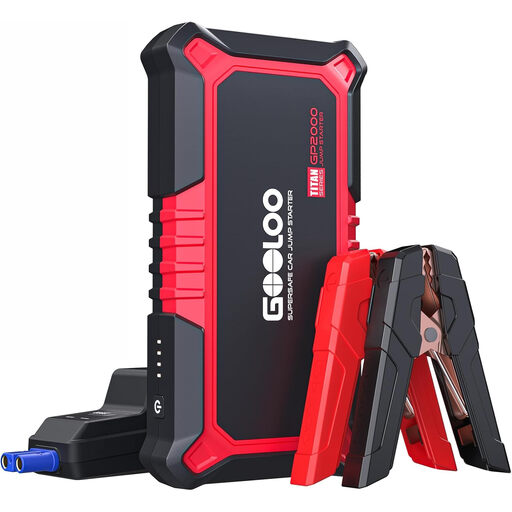
Why it suits this profile: According to the product description, this model offers 2000A peak current and supports up to 8.0 litres of petrol engine capacity and 6.0 litres of diesel engine capacity. This provides more power in reserve for larger cars, SUVs and light commercial vehicles.
The manufacturer specifies a smart cable with ten protection features and an operating range of -20 °C to 60 °C. You should still check your vehicle’s manual before buying.
USB outputs with multiple charging voltages, 400-lumen emergency lighting and a stated standby time of up to 24 months.
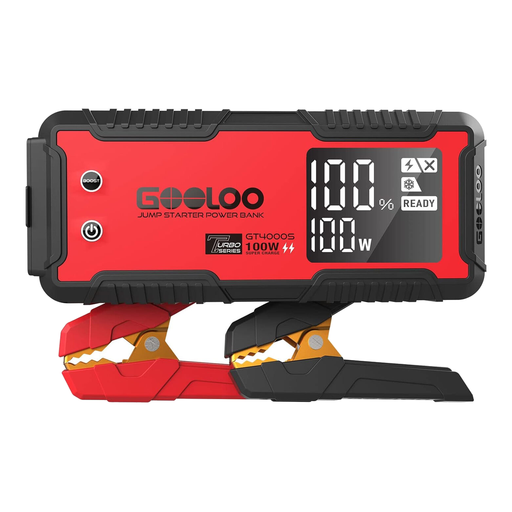
Why it suits this profile: According to the product description, this 12V jump starter is designed for larger vehicles with up to 12.0 litres of petrol engine capacity and 10.0 litres of diesel engine capacity. This makes it relevant for campervans, pick-ups, lorries and intensive use.
The product information lists a status display, a smart cable and ten protection features. This makes the charge status and connection information clearer than on a model with LEDs only.
4000A peak current, up to 100W charging via USB-C, 15V/10A output, three USB ports and a 400-lumen light.
We have put together a complete, up-to-date list of products that fully meet these strict selection criteria and the applicable European safety regulations.
A jump starter will only work reliably if it has sufficient charge. Fully charge the device before using it for the first time and check the level before setting off on a long journey. Use only the supplied or suitable cables, and avoid attempts that last longer than stated in the instructions.
Do not repeatedly try to start the engine without taking a break. If the car does not start after a few attempts, the problem could lie with the battery, starter motor, fuel supply or electronics. Have the vehicle checked instead of continuing to put the battery booster under strain.
Many models can be used for both, but only within the specified limits. Always check the maximum engine capacity for both fuel types. Starting a diesel engine generally requires more power, especially when the engine is cold.
This varies by model, temperature and storage conditions. Some manufacturers state a standby time of up to 18 or 24 months, but this is a product claim based on particular conditions. Check the charge level regularly and recharge an unused device according to the instructions.
The electricity cost of charging is usually limited and depends on the battery capacity and electricity tariff. The main cost is the purchase price. Choose a model that suits your vehicle rather than paying solely for the highest amp rating.
