
Vandaag of morgen in huis

Kwaliteit gegarandeerd

Welkomstaanbiedingen ontgrendelen: GRATIS bezorging | Tot 80% korting | Gratis 30 dagen JoyPlus-proefperiode
Download de app
A flat battery rarely happens at a convenient time. You might be in a car park, at a campsite or on a dark country road. A portable car jump starter can be the answer, but not every model is suitable for every vehicle. High amp ratings, large mAh figures and claims about extreme weather conditions can easily give a misleading impression.
Joybuy Product Recommendation Officer sets out the key points to consider. This will help you choose a suitable car jump starter, battery booster or 12V jump starter for your car, motorbike, SUV, van or motorhome.
A figure such as 2,000A or 8,000A sounds impressive, but the peak current is not the same as the starting current available for a longer period. Always check:
A jump starter for petrol and diesel engines must also be suitable for the engine size. A compact 12V booster for a small petrol engine is not automatically suitable for a heavy diesel SUV.
Manufacturers sometimes state the total battery capacity, and sometimes the nominal or usable capacity. For example, the Porbi S901 lists a 20,000mAh battery and a nominal capacity of 10,000mAh. The Porbi S306 lists 12,800mAh compared with 7,200mAh nominally.
So do not compare only the highest figure. Also consider:
Features such as reverse-polarity, short-circuit, overheating and overcharge protection are useful. However, they do not replace checking the positive and negative terminals. A CE mark refers to compliance with relevant European requirements, but it is not a general assessment of product quality.
Read the manual and only use the supplied or recommended jump leads. Do not use a jump starter with a damaged, leaking or swollen battery.
Check the voltage and engine size before buying. Most models in this category are designed for 12V vehicles. That does not mean they are suitable for 24V lorries, buses or the high-voltage batteries in electric vehicles.
For an ordinary car, a model supporting petrol engines of up to around 6 litres is often sufficient. For a large SUV, motorhome, boat or van, it is sensible to choose a model with more headroom. Pay particular attention to the stated maximum engine size for diesel engines, as they generally require more starting power.
A jump starter with jump leads should have sturdy clamps that fit securely onto the battery terminals. Look for insulated handles, cable length and an intelligent cable module. A display or warning signal can help identify an incorrect connection, but always check the polarity yourself.
Start the engine according to the instructions and keep each attempt brief. Wait between attempts if the engine does not start immediately. A jump starter is intended as an emergency car starter, not as a replacement for a battery charger or maintenance charger.
A power bank for your car can also charge a phone, GPS device or tablet while you are on the move. A jump starter with a torch is useful if you break down in the dark. An LCD display often shows the remaining charge level, so you do not set off with an empty booster.
Store the device in a dry place and do not leave it in direct sunlight for long periods. Temperatures can rise sharply inside a parked car. Check the charge level every two to six months, depending on the brand’s maintenance instructions. According to the product information for some models, periodic recharging is needed to keep the battery in good condition.
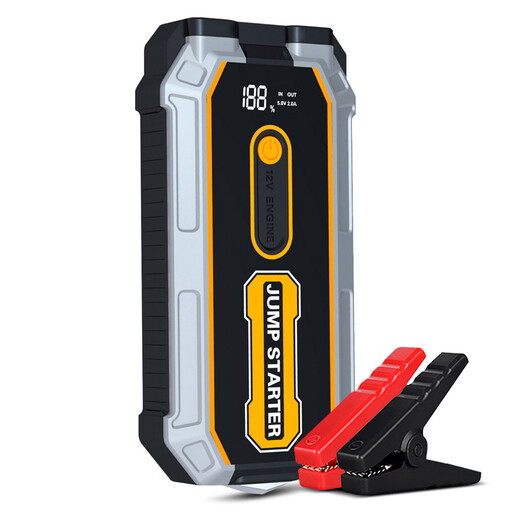
Why it suits this profile: This compact model is aimed at motorists and motorcyclists who mainly want a small emergency car starter to keep with them on the road.
The product information states both 12,800mAh and 7,200mAh nominal capacity, and gives a clearer indication of the engine range than a large mAh figure alone.
1,200A peak current, 12V petrol and diesel support, LCD display, USB output and three LED modes.
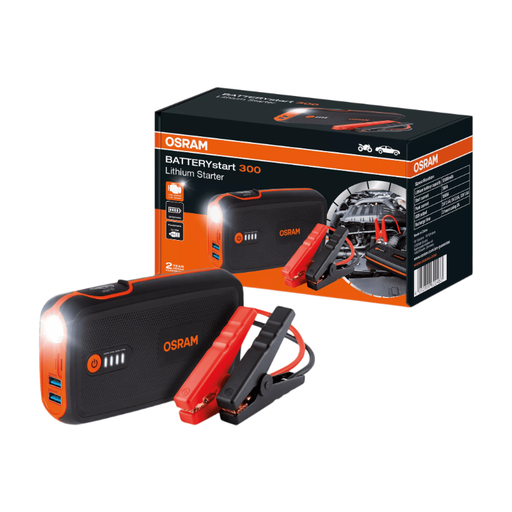
Why it suits this profile: Motorists who value a well-known brand, compact storage and a stated warranty may wish to include this model in their comparison.
The product details state a 600A nominal current alongside a 1,500A peak current, allowing both figures to be assessed.
13,000mAh lithium battery, dual USB output, 12V support and a stated two-year manufacturer’s warranty.
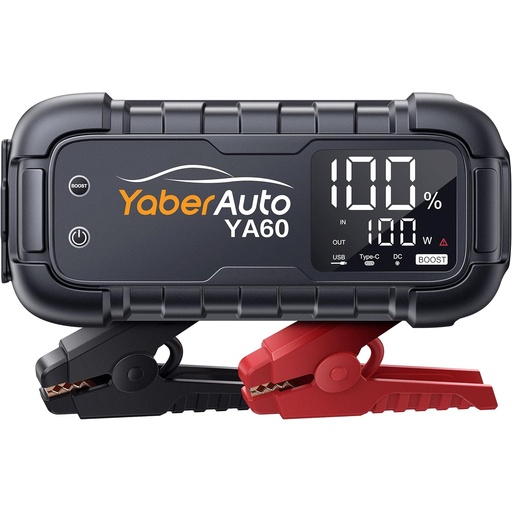
Why it suits this profile: Worth considering for owners of larger vehicles, motorhomes, boats or equipment that also needs power via USB-C and DC.
In addition to the peak current, the product information states the engine compatibility, 10 safety protections and a maximum starting attempt of five seconds.
8,000A peak current, support for up to 12.0L diesel engines according to the product description, 65W USB-C and 150W DC output.
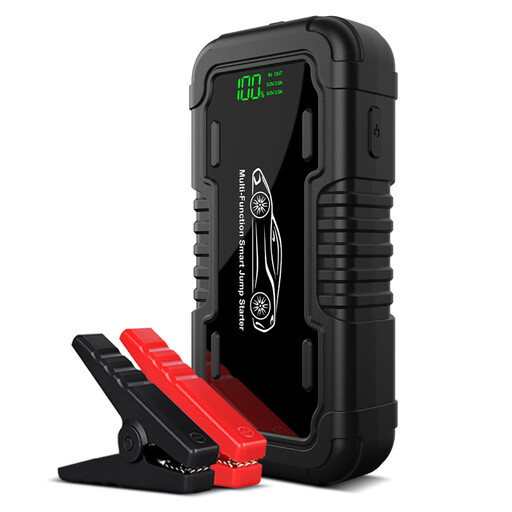
Why it suits this profile: The combination of an LCD display, LED emergency light and dust and splash protection makes it suitable for travelling, camping and use around a boat or motorbike.
The stated nominal capacity of 16,000mAh is shown separately from the total 20,000mAh, and the product information specifies IP44 protection.
2,000A peak current, 800A starting current, QC3.0 18W charging, LCD display and LED with SOS, strobe and continuous modes.
We have put together a complete, up-to-date list of products that fully meet these strict selection criteria and the applicable European safety regulations.
Switch off the car and check that the jump starter has sufficient charge. In most cases, connect the red clamp to the positive terminal and the black clamp to the negative terminal or a suitable unpainted earth point, as specified in the manual. Start the engine briefly and remove the clamps once it has started. Always follow the instructions for the specific model.
Its service life depends on the battery type, storage temperature, charging frequency and usage. Recharge the booster after a starting attempt and check the charge level regularly. Do not leave a lithium jump starter in a hot car for long periods, and do not use it if the casing or battery is damaged.
Yes, many models have USB-A or USB-C outputs for phones, tablets, cameras and sometimes laptops. Check the output power before connecting a laptop or compressor. A USB output makes a jump starter more versatile, but its primary purpose remains starting a suitable 12V vehicle.
