
Vandaag of morgen in huis

Kwaliteit gegarandeerd

Welkomstaanbiedingen ontgrendelen: GRATIS bezorging | Tot 80% korting | Gratis 30 dagen JoyPlus-proefperiode
Download de app
A flat battery never happens at a convenient time. You might be in a car park, on the hard shoulder or at home just before you need to leave for work. A portable car jump starter can get you moving again, but only if it’s suitable for your vehicle and used correctly.
Many models look similar, but there can be big differences in starting power, battery type, connections and compressor performance. Read on to find out what to look for, which marketing claims to treat with caution and which models suit different needs.
A high peak current sounds impressive, but it doesn’t tell you everything about whether a model is right for you. Check which engine size and engine type the jump starter is designed for, too. A small petrol car generally needs something different from a large diesel, van or motorhome.
Also, note the difference between peak current and sustained starting current. Manufacturers tend to highlight peak current in their adverts. Use the stated compatibility as your starting point, and treat any claim as a product specification rather than a guarantee that the device will start every vehicle in all conditions.
A 12V jump starter is designed for vehicles with a 12V battery system. That doesn’t mean it’s suitable for 24V lorries, electric vehicles with high-voltage batteries or every specialist setup. Check your car’s manual and the product specifications before ordering.
A vehicle with a completely dead or damaged battery may also be beyond the capabilities of a car battery booster. The boost function on some models may help when the voltage is very low, but according to the product information, success isn’t guaranteed if the battery has failed completely.
A jump starter with a compressor can come in handy if a tyre is soft, but maximum pressure isn’t the same as the speed at which it inflates a tyre. Check the airflow rate, automatic shut-off, included valve adaptors and available running time, too.
A tyre inflator with a compressor is mainly intended for emergencies and topping up tyre pressure. Always check your vehicle’s recommended tyre pressure, for example on the sticker inside the door frame or in the handbook.
Choose a model with a stated capacity that exceeds your car’s requirements. Look out for:
A compact car jump starter may be enough for a small petrol car. For a diesel van, motorhome or large SUV, a more powerful car battery booster makes more sense. If you mainly want a back-up for the occasional breakdown, you don’t necessarily need to choose the most powerful model.
Check whether the jump starter has protection against reverse polarity, short circuits, overheating, overloading and overcharging, among other things. Smart jump leads with an indicator light or audible warning can help prevent incorrect connections.
Always follow the instructions: red to the positive terminal, black to the negative terminal or a suitable unpainted earth point. Don’t try to start the engine for longer than the specified period at a time, and recharge the device after use.
A jump starter power bank can also charge smartphones, tablets and other USB devices. Don’t just look at the stated milliamp-hours: consider the weight, dimensions and type of charging port, too.
An emergency portable battery charger is only useful if you maintain it. Fully charge the device before first use and check the charge level every few months. Some manufacturers recommend topping up the charge every two to six months when the device isn’t in use. Store it in a dry place and avoid leaving it in a hot car for long periods.
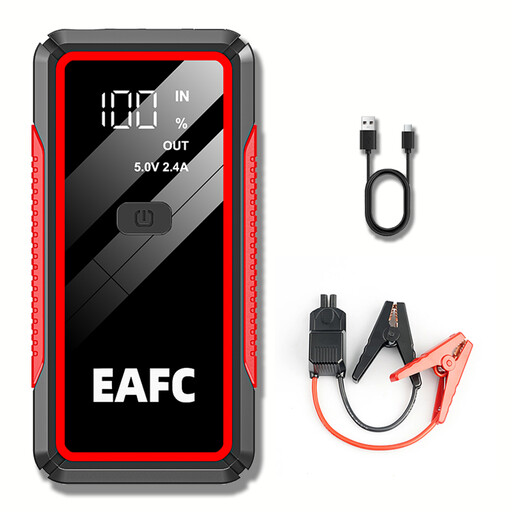
Why it suits this profile: According to the product description, this model supports 12V vehicles, petrol engines up to 6.0 litres and diesel engines up to 4.0 litres. Its compact size makes it handy for keeping in the glove compartment or boot.
The product specifications give separate petrol and diesel limits as well as a 2000A peak current. This makes it easier to check compatibility than relying on the amp rating alone.
10,000mAh capacity according to the product information, USB output, digital display and three-mode LED light.
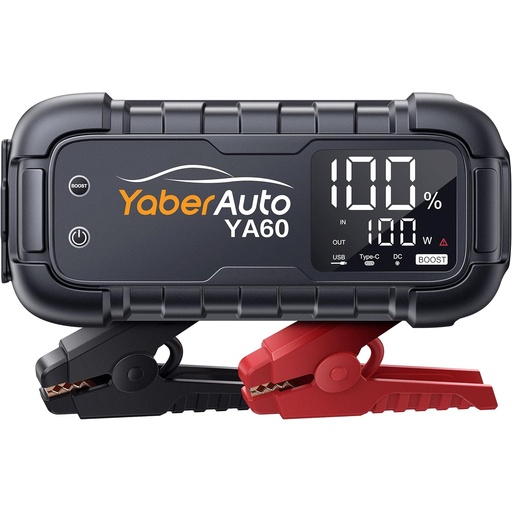
Why it suits this profile: According to the product description, this is a powerful 12V jump starter for all petrol engines and diesel engines up to 12.0 litres. It’s a good fit for drivers of larger SUVs, motorhomes, pick-ups and commercial vehicles.
The stated engine limits and 8AWG jump-lead type give you more context than the 8000A peak current claim alone. Always check your vehicle’s specifications, too.
65W two-way charging, 150W DC output, 600-lumen light and 10 listed safety features according to the product information.
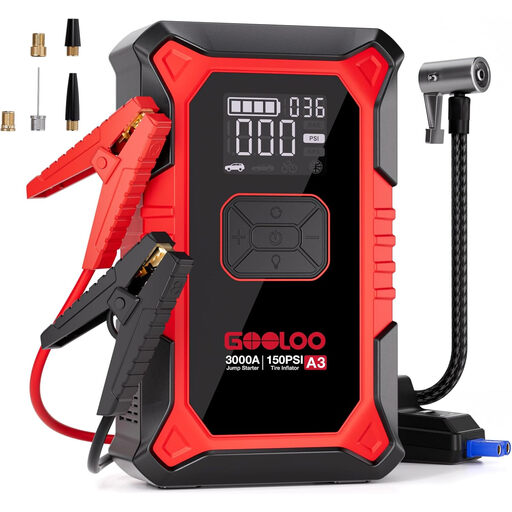
Why it suits this profile: According to the product description, this model combines a 3000A starting function with a compressor rated up to 150 PSI. It’s a practical choice for road trips, motorhomes and motorbikes, or for drivers who want to check their tyre pressure on the go.
As well as the maximum pressure, the product specifications list an airflow rate of 35 litres per minute, digital pressure monitoring and automatic shut-off. This gives you a more useful picture of the compressor’s performance.
Suitable, according to the product information, for petrol engines up to 9.0 litres and diesel engines up to 6.5 litres, with five inflation modes and included nozzles.
We’ve put together a complete, up-to-date list of products that meet these strict selection criteria and current European safety requirements.
Switch the car off and first check that the jump starter is sufficiently charged. Connect the red clamp to the positive terminal and the black clamp to the negative terminal or a suitable earth point. Try to start the car briefly, following the maximum time stated in the instructions. Once the engine has started, remove the clamps in reverse order. Don’t use the device with a leaking, damaged or swollen battery.
Its lifespan depends on the storage temperature, how often it’s charged and how it’s used. Recharge your emergency car jump starter after use and check the charge level regularly. Don’t store it in direct sunlight or extreme heat for long periods. Any charging cycles or standby times quoted by brands are product specifications, not a universal guarantee.
It depends on how you plan to use it. If you only want to get going again when your battery is flat, a compact model without a compressor may be enough. If you often travel long distances or use a motorhome, SUV or motorbike, you may benefit from a combined device with a tyre inflator, power bank and light. Check the weight, accessories and expected inflation time before you buy.
