
Vandaag of morgen in huis

Kwaliteit gegarandeerd

Welkomstaanbiedingen ontgrendelen: GRATIS bezorging | Tot 80% korting | Gratis 30 dagen JoyPlus-proefperiode
Download de app
A portable car fridge may seem straightforward at first glance: connect it to 12 volts and you’re ready to go. In practice, the cooling system, power supply and available space make the biggest difference. A small electric cool box may be suitable for a trip to the beach, while a compressor cooler may be necessary if you also want to freeze food while travelling.
For motorists, campers, motorhome owners, lorry drivers and boat owners, there are three common buying mistakes:
Use the checks below to quickly identify which 12V car fridge, camping fridge or RV fridge suits your needs.
A thermoelectric cool box usually uses a fan and semiconductor element. This system is compact and often suitable for cooling drinks and snacks. However, performance depends on the ambient temperature. According to the product information for the ICEROVER PN-06, this model cools to approximately 4 °C and heats to 60 °C; according to the same information, the actual temperature depends on the conditions.
A compressor cooler works more like a household fridge. The temperature is generally adjustable, and models with a freezer function can reach sub-zero temperatures according to their product specifications. For example, the BINGI 22L has a stated range of -18 °C to 15 °C. This makes this type more suitable for meat, frozen food or longer journeys.
Always pay attention to the wording used in product claims. A brand’s claim about rapid cooling is no guarantee that it will perform the same way in every situation. In particular, check:
A portable cool box with a capacity of 4 to 6 litres is handy for a few cans, lunch or cosmetics. For a weekend away, 18 to 22 litres is often more practical. Larger models of 35 litres or more are better suited to motorhomes, boats and longer stays, but take up space in the boot.
Don’t just look at the number of litres. Also measure:
A mini fridge with a handle is easy to carry, but often has less insulation and no freezer compartment. A large motorhome fridge offers more storage space, but is heavier and less suitable for regularly lifting out of the car.
A good 12V/24V fridge can be connected in a car, lorry, boat or motorhome. For home or campsite use, an AC/DC cool box with a 100-240V adapter is more convenient. Always check whether the adapter is included or needs to be purchased separately.
Battery protection is particularly important when the engine is switched off. Some models have three protection levels, often marked L, M and H. According to the product information for several EUHOMY and BINGI models, the built-in protection switches off the power when the battery voltage becomes too low. Check the manual to find out exactly how this function works, and don’t rely solely on the marketing name.
Also bear the following in mind:
Place a compressor fridge on a stable, level surface during first use. According to the product information for the selected compressor models, an appliance that has been heavily tilted during transport should be left upright for several hours before use. Always follow the supplied instructions.
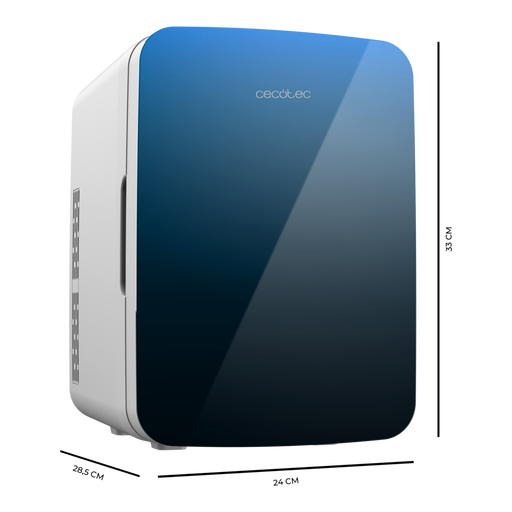
Why it suits this profile: A compact choice for short car journeys, a bedroom, office or occasional camping. According to the product name, this model works on 12V and 220V and has both cooling and warming functions.
The stated capacity and cooling/warming function are clearly specified. Don’t expect a freezer compartment: the product information describes a compact mini fridge.
10-litre capacity according to the product name; suitable for 12V and 220V use according to the stated specification.
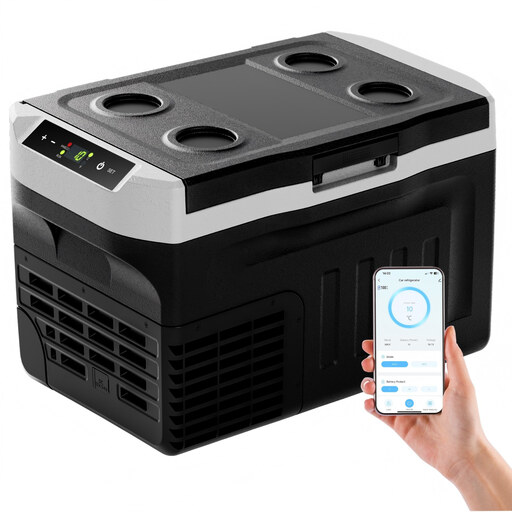
Why it suits this profile: For travellers who value an adjustable temperature, freezer function and multiple connection options. According to the product information, this model works on 12/24V DC and 220-240V AC.
According to the product specification, this is a compressor model with a range of -20 °C to 20 °C, rather than simply a cool box whose performance depends on the ambient temperature.
21-litre capacity; app control according to the product information; three battery protection levels.

Why it suits this profile: A spacious option for motorhomes, caravans, boats, lorries or longer camping trips. According to the product information, its size makes it particularly suitable for storage in the boot.
The two storage zones, baskets and removable divider make the layout more practical than a high litre figure alone would suggest.
35-litre capacity; temperature range of -20 °C to 20 °C according to the product information; wheels and handles for easy movement.
We’ve put together a complete, up-to-date list of products that fully meet these strict selection criteria and the applicable European safety regulations.
Many models use a 12V socket or cigarette lighter socket. Check that the socket supplies sufficient power and that the product is also suitable for 24V if you’re using a lorry. In motorhomes and boats, you should also check the type of plug and the fuse capacity available.
Consumption depends on the cooling system, outside temperature, selected setting and how often the lid is opened. According to their product specifications, compressor models may use around 45 watts in a particular mode, for example, but actual consumption can vary. An ECO mode, good ventilation and a full, well-organised cool box can help prevent unnecessary periods of maximum cooling.
Lifespan depends on use, storage and maintenance. Keep the ventilation openings clear, avoid direct contact with rainwater, clean the unit with a soft, damp cloth and allow a defrosted box to dry thoroughly. A compressor fridge should remain secure during transport and must not run for extended periods at a sharp angle. Before buying, also check the warranty, manual and availability of support.
