
Vandaag of morgen in huis

Kwaliteit gegarandeerd

Welkomstaanbiedingen ontgrendelen: GRATIS bezorging | Tot 80% korting | Gratis 30 dagen JoyPlus-proefperiode
Download de app
A portable car fridge is handy for road trips, campervan holidays, lorry journeys and long days on the water. However, not every electric coolbox is suited to the same situation. A compact thermoelectric model can be ideal for cans and lunch, while you may need a compressor coolbox if you want to freeze food.
The most common buying mistakes usually come down to three misunderstandings:
A thermoelectric coolbox uses a fan and semiconductor technology. This type is often compact, lightweight and relatively simple. However, its temperature depends on the ambient temperature, making it best suited to drinks, snacks and short journeys.
A coolbox with a warming function often uses the same technology to keep meals warm too. That’s useful for commuting or a picnic, but it’s no substitute for a freezer.
A compressor fridge works in much the same way as a household fridge. This type can generally offer an adjustable temperature range that goes below zero. That makes a car fridge with freezer more suitable for meat, fish, ice cream and longer trips.
Consider the power consumption, ventilation grilles and noise level. Product information for various models gives a noise level of around 40 to 45 dB. Your experience may vary depending on the surface, ambient temperature and ventilation.
Choose the capacity based on the number of people travelling and the length of the trip:
A dual-zone model can be useful if you want to store chilled and frozen products separately. Also check whether baskets, shelves or dividers can be removed.
A 12V fridge is suitable for most cars. For lorries, some campervans and boats, a 12V/24V fridge may be a better fit. If you want to use the appliance at home or on a campsite too, you’ll need a model with a 100-240V AC adaptor.
Built-in battery protection is important when using the fridge with the engine switched off. Some compressor coolboxes let you select a low, medium or high protection setting. This helps reduce the risk of draining the vehicle battery too far, but always check the manual and the condition of the battery.
A range such as -20°C to 20°C indicates a compressor model with cooling and freezing functions. A range of 5°C to 65°C or 8°C to 18°C is more typical of a thermoelectric mini fridge with a warming function. According to the brands’ own product information, these ranges are quoted under specific conditions; the ambient temperature affects the results.
Always place a portable fridge on a stable surface and leave around 10 centimetres of space around the ventilation openings when specified in the product information. Keep the appliance out of direct sunlight. If a compressor model has been tilted significantly, leave it upright before connecting it.
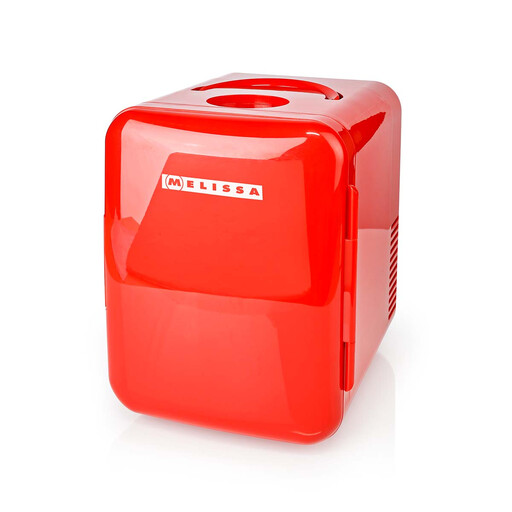
Why it suits this profile: Its 4-litre capacity and compact size make it a good fit for short car journeys, a desk or a small bedroom. According to the product information, it runs on 12V and 100-240V.
The capacity is clearly defined: this is a personal mini fridge, not a large camping fridge or freezer.
4-litre capacity, removable shelf, cooling and warming functions, 12V and mains connections.
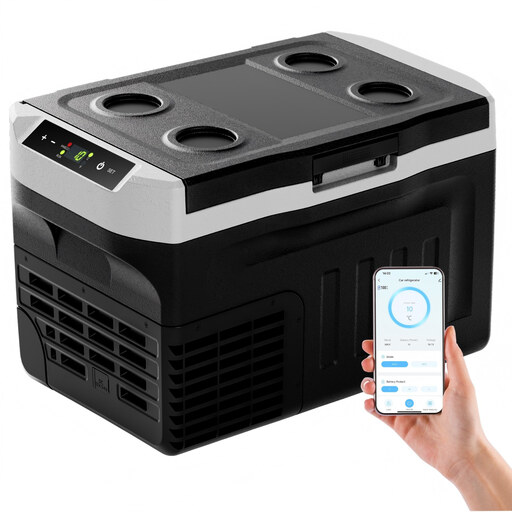
Why it suits this profile: This model combines a medium capacity with compressor cooling, adjustable temperature, app control and operation via 12/24V DC or 220-240V AC.
Its stated temperature range down to -20°C makes the difference between chilling and freezing clearer than with a basic thermoelectric coolbox.
21 litres, 12/24V and AC support, three battery protection settings, ECO and MAX modes.

Why it suits this profile: Its 42-litre capacity is designed for families, campervan owners and travellers taking food and drinks for several days.
Its stated temperature range of -18°C to 15°C makes it suitable for both chilled and frozen supplies, provided it is set up and ventilated correctly.
42 litres, inverter compressor according to the product information, ECO mode, 12/24V DC and 100-240V AC.

Why it suits this profile: Its capacity, two storage zones and transport wheels are useful when the fridge is mainly kept in a campervan, caravan or boot.
The product information lists a removable divider and two baskets, so you can organise the space in more ways than simply relying on the total litre capacity.
35 litres, dual zone, 12/24V and 220-240V, wheels, baskets and app control according to the product description.
We’ve put together a complete, up-to-date list of products that meet these strict selection criteria and the applicable European safety regulations.
That depends on the battery capacity, the power setting, the outside temperature and whether battery protection is fitted. A compressor model can keep cooling when the engine is off, but it’s best to use a suitable power station or campervan battery. Check regularly that the vehicle battery has sufficient voltage.
Consumption varies depending on the cooling technology and settings. Don’t just look at the maximum wattage; check the average consumption in ECO mode too. Product information for some models gives a stated power rating of around 45 to 48 watts. Actual consumption varies with the ambient temperature, ventilation and how often you open the fridge.
Yes, it’s best to place it on a stable, level surface. Compressor oil can shift after transport or significant tilting. Follow the manual for how long to leave the appliance upright before switching it on. Keep the ventilation openings clear and make sure the coolbox can’t shift while you’re driving.
