
Vandaag of morgen in huis

Kwaliteit gegarandeerd

Welkomstaanbiedingen ontgrendelen: GRATIS bezorging | Tot 80% korting | Gratis 30 dagen JoyPlus-proefperiode
Download de app
A portable Bluetooth speaker might seem easy to choose: connect your phone, press play and you’re ready to go. In practice, models vary considerably in sound output, battery life, water protection and portability. A speaker that sounds great in the living room is not automatically suitable for the beach or a camping trip.
So don’t focus solely on eye-catching features such as LED lighting, deep bass or a high wattage. Above all, check whether the specifications match the way you plan to use the speaker. This helps you avoid paying for features you’ll rarely use or choosing a product that quickly falls short outdoors.
A higher wattage can indicate greater sound output, but it does not determine on its own how clearly a speaker sounds. The speaker configuration, enclosure, positioning and tuning also play a part. Check whether the stated power is RMS, rather than looking only at temporary peak power.
A powerful Bluetooth speaker with a large woofer may be suitable for a party, while a compact, lower-powered model may be more practical for a picnic or bedroom. If bass is particularly important to you, you could also look for a passive radiator or a dedicated bass mode. Don’t expect a small enclosure to reproduce the same low frequencies as a larger speaker.
A waterproof Bluetooth speaker is not necessarily resistant to every situation. The IP rating consists of numbers that indicate protection against dust and water. An IP67 rating means the product is dustproof and, according to the stated standard, can be temporarily immersed in fresh water. An IP66 waterproof speaker is protected against powerful jets of water, but is not designed to be submerged.
Always check the instructions for use. Salt water, chlorine, high pressure and prolonged immersion can cause damage, even when the enclosure has an IP rating. Also make sure the charging ports are properly sealed before using the speaker outdoors.
The stated playback time, for example 12 or 24 hours, depends on the volume, type of music and additional features. LED lighting, bass boost and phone calls can reduce battery life. For example, the Tronsmart T7 is advertised with up to 12 hours of playback without lighting, while using the lighting can reduce playback time.
So, always consider the conditions under which the stated battery life was measured. For a full day out, a portable speaker with long battery life is practical, but for intensive use, take a USB-C power bank or make sure you have access to a charging point.
A Bluetooth speaker with a single speaker channel is often compact and easy to position. Models with multiple drivers, such as a tweeter and woofer, can reproduce different frequencies more precisely. If you want a wider stereo soundstage, you could choose a Bluetooth speaker with stereo pairing. This allows two compatible speakers to be connected wirelessly.
Check whether both devices need to be from the same brand or product range. TWS or stereo pairing does not automatically work between any two models. According to the product information, the Edifier ES60 supports pairing two speakers for stereo sound.
Bluetooth 5.3 and 5.4 can provide a stable connection and more efficient energy use, but the overall experience also depends on your smartphone or tablet. Also consider the additional connections. A USB-C port is common for charging, while an AUX input is useful when you want to connect a device by cable.
Some models also support a microSD card or USB stick. This is handy in places where you don’t want to use a phone connection. A built-in microphone can enable hands-free calls, but call quality varies depending on the surroundings.
A compact speaker weighing a few hundred grams fits easily into a bag. Larger models often deliver more volume, but are less comfortable to carry for longer periods. Look for a carrying strap, handle or attachment point.
For the beach, campsite and garden, dust and water protection are more important than an attractive design alone. For use indoors, size, controls and appearance may carry more weight. A retro wireless speaker such as the Mlove A200 is designed as a home accessory, for example, while an outdoor speaker such as the Mifa WildRod is aimed at outdoor use.
The choices below are based on the stated product specifications. Claims about sound, battery life or protection come from the product information supplied by the relevant manufacturer or seller and depend on the conditions of use.
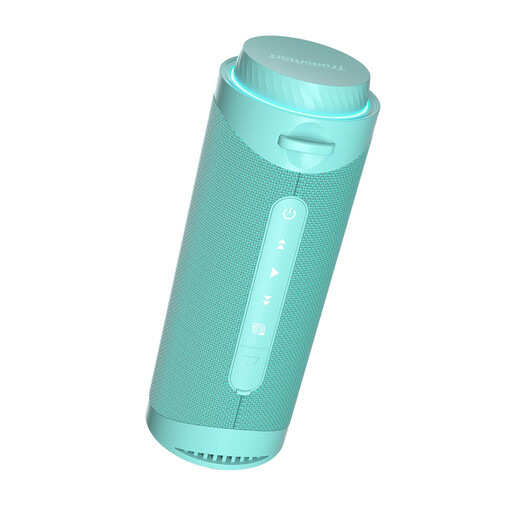
Why it suits this profile: A practical choice for anyone looking for a wireless speaker for use at home, at a party or on a day out, without needing lots of connections.
The product information lists 30W output power, IPX7 water protection and up to 12 hours of playback without lighting. The conditions relating to LED use remain important.
Bluetooth 5.3, LED lighting, microSD support and TWS pairing.

Why it suits this profile: Suitable for anyone who wants to use a more powerful Bluetooth speaker at home, on the patio or at a gathering.
The specifications state 34W RMS and IP66 dust and water protection. This gives you a clearer idea of its intended use than a general claim of “powerful” sound alone.
Bluetooth 5.4, simultaneous connection to two devices, three lighting effects and stereo pairing.

Why it suits this profile: Designed for karaoke, performances and family gatherings, as well as for users who want to connect microphones or instruments.
The features are specific: two wireless UHF microphones, separate settings for the microphone and instrument, and various connections.
Stated power of 200W, USB, AUX and microSD playback, plus around 6–8 hours of battery life at average volume.
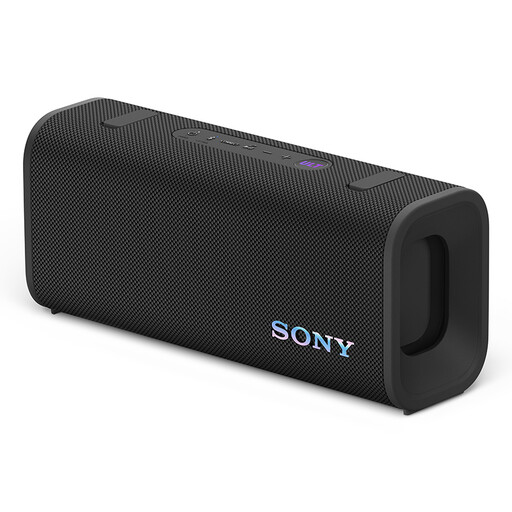
Why it suits this profile: An option for camping, garden parties and travel, where battery life, portability and protection against outdoor conditions matter.
The product details state IP67, a weight of approximately 1.2 kg and up to 24 hours of battery life. When using it outdoors, still check the conditions relating to water and salt.
27W RMS, USB-C, 3.5mm audio input and a stated battery life of 24 hours.
We’ve put together a complete, up-to-date list of products that fully meet these strict selection criteria and the applicable European safety regulations.
Switch on the speaker and activate pairing mode. Then open the Bluetooth settings on your phone and select the speaker’s name. If the device has been paired before, the connection will often happen automatically. Keep the speaker and phone close together during the initial pairing process.
This varies from model to model and depends on how you use it. Compact models often state around 12 to 16 hours, while larger models may last longer. The actual result is affected by volume, bass settings, LED lighting and phone calls. So don’t just look at the maximum playback time; also check whether it was measured with the lighting switched on.
This is not recommended, even with an IP66 or IP67 rating. This standard describes protection under specific test conditions, not against prolonged rain, frost, salt water or direct sunlight. Bring the speaker indoors after use, dry it and charge it in a dry place.
