
Vandaag of morgen in huis

Kwaliteit gegarandeerd

Welkomstaanbiedingen ontgrendelen: GRATIS bezorging | Tot 80% korting | Gratis 30 dagen JoyPlus-proefperiode
Download de app
A portable Bluetooth speaker is useful at home, on holiday, while camping or at a party. However, it is easy to pay too much for features you do not use. For example, a high wattage does not automatically mean that a speaker will sound good in every room. Similarly, “water-resistant” does not always mean that you can safely submerge the device.
With this guide, you can compare the most important specifications and recognise three common purchasing pitfalls. You will also find several models suited to different use cases.
A manufacturer may quote a high peak power output, while the continuous RMS power is lower. The number of drivers, the enclosure and the speaker’s positioning also make a difference. A compact Bluetooth speaker with a well-tuned full-range driver may sound more pleasant in a small room than a larger model with nothing more than a high peak figure.
Pay attention to:
The IP rating provides greater clarity. The first digit indicates protection against solid particles, such as dust. The second digit refers to water.
Salt water, chlorine, high pressure and prolonged exposure may fall outside the stated conditions. After using a speaker at the beach, do not automatically rinse it as if every liquid posed no risk.
A claim such as “up to 16 hours” usually depends on the volume, music, lighting and connection. RGB lighting and high volume often reduce playback time. Check whether the stated battery life was measured without lighting, and look at the charging port, battery indicator and supplied cable.
Bluetooth 5.3 or 5.4 can provide a modern, stable connection, but the overall experience also depends on your phone, tablet and distance. Useful extras include:
A speaker with long battery life is particularly useful for long days outdoors. For use in the kitchen or bedroom, a shorter playback time may be sufficient.
For an outdoor Bluetooth speaker, a sturdy enclosure, a carrying strap or handle and a clearly stated IP rating are all practical considerations. A dustproof Bluetooth speaker with IP6x protection is better suited to beaches, camping and dusty paths than a model with no specified protection.
Also check that the ports are properly sealed. A high IP rating does not protect against drops, heat or incorrect charging.
A small speaker is easy to carry, but generally delivers less volume and bass than a larger model. For a living room, garden party or group of listeners, multiple drivers and higher RMS power can be useful. For cycling, travelling or carrying in a rucksack, weight and mounting options are often more important.
The selection below is based on verifiable product information, such as battery life, IP rating, Bluetooth version, connections and dimensions. Product specifications may vary depending on the version or delivery, so always check the current product page.

Why it suits this profile: According to the product specifications, this compact model weighs 274 grams and has a carrying strap. It is therefore well suited to everyday use, travelling and smaller spaces.
The IP67 rating makes clear what level of protection against dust and temporary immersion is specified. The manufacturer also states a battery life of up to 16 hours.
Bluetooth 5.3, USB-C, hands-free calling, IP67 and a stated battery life of up to 16 hours.

Why it suits this profile: The ES60 is designed for users who want more powerful sound at home, at parties and outdoors. Its stated RMS power is 34 W.
As well as the power rating, the product information lists separate tweeters, a mid-low driver and a passive bass radiator. The IP66 rating is clearly distinguished from full immersion.
Bluetooth 5.4, two-device connection, stereo pairing, USB-C, three lighting effects and up to 9 hours of stated playback time.
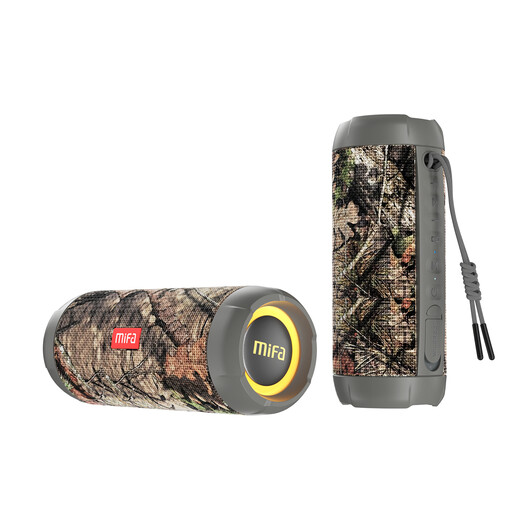
Why it suits this profile: This model is designed for outdoor use, including by the pool, at the beach, while camping and on active outings. According to the product information, its enclosure is IP67-rated and buoyant.
The separate IP67 specification provides more useful guidance than simply calling it waterproof. However, check the usage limits and avoid salt water and unnecessarily prolonged immersion.
30 W audio, Bluetooth 5.3, two simultaneous Bluetooth devices, microSD support, RGB lighting and up to 12 hours of stated playback time.
We have put together a complete, up-to-date list of products that fully meet these strict selection criteria and the applicable European safety regulations.
Switch on the speaker and activate pairing mode. Then open the Bluetooth settings on your phone and select the speaker’s name. On some Android devices, models such as the Sony SRS-XB100 support a faster Fast Pair connection. If you experience problems, it often helps to remove a previous connection and restart both devices.
Battery life depends on charging cycles, volume, temperature and storage. Charge the speaker with a suitable USB-C charger, avoid prolonged exposure to heat and do not store it completely flat. A stated playback time of 8, 12 or 16 hours is a guideline; lighting and higher volume can reduce the actual duration.
While playing music, a speaker mainly uses its built-in battery. Power consumption therefore occurs primarily while charging. A compact speaker with a smaller battery generally uses less energy per charge than a powerful party speaker. Switch the speaker off when you are not using it and do not leave the charger connected unnecessarily.
