
Vandaag of morgen in huis

Kwaliteit gegarandeerd

Welkomstaanbiedingen ontgrendelen: GRATIS bezorging | Tot 80% korting | Gratis 30 dagen JoyPlus-proefperiode
Download de app
A portable Bluetooth speaker might seem simple to choose: connect your smartphone, press play and take the device with you. In reality, models vary greatly in sound output, battery life, water protection and portability. A low price can be tempting, but an unsuitable speaker will soon end up unused in a cupboard.
These buying tips will help you choose a wireless speaker for home, parties, camping, the beach, cycling or walking.
A higher wattage doesn't automatically mean a speaker will sound better in your situation. The stated power can be peak power or RMS power. RMS is usually the more useful value for comparison, as it describes the continuous output power.
Also pay attention to the speaker's construction. A model with a tweeter, woofer and passive radiators can reproduce music differently to a compact speaker with a single driver, even when the power seems similar.
Always check the full IP rating. The first digit relates to dust protection, the second to water.
A waterproof Bluetooth speaker is therefore not necessarily suitable for prolonged use in a swimming pool or seawater. Salt, sand and dirt can also damage connections. Always follow the manufacturer's instructions.
"Up to 20 hours" or "up to 26 hours" is usually measured at a certain volume, without or with limited lighting. Higher volume, bass enhancement and a Bluetooth speaker with lighting often shorten the playback time. Therefore, compare the stated battery life with your expected usage and check whether the manufacturer mentions any conditions.
For a bedroom, kitchen or desk, you usually don't need a large powerful Bluetooth speaker. For a garden party or larger group, more power is practical. A compact model of around 3 to 6 watts suits personal listening; models with tens of watts are more aimed at parties and outdoor use.
A stereo Bluetooth speaker or a model with stereo pairing can provide a wider soundstage. Check whether you need two identical speakers and whether pairing happens via the app or a button.
Besides playback time, also look at:
Bluetooth versions like 5.3 and 5.4 can provide a modern connection, but range and stability also depend on obstacles, your smartphone and the environment.
A speaker that sounds great at home might be too heavy for a bike ride. So check the weight, a handle, carry loop or attachment clip. For walking and camping, a compact outdoor speaker with dust and water protection is often more practical than a large party model.
With models that have lighting, pay attention to the extra battery drain. Lighting is an atmospheric feature, but not essential when long battery life is more important to you.
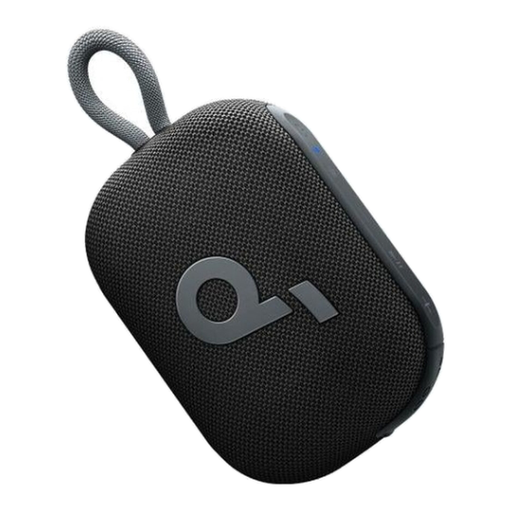
Why this fits the profile: According to the product description, this compact speaker combines 5W sound with a stated playback time of up to 20 hours. The low weight and integrated carry loop are practical for walking, cycling or daily use.
The IP67 rating is clearly stated. This allows you to compare its protection against models that only say "water-resistant" without further explanation.
5W output power, IP67 protection, floating design and True Wireless Stereo pairing for two speakers.
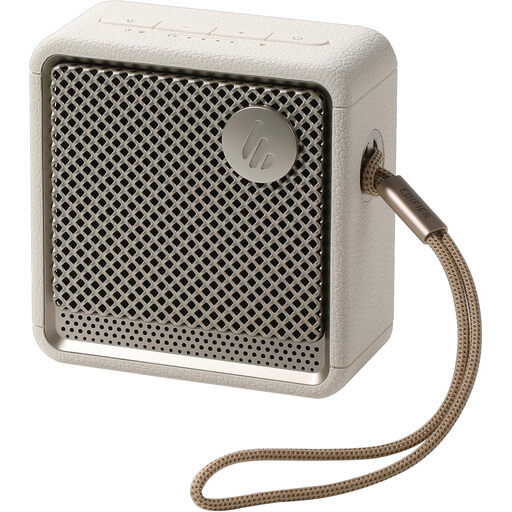
Why this fits the profile: According to the product specifications, this model focuses on 360° sound, control via the EDIFIER ConneX app and a battery life of up to 15 hours. That suits users who want the same features at home and outdoors.
The product specification mentions both 6W RMS and two passive bass radiators. This gives you more information than just a general claim about "powerful sound".
Bluetooth 5.4, IP67, up to 15 hours of playtime, RGB ambient lighting and stereo pairing.
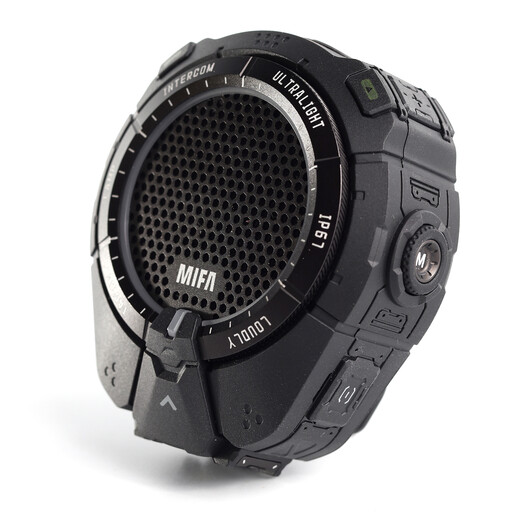
Why this fits the profile: According to the product description, this speaker is designed for walking, cycling and camping. The model weighs approximately 85 grams and, in addition to Bluetooth, features an intercom function for up to six people.
The IP67 rating, magnetic clip and stated dimensions make it clear what the device is designed for. Usage conditions still depend on the instructions and environment.
Bluetooth 5.3, approximately 10 hours of battery life, IP67, 80-lumen lamp and communication without a mobile network according to the product description.
We've put together a full, up-to-date list of products that fully meet these strict selection criteria and current European safety regulations.
First charge the speaker and turn it on. If necessary, press and hold the Bluetooth or pairing button. Then open the Bluetooth settings on your smartphone, tablet or laptop and select the speaker's name. For subsequent connections, many models automatically reconnect as long as Bluetooth is enabled.
The lifespan depends on charging cycles, volume, storage and exposure to moisture or heat. Use the supplied or recommended charging cable, let a wet speaker dry completely first and don't store the device empty for long periods. The stated battery life is a usage indication; high volumes and lighting can shorten the playback time.
During playback, a wireless speaker uses relatively little power, but consumption increases at high volume, with bass enhancement and lighting. A model with USB-C is practical because you can use the same charger or power bank as for many other devices. However, check the required charging power before connecting an adapter.
