
Vandaag of morgen in huis

Kwaliteit gegarandeerd

Welkomstaanbiedingen ontgrendelen: GRATIS bezorging | Tot 80% korting | Gratis 30 dagen JoyPlus-proefperiode
Download de app
A portable Bluetooth speaker might seem simple to choose. Yet many shoppers fall for an eye-catching wattage, colourful lighting or a long battery life that’s only achieved under ideal conditions. For home use, a party, camping or a bike ride, different features really matter.
In this buying guide from the Joybuy Product Recommendation Officer, we compare verifiable specifications and explain which details you should check before you buy.
A high wattage doesn’t automatically mean a Bluetooth speaker sounds better. It mainly tells you about the electrical power. The size of the drivers, the cabinet, the tuning and the maximum volume all play a part too. A compact speaker with 6 W RMS is fine for a small room or picnic, whereas a party speaker with 90 W is more suited to a larger group outdoors.
So pay attention to:
The terms waterproof and splash-proof aren’t always used consistently. So check the IP rating. With IP67, the first digit 6 means dust-tight protection. The second digit 7, according to the usual classification, refers to temporary immersion under specified conditions.
That doesn’t mean you can use a speaker for long periods in the sea, swimming pool water or a powerful water jet. Sony’s product information, for example, states that salt water, chlorinated water and high-pressure water should be avoided. An IPX6 model, like the Tronsmart Bang 2, is protected against powerful water jets according to the stated specification, but has no dust protection rating.
“Up to 16 hours” or “up to 26 hours” is a maximum figure. The actual result depends on volume, music type, Bluetooth connection and lighting. With the Tronsmart Bang 2, the manufacturer states up to 26 hours at 50% volume with LED lighting switched off, but up to 7 hours with lighting on at the same volume reference.
So for a speaker with long battery life, look at:
Bluetooth 5.3 and 5.4 are modern versions with an efficient and stable connection, but the final experience also depends on your smartphone, tablet and distance. A range of “more than 15 metres” is a stated maximum and may be lower indoors due to walls and other wireless signals.
Dual device connection is handy when two people want to play music without having to pair again each time. If you want to fill multiple rooms at home, it’s better to look at Wi-Fi, AirPlay 2 or a multi-room function. The Edifier ES300 supports Bluetooth 5.3, Wi-Fi, USB, AUX and AirPlay 2 according to the product information.
For walking or cycling, weight matters more than big bass. The Mifa Yukon weighs around 85 grams according to the specifications and has a stated play time of up to 10 hours. The Sony SRS-XB100 weighs about 274 grams and offers up to 16 hours of use according to the product information.
For a portable speaker for camping, a play time of 8 to 12 hours is often practical. For a garden party, a larger model with a handle, carry strap and longer play time may make more sense, even if the weight is higher.
For the beach, forest and camping, both dust protection and water protection are relevant. IP66 in practice means a higher level of dust protection and protection against powerful water jets. IP67 adds limited immersion protection according to the stated standard.
Also check whether the connections are properly sealed and whether the manufacturer mentions any limitations. Let a wet speaker dry first before using the USB port.
Lighting is mainly an atmosphere feature. A Bluetooth speaker with lighting can be suitable for a party, but LEDs often shorten the battery life. Stereo pairing is useful when you have two compatible speakers. An AUX input, USB stick, microSD card or FM radio can be handy when you don’t want to stream exclusively via a smartphone.

Why this fits: A compact speaker for home, balcony, park or a short bike ride. According to the product information, it weighs around 274 grams and has a battery life of up to 16 hours.
The stated IP67 rating mentions protection against dust and water. Do check the usage limitations regarding salt and chlorinated water.
Bluetooth 5.3, USB-C, carry strap, microphone and up to 16 hours stated battery life.
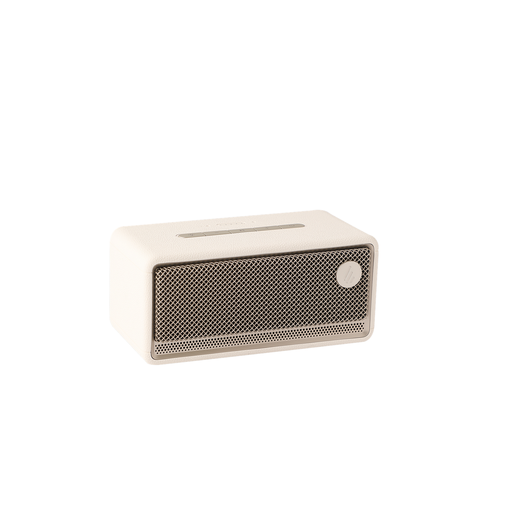
Why this fits: For a living room, home office or multi-room setup where Bluetooth isn’t the only connection.
The specifications mention multiple input options, so you’re not reliant on a single wireless standard.
According to the product information, 60 W total power, Wi-Fi on 2.4 and 5 GHz, AirPlay 2, USB, AUX and up to 12 hours battery life.
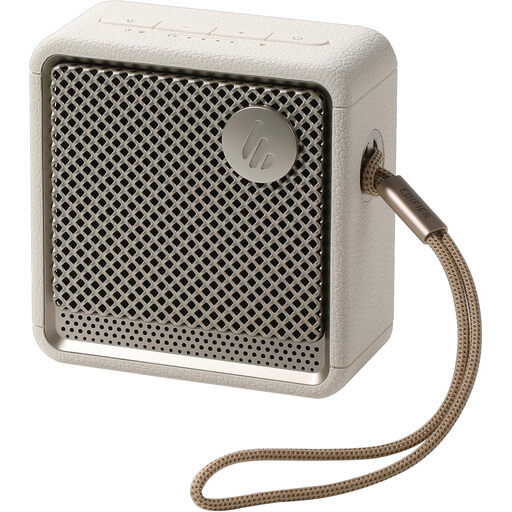
Why this fits: A compact outdoor speaker for the beach, park, walking or cycling, when dust and water protection are important.
The stated IP67 rating makes clear which protection class you’re buying, rather than just a general claim like “outdoor”.
Bluetooth 5.4, stereo pairing, three light effects, USB-C and a stated play time of up to 15 hours.
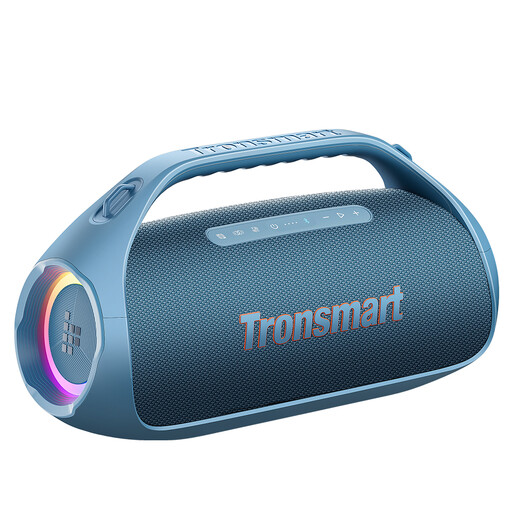
Why this fits: For garden parties and larger groups looking for a more powerful Bluetooth speaker with a carry strap.
The product specification separately states the power, IPX6 protection and battery life at different LED settings.
Stated 90 W, TWS pairing, app equaliser, LED lighting, USB-C and up to 26 hours without lighting at 50% volume.
Check these points before ordering:
Browse a current selection of speakers with amplifier and compare models on power, connections, portability and extra features.
First charge the speaker and switch it on. Then open Bluetooth in your smartphone or tablet’s settings, activate pairing mode on the speaker and select the correct product name. With a previously paired device, the connection often happens automatically.
That varies by model and usage. The stated values in this guide range from around 8 to 26 hours. Volume, bass output, lighting and phone calls all affect the actual duration. So treat “up to” as a maximum guideline.
Yes, as long as the conditions match the IP rating and the manufacturer’s instructions. Protect the speaker from prolonged rain, salt water, mud and extreme temperatures. Only connect a wet speaker to the charger once the connections are completely dry.
