
Vandaag of morgen in huis

Kwaliteit gegarandeerd

Welkomstaanbiedingen ontgrendelen: GRATIS bezorging | Tot 80% korting | Gratis 30 dagen JoyPlus-proefperiode
Download de app
A portable Bluetooth speaker might seem easy to choose: check the wattage, look at the battery life and pick a colour you like. But marketing claims and unclear specifications can mean your purchase isn’t quite right for how you plan to use it. For example, a compact speaker that sounds great indoors may not be suitable for a busy garden or a day at the beach.
In this guide, you’ll find out what to look for in a wireless speaker, which features make a difference in everyday use and what type of portable speaker best suits your needs.
The quoted battery life is usually a maximum. Actual performance depends on the volume, the type of music and extra features such as LED lighting. For example, the Tronsmart T7 is rated for up to 12 hours of playback without the lights, but around 4 hours with them switched on.
So don’t compare battery life by the number of hours alone. Think about whether you’ll use the speaker for a few hours in the kitchen, a full day camping or an evening party. A Bluetooth speaker with long battery life is most useful when the manufacturer clearly states the conditions under which that battery life applies.
The word waterproof doesn’t tell you much on its own. Check the official IP rating:
A Bluetooth speaker with an IP67 rating may therefore be suitable for rain, camping or use by the pool. That doesn’t mean you should leave it in salt water or chlorinated water for long periods, or expose it to a powerful jet of water. You should also generally avoid charging a speaker when its connections are wet.
More power doesn’t automatically mean a speaker will sound better in every room. Size, speaker design, placement and sound settings all play a part. A small, compact speaker is easy to carry, but will generally have less volume and bass than a model weighing several kilos.
Also consider whether you want mono or stereo sound, the option to pair speakers and any equaliser features. You’ll need different features for background music on a balcony than for a Bluetooth party speaker in a large garden.
For everyday carry, size and weight are often more important than an extra feature. According to its product specifications, the Sony SRS-XB100 weighs 274 grams and has an adjustable carrying strap. This type of speaker is easy to pack in a rucksack, bike bag or picnic basket.
Larger models often deliver more volume, but take up more space too. The Sony ULT FIELD 3 weighs around 1.2 kilograms. The Sony ULT FIELD 5 weighs around 3.3 kilograms. So think about whether you’ll mainly be carrying the speaker, transporting it by car or using it in one fixed spot.
A USB-C connection is handy if you already use a suitable cable for your smartphone or tablet. When checking battery life, look out for the word “up to”. Actual performance varies depending on the volume and what you’re playing. Some larger models can also work as power banks, so you can top up your phone.
If you’re choosing a speaker for camping and the beach, it’s worth checking:
Calling a speaker waterproof is only useful if the IP rating is given too. For beach use, dust protection and a well-sealed casing are important. For rain or use by a swimming pool, water protection matters more. Sand, salt water and mud also mean you’ll need to clean the speaker carefully, following the manufacturer’s instructions.
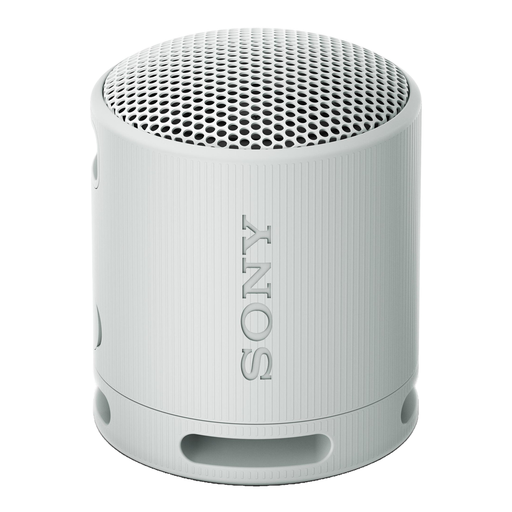
Why it suits this profile: Weighing 274 grams, with Bluetooth 5.3, a carrying strap and a quoted battery life of 16 hours, this is an accessible choice for everyday use at home or on the go.
The product specifications clearly state the IP67 rating, 16-hour battery life and weight. This makes it easier to compare portability and protection without relying on vague marketing terms.
274 grams, IP67 dust and water protection, USB-C, hands-free calling and the option to pair with a second speaker.
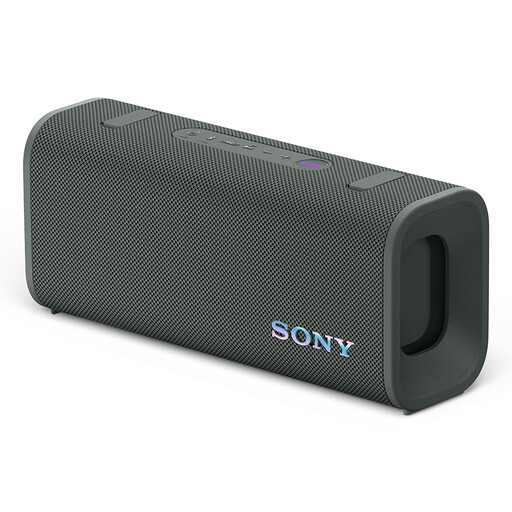
Why it suits this profile: This model is aimed at people looking for more volume, bass settings and longer battery life, without stepping up to a large home sound system.
The quoted specifications give both the weight of around 1.2 kilograms and the 24-hour battery life, as well as the IP67 rating. This means you can see in advance what you’re trading in portability for the extra features.
Quoted battery life of 24 hours, IP67, 7-band equaliser, removable shoulder strap, power bank function and hands-free calling.
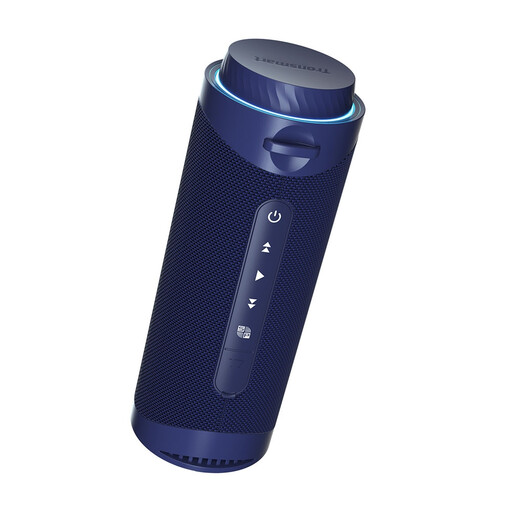
Why it suits this profile: With a quoted output of 30 W, LED lighting and TWS pairing, this speaker is well suited to garden parties, group listening and short trips outdoors.
The product specifications distinguish between up to 12 hours of playback without the lights and around 4 hours with them switched on. This helps set realistic expectations when using it for parties.
Quoted output of 30 W, IPX7, LED lighting, built-in microphone, microSD card reader and wireless stereo pairing.
We’ve put together a complete, up-to-date list of products that meet these strict selection criteria and the applicable European safety regulations.
Switch on the speaker and activate pairing mode. Then open the Bluetooth settings on your smartphone or tablet and select the speaker’s name. On models with Fast Pair or a dedicated app, you may be able to connect more quickly the first time. Once paired, the speaker will often connect automatically the next time you use it.
It varies by model and how you use it. Product specifications may quote a maximum battery life of 12, 16, 24 or 25 hours, for example. Volume, music and lighting all affect actual performance. Treat the quoted battery life as a guide rather than a guaranteed playback time.
An IP67 model is rated for dust protection and temporary immersion under certain conditions. At the beach, you should take particular care to avoid sand, salt water and prolonged exposure. Make sure the connections are properly sealed, don’t charge the speaker when it’s wet and follow the manufacturer’s safety instructions.
