
Vandaag of morgen in huis

Kwaliteit gegarandeerd

Welkomstaanbiedingen ontgrendelen: GRATIS bezorging | Tot 80% korting | Gratis 30 dagen JoyPlus-proefperiode
Download de app
A portable Bluetooth speaker seems simple enough: connect it to your phone and play music. But models can differ considerably in size, battery life, protection and sound quality. A low price or eye-catching marketing claim doesn’t always tell you whether a speaker is right for your needs.
Look out for these common pitfalls:
For outdoor use, IP67 is a useful technical rating. The first digit, 6, means complete protection against dust. The second digit, 7, means temporary immersion under the manufacturer’s specified conditions, usually in fresh water.
That doesn’t mean you can leave a waterproof Bluetooth speaker in a swimming pool or the sea for a long time. Salt water, chlorine, high-pressure water jets and an open charging port can cause damage. Also check that the USB-C port is properly sealed before using the speaker.
A Bluetooth speaker with an IP67 rating is suitable for picnics, bike rides and trips to the beach, as long as you follow the usage limits.
A Bluetooth speaker with long battery life is especially useful when there isn’t a mains socket nearby. Don’t just look at the number of hours. Check:
A stated playback time of 12 or 16 hours may be enough for a day outdoors, but actual battery life is often shorter at high volume. Switch the speaker off when you’re not using it, and don’t leave it in direct sunlight or extreme heat for long periods.
A compact Bluetooth speaker should fit easily in a bag or hang from a belt. Check its weight and dimensions rather than relying on the product photo alone. A carrying loop is useful for walking or cycling, but check that it’s adjustable and securely attached.
Also look at the speaker configuration. A 1.0 speaker delivers mono sound, which is suitable for background music, podcasts and listening on the go. A larger model may offer more volume and bass, but takes up more space too.
Features such as a passive radiator, equaliser or Sound Diffusion Processor can affect sound quality. According to Sony’s product description, the SRS-XB100 has a Sound Diffusion Processor and a passive radiator. Treat this as a technical feature, not a guarantee that every listener will hear the same result.
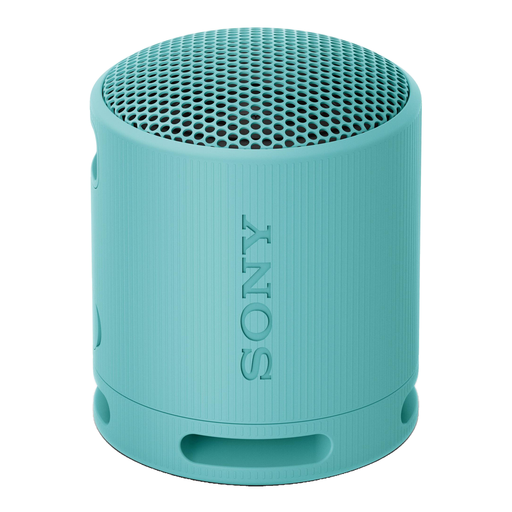
Why it suits this profile: The Sony SRS-XB100 is small and weighs 274 grams according to the product details. This makes it a good choice for everyday use, travel and listening to music at your desk or on the balcony.
The specifications give a clear battery-life figure of up to 16 hours, IP67 protection and a USB-C connection. That means you don’t have to rely on vague terms such as “portable”.
Bluetooth 5.3, stated battery life of 16 hours, IP67, built-in microphone and an adjustable carrying strap.
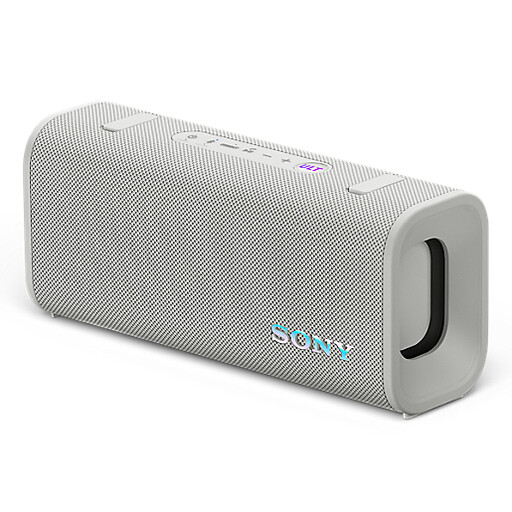
Why it suits this profile: This larger model is designed for anyone looking for more volume and sound customisation for the garden, living room or outdoor get-togethers.
The product details list 27 W RMS, IP67 and battery life of up to 24 hours. The app also includes a 7-band equaliser for personalised settings.
Stated battery life of 24 hours, USB-C, 3.5mm audio input, IP67 and a weight of around 1.2 kg.
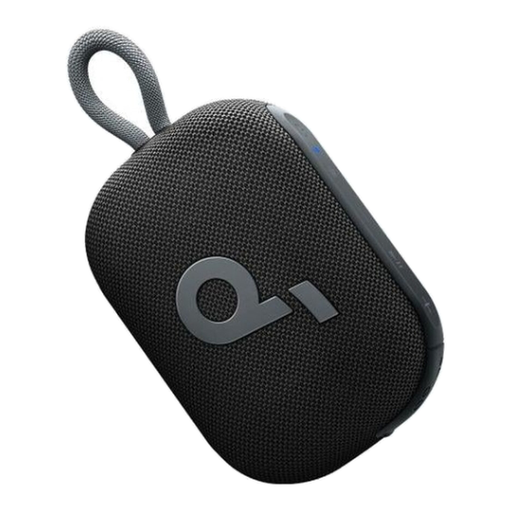
Why it suits this profile: This portable speaker is a good fit for walks, bike rides and days out where low weight, a carrying loop and protection against dust and water are important.
The product information lists IP67, a weight of around 264 grams and stated battery life of 20 hours. You can also pair it with a second speaker.
Stated battery life of 20 hours, IP67, carrying loop, 5 W sound output according to the product information and True Wireless Stereo pairing.
We’ve put together a complete, up-to-date list of products that meet these strict selection criteria and current European safety regulations.
Switch on the speaker and activate pairing mode. Then open the Bluetooth settings on your smartphone and select the speaker’s name. You may need to confirm the connection on both devices the first time you pair them. Keep your phone and speaker close together while pairing, and check that the battery is sufficiently charged.
It depends on the model, volume, temperature and how you use it. Products in this selection state a maximum battery life of 16 to 24 hours, but these are estimates. Playing music loudly or making lots of calls can reduce playback time. A USB-C connection makes it easier to top up the charge.
A wireless speaker uses power from its built-in battery while playing music. The cost comes mainly from charging and is usually low, depending on the battery capacity and your electricity tariff. Don’t leave the speaker switched on all the time, and charge it using a suitable adapter and an undamaged USB-C cable.
