
Vandaag of morgen in huis

Kwaliteit gegarandeerd

Welkomstaanbiedingen ontgrendelen: GRATIS bezorging | Tot 80% korting | Gratis 30 dagen JoyPlus-proefperiode
Download de app
A portable Bluetooth speaker is handy at home, on holiday, when camping or at the beach. But there are big differences between models. A compact design tells you little about battery life, an IP rating doesn’t protect against every type of water, and a high wattage doesn’t guarantee great sound.
Use these practical checks to avoid a disappointing purchase and find a wireless Bluetooth speaker that suits the way you’ll use it.
Manufacturers often quote the maximum playback time. In practice, it may be shorter at high volume or with bass boost, lighting or phone calls. So don’t just look at the number of hours. Check:
A Bluetooth speaker with long battery life is especially useful when there’s no power socket nearby, such as on a bike ride or a weekend camping trip.
A waterproof Bluetooth speaker isn’t automatically resistant to every type of liquid. The IP code consists of two numbers. The first indicates protection against dust, and the second indicates protection against water. An IP67 Bluetooth speaker generally offers complete dust protection and can be temporarily submerged, subject to certain conditions.
Always check the manual. Salt water, chlorine, high water pressure and a cover that isn’t properly closed can still cause damage. Also, don’t charge a speaker while its port is wet.
A compact Bluetooth speaker is easy to carry, but it usually moves less air than a larger model. Check the number of drivers, RMS output and features such as a passive radiator. These specifications give you more useful context than phrases such as “party sound” or “extra bass”.
A mono speaker can be perfectly good for listening on your own. If you want a wider stereo sound, a Bluetooth speaker with stereo pairing may be a better choice, as long as you use two compatible speakers.
For a portable outdoor speaker, protection against dust and splashes is useful. IP66 means it’s dust-tight and protected against powerful water jets. IP67 adds protection against temporary submersion, subject to the manufacturer’s conditions. This makes an IP67 model suitable for situations such as rain, sand or an accidental drop near the pool, but it’s not an invitation to use it underwater for long periods.
Compare battery life based on how you plan to use the speaker. For an afternoon in the park, 9 to 12 hours may be enough. If you’ll be out all day, look for 16 to 24 hours. Bear in mind that volume and features affect how long the battery actually lasts.
USB-C makes charging easier, as you can often use the same cable for your phone or tablet. Check whether a charging adapter is included.
A speaker weighing around 250 to 700 grams is easier to fit in a bag or attach to a bike’s handlebars. A carrying strap, handle or clip means you won’t have to carry it in your hand. Larger models often deliver more volume, but take up more space too.
Placement matters for an outdoor speaker. The bass may sound different on a hard surface than on grass or another soft surface. A model that can stand both horizontally and vertically gives you more flexibility.
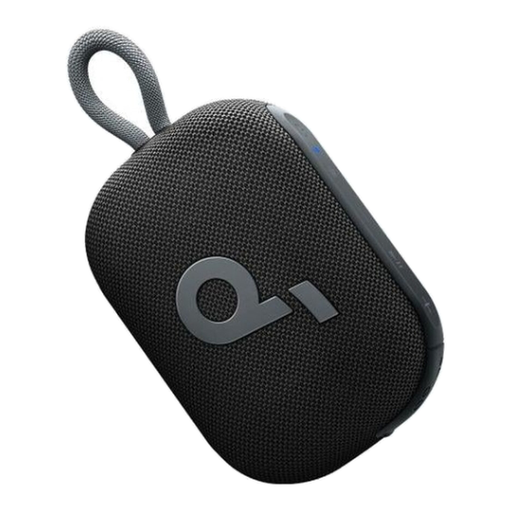
Why it suits this type of user: A lightweight choice for everyday use, walks and short trips. The integrated strap makes it easy to take with you.
The product specifications state 20 hours of battery life and IP67 protection. This offers clear reassurance on both playback time and protection against dust and splashes.
263.65 grams, 5 W audio output according to the product information, IP67 and True Wireless Stereo pairing.
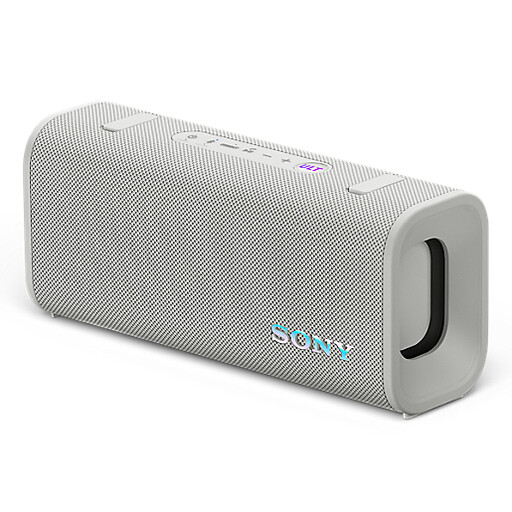
Why it suits this type of user: For anyone looking for greater range, longer battery life and more ways to adjust the sound for home, the garden and parties.
Choosing a larger model helps ensure it won’t feel too small for group use. IP67 and the covered port still need to be used correctly, in line with the manual.
27 W RMS, up to 24 hours of battery life, 3.5 mm audio input, power bank function and a 7-band equaliser according to the product specifications.

Why it suits this type of user: Designed for users who value connecting multiple devices, stereo pairing and extra connection options.
The stated 34 W RMS output and two tweeters give you more technical detail than a vague marketing claim about volume. IP66 protects against dust and water jets, but it isn’t the same as IP67.
34 W RMS, Bluetooth 5.4, pairing two speakers, connecting two Bluetooth devices and USB-C.
We’ve put together a complete, up-to-date list of products that meet these strict selection criteria and current European safety regulations.
Switch on the speaker and activate pairing mode. Then open the Bluetooth settings on your smartphone and select the speaker’s name. You may need to confirm the connection on both devices the first time you pair them. Keep the speaker and phone close together while pairing.
It depends on the model, volume and features. Product specifications for the examples listed here range from around 9 to 24 hours. A higher volume setting, lighting and bass boost can shorten playback time. Charge the speaker fully before taking it with you.
According to the usual classification, IP67 means protection against dust and temporary submersion under certain conditions. Check the manual for your specific model. Avoid salt water, chlorine, prolonged submersion and charging the speaker while it’s wet. This helps preserve its water and dust resistance.
