
Vandaag of morgen in huis

Kwaliteit gegarandeerd

Welkomstaanbiedingen ontgrendelen: GRATIS bezorging | Tot 80% korting | Gratis 30 dagen JoyPlus-proefperiode
Download de app
A portable Bluetooth speaker may seem easy to choose: select a model, connect your phone and play your music. Yet many buyers run into the same problems after just a few weeks. The sound is too quiet outdoors, the battery does not last as long as stated, or the speaker turns out to be less well protected against rain than expected.
The solution is not simply to look at wattage or eye-catching design. Above all, check how you plan to use the speaker, which protection rating it has and how its battery life was measured. Below, you will find practical points to consider, along with a selection of models for different situations.
Higher wattage does not automatically mean better sound. It mainly indicates the electrical output under specific measuring conditions. The size of the drivers, the enclosure and the speaker’s tuning also affect the sound.
For a compact speaker for the kitchen or bedroom, lower power may be sufficient. If you are looking for a Bluetooth speaker for parties or an outdoor speaker, you will usually benefit more from a sturdy enclosure, sufficient volume and a battery that does not run out quickly.
Always check the IP rating. The first digit indicates protection against dust, while the second refers to water. An IP67 speaker is dust-tight and, according to its rating, can be temporarily immersed in fresh water. IP66 provides protection against powerful water jets, but does not mean the same as immersion protection.
The instructions may list additional restrictions. These can include salt water, chlorinated water, high-pressure jets and prolonged exposure to rain. A waterproof Bluetooth speaker is therefore not automatically suitable for swimming.
Manufacturers generally state battery life under specific conditions. Higher volume, active lighting, strong bass and phone calls can reduce playback time. For example, the Tronsmart Bang 2 is stated to offer up to 26 hours of playback with the lighting switched off and the volume set to around 50%; a shorter figure is given when the lighting is on.
So do not just look for “long battery life”; consider the conditions as well. A Bluetooth speaker with long battery life should suit your everyday use: a bike ride, a camping weekend or an afternoon in the park requires something different from background music at home.
For use in the garden, at the campsite or on the beach, dust protection and water resistance are important. Also consider the weight, whether it has a handle or carry strap, and where the controls are positioned. A larger speaker may sound more powerful, but is less practical on a bike or in a small rucksack.
Also check whether the manufacturer explicitly mentions protection against dust and water. If it only says “splash-resistant”, do not use the device in heavy rain.
Bluetooth 5.3 and Bluetooth 5.4 are modern standards, but the practical connection also depends on your smartphone, the distance and the surrounding environment. Useful extras include a microphone for hands-free calls, multipoint connectivity or the ability to connect two devices.
A speaker with stereo pairing can be connected to a second unit. This can improve the spatial sound, but check whether both speakers need to be the same model or use the same system. If you want to listen without your phone, look for USB, AUX, microSD or USB flash drive support.
Look at the number of drivers, the RMS power and any passive bass radiators. These details provide more context than a standalone marketing phrase such as “powerful bass”. A portable speaker with powerful bass may be larger and therefore less lightweight and convenient to carry.
Lighting is mainly an atmospheric feature. With a Bluetooth speaker with lighting, power consumption may be higher. Check whether the lighting mode can be switched off and whether battery life with the lighting on is stated separately.
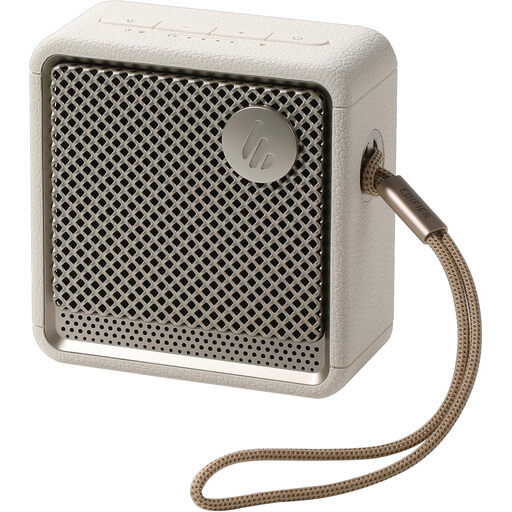
Why it suits this profile: This compact model combines Bluetooth 5.4, button controls and a stated playback time of up to 15 hours. This makes it suitable for everyday use at home, on the go or on a short bike ride.
The IP67 rating provides more specific information about dust and water protection than simply using the term “outdoor”. The lighting can be adjusted using the controls.
6 W RMS, Bluetooth 5.4, IP67, microphone, stereo pairing and ambient lighting.

Why it suits this profile: With 34 W RMS, two tweeters, a mid-low driver and a passive bass radiator, this model is aimed at users who want more volume and fuller sound at home and outdoors.
The product specifications list the drivers, RMS power and IP66 rating separately. This allows you to assess sound and protection without relying solely on a wattage claim.
34 W RMS, Bluetooth 5.4, connection to two devices, stereo pairing and up to 9 hours of stated playback time.
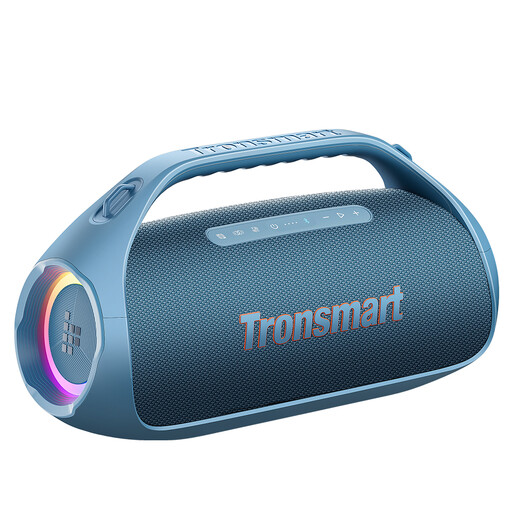
Why it suits this profile: This larger model is designed for outdoor use and groups. The handle and carry strap make it easier to transport, while the IPX6 rating is suitable for protection against powerful water jets.
The product information distinguishes between playback time with and without lighting. It also lists IPX6, so you do not confuse water protection with complete dust protection.
90 W stated power, Bluetooth 5.3, TWS pairing, lighting and up to 26 hours of stated playback time without lighting.

Why it suits this profile: Weighing 274 grams, with an adjustable carry strap and a stated battery life of up to 16 hours, this model is practical for a bag, bicycle handlebars or a day trip.
The IP67 rating specifies both dust-tightness and temporary immersion in fresh water. However, the manufacturer warns against salt water and chlorinated water.
274 grams, Bluetooth 5.3, IP67, microphone, stereo pairing and up to 16 hours of stated battery life.
We have put together a complete, up-to-date list of products that fully meet these strict selection criteria and the applicable European safety regulations.
Switch on the speaker and activate pairing mode according to the instructions. Then open the Bluetooth settings on your smartphone and select the speaker’s name. On models with Fast Pair, the connection may be quicker on supported Android devices. If pairing continues to fail, remove an old connection or switch Bluetooth off briefly and then back on.
This varies by model and usage. Volume, bass, lighting and phone calls all affect playback time. Compare the stated battery life under similar conditions. For everyday use, 8 to 16 hours may be sufficient; for longer outdoor activities, a model with a larger battery is more practical.
Only if the protection rating and instructions allow it. IP66 protects against powerful water jets, while IP67 adds protection against temporary immersion. Neither rating automatically means that use in salt water, chlorinated water or under a high-pressure jet is safe. After a wet activity, also check that the charging port is dry before connecting the speaker.
