
Vandaag of morgen in huis

Kwaliteit gegarandeerd

Welkomstaanbiedingen ontgrendelen: GRATIS bezorging | Tot 80% korting | Gratis 30 dagen JoyPlus-proefperiode
Download de app
A portable Bluetooth speaker may seem simple to choose at first glance. You pair it with your smartphone and play music. In practice, models vary considerably in volume, battery life, water protection and ease of use. A low price can be tempting, but it is not always the best value if the battery runs out quickly or the speaker is barely audible outdoors.
“Up to 20 hours” usually does not mean you will get 20 hours of music at every volume and with all features switched on. LED lighting, powerful bass, high volume and temperature all affect power consumption. So check whether the stated time applies with the lighting switched on or off.
A portable speaker with long battery life is particularly useful when you are using it on a long bike ride, at a campsite or for a full day by the water. For everyday use at home, a shorter playback time may be sufficient.
An IP rating consists of two digits or, with some models, a digit and an X. The first digit refers to protection against dust; the second refers to water.
Salt water, chlorine, high pressure and soapy water can still cause damage. Always follow the manufacturer's instructions. An IP67 Bluetooth speaker or IPX7 Bluetooth speaker is therefore suitable for certain outdoor situations, but it is not indefinitely resistant to every type of moisture.
Higher wattage may indicate greater output power, but it is not the only factor determining how well a speaker sounds. The enclosure, drivers, passive radiators, positioning and digital signal processing all play a part too. A compact 5W speaker is convenient for personal listening, while a 90W party speaker is better suited to a larger group.
Also consider the size and weight. A heavier speaker may sound more powerful, but it is less practical on a bike or during a walk.
As well as the maximum playback time, check the charging port and the conditions under which the claim applies. USB-C is practical because the same cable can often be used for other devices. Some speakers can charge a smartphone while in use, but this reduces the remaining playback time.
For a short trip, 8 to 12 hours is often enough. If you plan to use a Bluetooth speaker outdoors for several days, it is better to look for a model with a stated playback time of around 16 to 20 hours or take a power bank with you.
Bluetooth 5.3 and Bluetooth 5.4 are modern standards for wireless connections. The actual range depends on walls, other wireless signals and the connected device. Also check whether the speaker supports two devices at the same time. This is useful when several people want to play music.
A model with stereo pairing, also known as TWS, can be connected to a second identical speaker. Bear in mind that this is not the same as automatically pairing with every other brand or model.
For the beach, pool or camping, a sturdy casing, carry loop and clearly marked buttons are practical features. A rotary control can be convenient for use at home, while an app offers more settings for the equaliser and lighting.
A portable speaker with lighting can add atmosphere to a party, but LEDs use extra energy. So check the battery life with and without the light show.
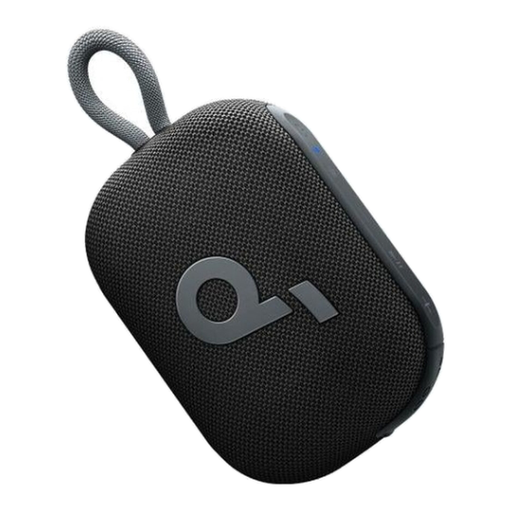
Why it suits this profile: At around 264 grams, this lightweight speaker is easy to take with you thanks to its integrated carry strap. It is well suited to walking, cycling, picnics or casual use at home.
The product specification states 20 hours of battery life and lists the IP67 rating separately. This lets you compare playback time and protection clearly, rather than relying on marketing terms alone.
5W output power, IP67 protection, a floating design and TWS pairing with a second speaker.
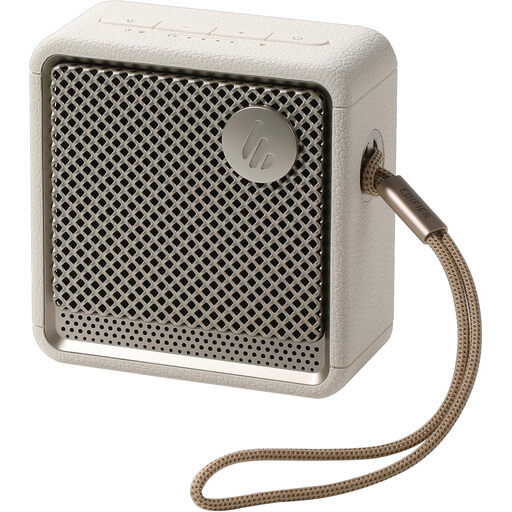
Why it suits this profile: This model combines 360° sound, ambient lighting and control via the EDIFIER ConneX app. It is ideal for listeners who want greater control over sound and features at home and on the go.
The stated 15-hour battery life is combined with an IP67 rating and a separate mention of ambient lighting. Bear in mind, however, that lighting can affect the actual usage time.
6W RMS, Bluetooth 5.4, IP67, 15 hours of stated playback time and stereo pairing.
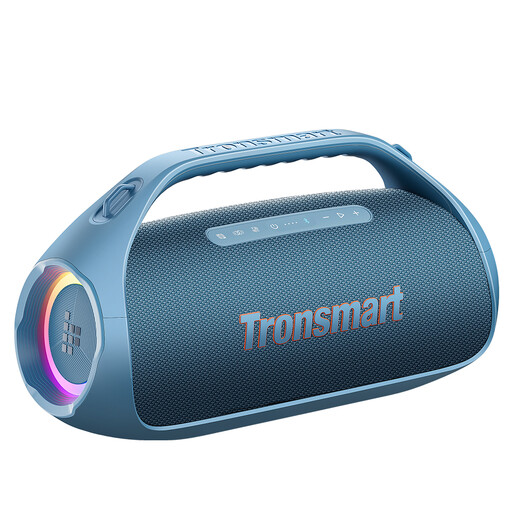
Why it suits this profile: The larger size, handle and detachable carry strap are designed for parties, garden gatherings and outdoor use with several listeners.
The product specification lists separate playback times for the LEDs switched off and on: up to 26 hours without lighting and up to 7 hours with lighting at 50% volume.
90W stated output power, IPX6, Bluetooth 5.3, adjustable equaliser and TWS support.
We have compiled a complete, up-to-date list of products that fully meet these strict selection criteria and the applicable European safety regulations.
Before ordering, check whether the speaker comes with a suitable USB-C cable, what warranty information is available and whether the control language or app works with your smartphone. Also consider the weight. A model weighing a few hundred grams is more convenient for travelling; a larger outdoor speaker may deliver more volume, but takes up more space in your bag.
Use a speaker outdoors on a stable surface and keep the ports closed whenever the instructions require this. Allow a wet device to dry completely before charging it. With lithium-ion batteries, it is advisable to avoid heat, prolonged storage at 0% and damaged cables.
Switch on the speaker and activate pairing mode. Then open the Bluetooth settings on your smartphone, tablet or laptop and select the speaker's name. A previously paired device will often reconnect automatically. If this does not work, remove the old pairing and try again.
This depends on the volume, type of music, temperature and additional features. Manufacturers usually state a maximum playback time. Lighting and high volume often reduce this time. So compare models under the same conditions and check whether the manufacturer provides figures for the LEDs switched on and off.
An IP67 rating may provide protection against temporary immersion according to the product specification, but always check the instructions. Salt water, chlorine, high pressure and prolonged use underwater may fall outside the specified conditions. Do not simply rinse a speaker without checking what the manufacturer permits.
