
Vandaag of morgen in huis

Kwaliteit gegarandeerd

Welkomstaanbiedingen ontgrendelen: GRATIS bezorging | Tot 80% korting | Gratis 30 dagen JoyPlus-proefperiode
Download de app
A portable Bluetooth speaker may seem easy to choose: connect your smartphone, press play and you’re done. In practice, speakers vary considerably in size, battery life, protection and sound reproduction. A compact speaker for your bike bag has different requirements from a portable party speaker for a garden party.
Most disappointing purchases usually result from three common pitfalls:
So first consider the situation in which you’ll use the speaker. For a bedroom or picnic, a compact Bluetooth speaker is often sufficient. For outdoor use, camping or a party, protection, volume and battery capacity are more important.
Pay attention to the stated battery life, but also check the conditions under which it was measured. A Bluetooth speaker with long battery life is practical for a day at the beach or a weekend away, but lighting, high volume and bass boost can shorten playback time.
A USB-C connection makes charging easier, as you can often use the same cable as with your other devices. Some models can also serve as a power bank. Check the product specifications to make sure this function is actually included.
For an outdoor Bluetooth speaker, the IP rating is a useful technical indication:
An IP67 Bluetooth speaker is therefore suitable for situations such as splashes, rain or a fall into shallow fresh water. Always follow the instructions in the manual. Salt water, chlorine, high pressure and charging while the speaker is wet may cause damage.
A lightweight speaker weighing around 250 to 300 grams is easy to carry in a bag or on a belt. On the other hand, a larger model often has more room for drivers and passive radiators. This can help produce fuller bass, but makes the speaker less convenient for walks or bike rides.
Also check whether the model is mono or stereo, whether two speakers can be paired wirelessly and whether an equaliser is available in an app. According to Sony’s own product information, certain models use a Sound Diffusion Processor or a ULT mode to influence sound reproduction. Treat this as a product specification rather than a guarantee that every listener will experience the same result.
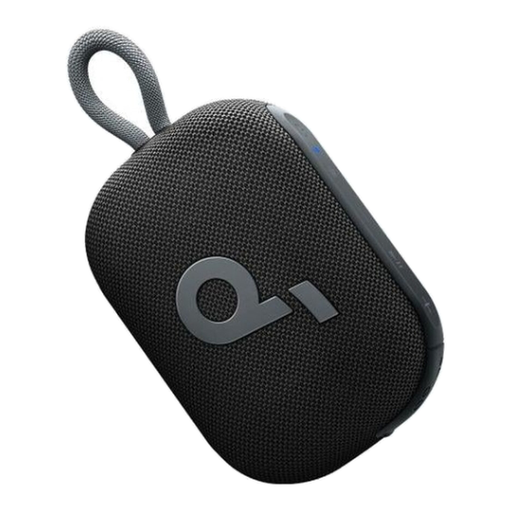
Why it suits this profile: According to the product information, this model is compact and weighs around 263,65 grams. That makes it suitable for everyday use, walks and short trips without adding much extra weight.
The specifications state up to 20 hours of playback and IP67 protection. However, check the usage conditions: the stated number of hours may vary depending on volume and content.
Stated 20-hour battery life, IP67, integrated carry loop and support for True Wireless Stereo.
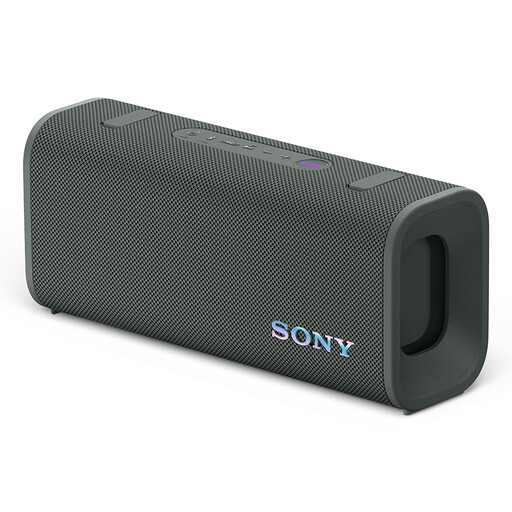
Why it suits this profile: According to the product information, the Sony ULT FIELD 3 combines a 27 W RMS specification with 24-hour battery life, an IP67 rating and a 7-band equaliser.
The battery life and protection rating are clearly stated. The ULT button can adjust the bass reproduction, but the effect depends on volume, music style and listening environment.
Stated 24-hour battery life, 27 W RMS, USB-C, 3,5mm audio input and a portable casing weighing approximately 1,2 kg.
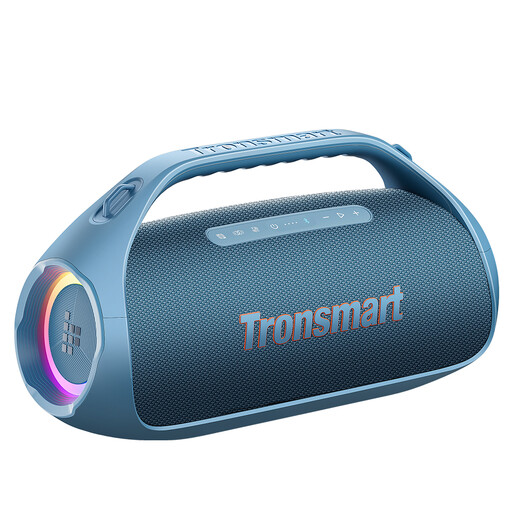
Why it suits this profile: This larger model is designed for outdoor parties and users who need more volume and features than a compact speaker can provide.
The product information states 90 W, IPX6 and up to 26 hours of battery life without lighting at 50% volume. IPX6 is not the same as IP67: immersion is not intended.
Stated 90 W output power, up to 26 hours of playback under the stated conditions, carry strap and the ability to link multiple speakers.

Why it suits this profile: Weighing 274 grams and featuring a carry strap, Bluetooth 5.3 and IP67, this model is designed to be easy to take to the park, campsite or beach.
The stated 16-hour battery life, IP67 rating and dimensions of 95 × 76 × 76 mm are clearly listed in the product details.
Stated 16-hour battery life, IP67, Bluetooth 5.3, microphone and the option to pair two speakers.
We’ve put together a complete, up-to-date list of products that fully meet these strict selection criteria and the applicable European safety regulations.
Switch on the speaker and activate pairing mode. Then open the Bluetooth settings on your smartphone or tablet and select the speaker’s name. When connecting for the first time, a confirmation may appear on screen. If the connection does not work, remove an old pairing or check that the speaker is not already connected to another device.
That depends on the volume, equaliser settings, lighting and the age of the battery. The stated duration is a guideline. For regular use, a model with a claimed playback time of at least 12 to 16 hours is practical; if you spend long days outdoors, it’s better to allow some extra margin.
First check the IP rating and the manufacturer’s instructions. According to the classification, IP67 models are suitable for temporary immersion within the stated limits, but salt and chlorine may cause damage. Never charge a speaker when the casing or connection is wet.
