
Vandaag of morgen in huis

Kwaliteit gegarandeerd

Welkomstaanbiedingen ontgrendelen: GRATIS bezorging | Tot 80% korting | Gratis 30 dagen JoyPlus-proefperiode
Download de app
A portable Bluetooth speaker may seem easy to choose: look at the power output, battery life and an attractive price. However, marketing claims can give a misleading impression. A compact model with a high wattage does not automatically sound better, and “waterproof” does not mean you can drop every speaker into the swimming pool without limitations.
For use at home, on the campsite, while cycling or at the beach, three things are particularly important: the right level of protection, realistic battery life and a size you will actually want to take with you. Below, we explain what to look out for and which popular options suit different situations.
A higher wattage may indicate greater volume, but on its own it says little about clarity, bass response or distortion. The enclosure, speaker configuration and passive radiators also play a role. So do not compare wattage alone; also consider:
A small compact Bluetooth speaker is practical for taking on the go, but it generally delivers less bass than a larger party speaker.
The IP rating consists of two digits. The first digit relates to dust, while the second relates to water. With IP67, the classification indicates that the product is dustproof and can be temporarily submerged in fresh water under the stated conditions. This does not automatically make a speaker suitable for salt water, chlorinated water or a powerful water jet.
An IP66 model is protected against dust and powerful water jets, but it does not have the same immersion rating as IP67. Always check the full product description and safety instructions.
“Up to 20 hours” or “up to 26 hours” is usually measured at a specific volume, without lighting or with limited functions active. Higher volume, bass boost, RGB lighting and phone calls reduce operating time. For a portable speaker with long battery life, it is sensible to check:
Bluetooth 5.3 or 5.4 can provide a modern, stable connection, but the overall experience also depends on your smartphone, codec, distance and obstacles. Features such as multipoint or dual-device pairing are useful when two people want to take turns playing music.
If you want to combine two speakers, check that both models support the same pairing technology. TWS or stereo pairing does not always work between different brands.
For a bike ride or short picnic, a lightweight speaker weighing around 250 to 700 grams is often more convenient than a large model. For a garden party, a heavier outdoor speaker with a handle and carrying strap may be more suitable.
Also consider the shape. An integrated strap, clip or handle means you do not need a separate bag. Check whether the speaker can be used upright, lying down or in several different positions.
Lighting is primarily an atmospheric feature. A Bluetooth speaker with lighting may have three lighting modes, while other models offer RGB effects that respond to music. This often affects battery life.
For use at home, Wi-Fi, AirPlay 2, AUX, USB and multi-room functionality may be more important than maximum water resistance. For the beach, campsite and swimming pool, IP protection, low weight and simple buttons are usually more relevant.
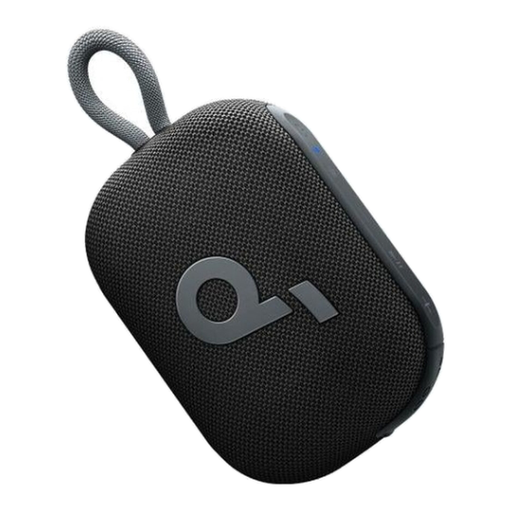
Why it suits this profile: According to the product information, this lightweight speaker weighs around 264 grams and has an integrated carrying strap. That makes it suitable for short walks, cycling and everyday use.
The IP67 rating and buoyancy provide clear protection for use at the beach and near water. The stated 20-hour playback time still depends on volume and usage.
5W output, IP67 protection and TWS pairing for two speakers.
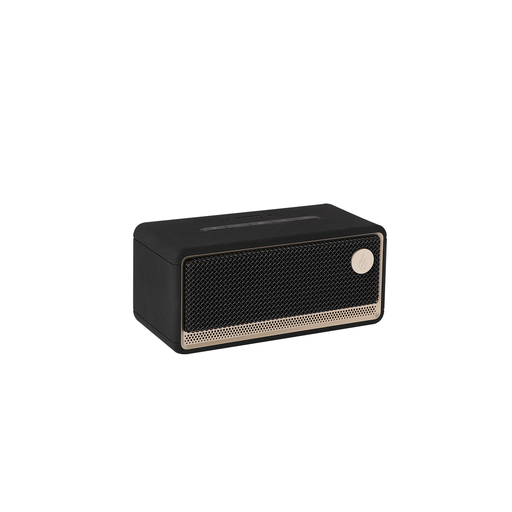
Why it suits this profile: For the living room, workspace or a permanent setup, this model offers more connection options than a basic wireless speaker.
The stated 12-hour battery life is complemented by Wi-Fi, USB and AUX. This means you are not entirely dependent on Bluetooth.
60W RMS according to the product information, AirPlay 2, LDAC, multi-room functionality and three lighting modes.
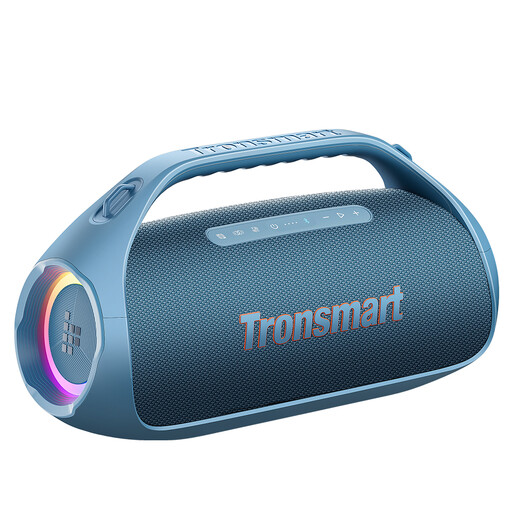
Why it suits this profile: This larger model is designed for garden parties and groups. The handle and detachable carrying strap make it easy to move, but it is heavier than a compact speaker.
The product information lists separate playback times with the LED lighting switched off and on. This clearly shows the difference between a maximum of 26 hours and a maximum of 7 hours.
90W output, IPX6 water protection, EQ control via the app and TWS pairing.

Why it suits this profile: This model combines a weight of around 274 grams with an adjustable carrying strap and a stated battery life of 16 hours.
The IP67 specification covers both dust resistance and temporary immersion. Nevertheless, use the speaker in accordance with the safety instructions and avoid prolonged contact with salt water.
Bluetooth 5.3, IP67, USB-C, microphone and pairing with a second speaker via TWS.
We have compiled a complete, up-to-date list of products that fully meet these strict selection criteria and the applicable European safety regulations.
Switch on the speaker and activate Bluetooth on your smartphone. Select the speaker’s name from the list of available devices. On models with Fast Pair or multipoint, pairing may be quicker. If the connection fails, remove the speaker from the Bluetooth list and try again.
This depends on the volume, battery capacity, codec and extra features. Lighting and heavy bass settings generally use more energy. A stated playback time of 12 to 20 hours is a maximum indication; in practice, the actual duration may be shorter.
Check the IP rating and the manufacturer’s instructions. According to the product specification, IP67 models are suitable for temporary immersion under certain conditions, but salt water, chlorine, high pressure and prolonged immersion can still cause damage. Only rinse a speaker if the manufacturer permits it, and make sure the charging port is properly closed.
