
Vandaag of morgen in huis

Kwaliteit gegarandeerd

Welkomstaanbiedingen ontgrendelen: GRATIS bezorging | Tot 80% korting | Gratis 30 dagen JoyPlus-proefperiode
Download de app
A portable Bluetooth speaker may seem easy to choose: connect your smartphone, press play and take your music outdoors. However, models vary significantly in volume, battery life, water protection and ease of use. A small speaker can be ideal for cycling, while a heavier model may be better suited to a garden party.
Pay close attention to marketing claims that do not tell the whole story. A high wattage, for example, does not automatically mean that a speaker will sound clear in every room. Similarly, “waterproof” does not mean that every model is suitable for prolonged submersion. The checks below will help you avoid buying a speaker that proves less practical than expected after just a few months.
The stated battery life is usually a maximum figure. Actual performance depends on the volume, the audio being played and features such as LED lighting. For example, the product information for the Tronsmart T7 states up to 12 hours of playback, but also says that battery life varies depending on the light display. With the lighting switched on, this can be considerably lower.
So do not just look for “long battery life”. Also check:
The letters and numbers in an IP rating indicate specific levels of protection. With IP67, the first 6 indicates complete protection against dust. According to the product specification, the 7 refers to temporary submersion under certain conditions, generally up to 1 metre for a maximum of 30 minutes. This makes an IP67 Bluetooth speaker suitable for rain, sand and an accidental drop into fresh water, but not automatically for salt water, chlorinated water or a high-pressure jet.
An IPX7 Bluetooth speaker has no stated dust-protection rating. This does not necessarily mean that the product is vulnerable to dust, but you cannot determine its dust protection from the classification. For the beach, camping or dusty cycling routes, a model with both dust and water protection is often more practical.
Output power in watts is a useful indication, but it does not tell you everything about the sound. Drivers, passive bass radiators, the enclosure and digital signal processing also have an impact. A compact Bluetooth speaker with powerful bass can sound enjoyable with modern music, but a larger model will generally offer more headroom for a group.
Also consider the dimensions and weight. An outdoor speaker weighing several kilograms is less convenient to take cycling than a model with a carry loop that weighs a few hundred grams.
A compact speaker is often sufficient for a living room, bedroom or picnic. For a Bluetooth speaker for parties, power, sound dispersion and the ability to pair two speakers are more important. TWS or stereo pairing means that two compatible speakers can work wirelessly as a stereo pair.
A 360° design spreads sound around the enclosure. This is useful when people are sitting around a table or campfire. A directional speaker, on the other hand, may sound more powerful when aimed towards the listening position.
Check the exact IP rating instead of relying solely on the word “waterproof”. Also take the manufacturer’s instructions into account. According to Sony’s product information, for example, the SRS-XB100 should be protected from prolonged exposure to salt water, chlorinated water and liquids outside the specified conditions.
For walks, travel and cycling, a carry loop, strap or integrated clip can be a practical feature. Low weight is usually more important than a large number of lighting effects. If you mainly listen at home, you may instead prefer a model with more connections, app control or higher sound output.
The recommendations below are based on verifiable product specifications and the stated usage scenario. Where a brand mentions functionality or performance, this refers to information in that brand’s product description.
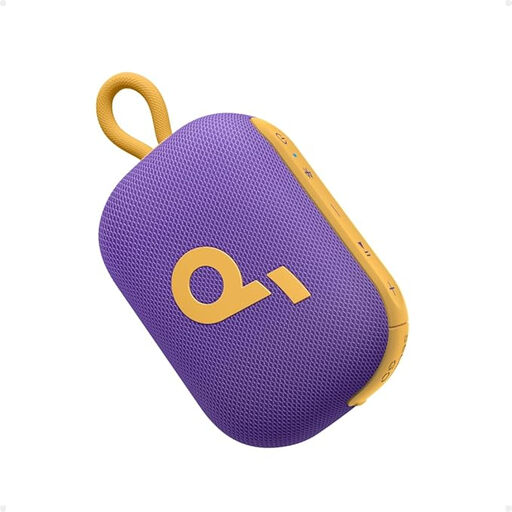
Why it suits this profile: Compact and lightweight for everyday use, travel, cycling or a walk. According to the product information, this model offers up to 20 hours of playback and can float.
The IP67 rating clearly distinguishes a general water-resistance claim from a specific level of protection. However, always pay attention to the usage conditions.
263.65 grams, carry strap, IP67, up to 20 hours according to the product information and TWS pairing.
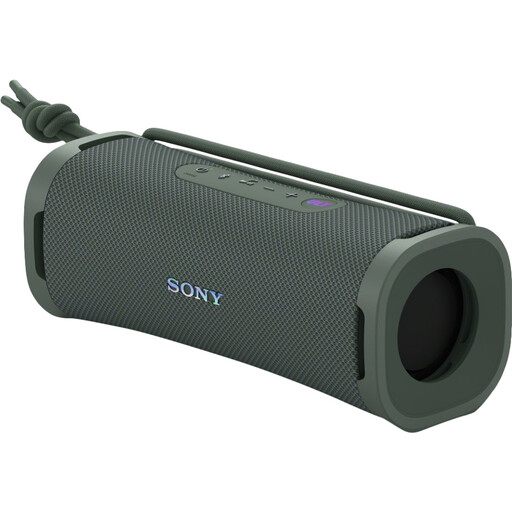
Why it suits this profile: If bass and a robust design are your priorities, the product information lists a 30W RMS model with ULT bass mode, IP67 and up to 12 hours of battery life.
The product information specifies both the RMS power and the IP67 rating. This allows you to assess volume capability and protection separately.
30W RMS, ULT bass mode, IP67, shock-resistant design and TWS support.
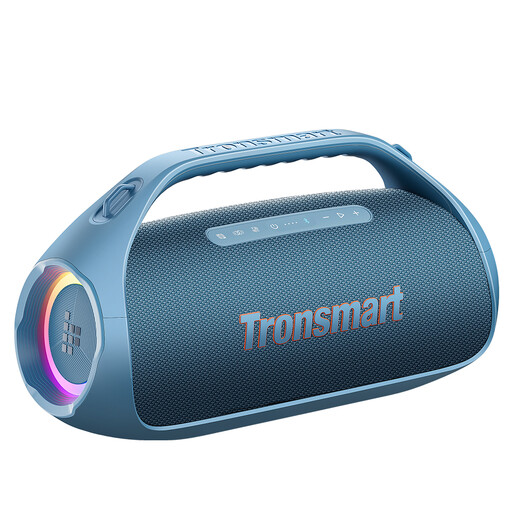
Why it suits this profile: Designed for larger gatherings where higher volume and long battery life are important. The manufacturer states up to 26 hours without LED lighting at 50% volume.
The product information gives separate battery-life figures with the LEDs switched on and off. This prevents the maximum battery claim from being interpreted without context.
90W, up to 26 hours without LEDs according to the manufacturer, IPX6, app equaliser and multi-speaker pairing.
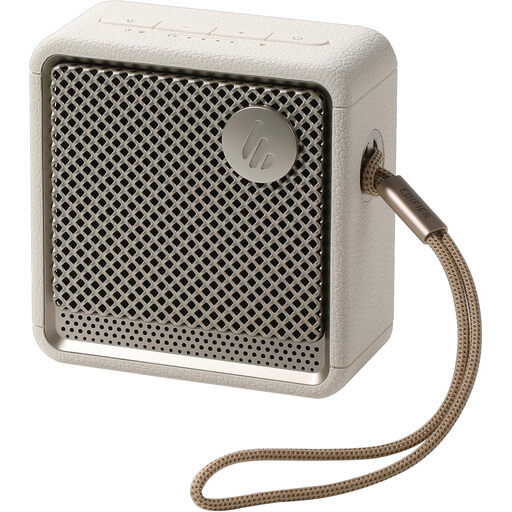
Why it suits this profile: A practical choice for anyone who wants to combine 360° sound, ambient lighting and a compact enclosure with use by the pool or while out walking.
The product description specifically mentions 6W RMS, IP67, Bluetooth 5.4 and up to 15 hours of battery life. When using the lighting, always check the actual battery life.
360° sound, RGB ambient lighting, IP67, Bluetooth 5.4, app control and stereo pairing.
We have put together a complete, up-to-date list of products that fully meet these strict selection criteria and the applicable European safety regulations.
First, charge the speaker and switch it on. If necessary, press and hold the Bluetooth or pairing button. Then open the Bluetooth settings on your smartphone, select the speaker’s name and confirm the connection. The next time, the device will often reconnect automatically.
This varies by model and usage. According to their product information, compact models often offer 12 to 20 hours at moderate volume. Higher volume, bass boost and LED lighting reduce playback time. Treat the stated hours as a guide and check whether the manufacturer specifies any conditions.
According to the classification, an IP67 or IPX7 model can withstand temporary submersion under specific conditions. Always check the manual. Salt water, chlorine, prolonged submersion and high-pressure water may fall outside the stated protection. A speaker that floats is also not automatically designed to be left unattended in the water.
