
Vandaag of morgen in huis

Kwaliteit gegarandeerd

Welkomstaanbiedingen ontgrendelen: GRATIS bezorging | Tot 80% korting | Gratis 30 dagen JoyPlus-proefperiode
Download de app
A portable Bluetooth speaker might seem simple to choose: connect your phone, press play and take it with you. In practice, models vary considerably in volume, battery life, water resistance and portability. A speaker that sounds great in your living room might not have enough power outdoors. And a product described as “waterproof” isn’t automatically suitable for prolonged exposure to water.
For UK users, three situations are particularly familiar: listening to music at home, taking a speaker on a bike ride or to the beach, and turning up the volume at a garden party. So don’t just look at the brand or appearance. Check that the specifications suit the way you plan to use it.
The stated play time is usually a maximum measured under specific conditions. A portable speaker with long battery life may play for less time at higher volumes. LED lighting also uses extra power. For example, the Tronsmart T7 is listed as offering up to 12 hours without the lights; according to the product description, this can drop to around 4 hours when the lighting is on.
So, check:
An IP67 speaker is dust-tight and, according to its rating, can withstand temporary immersion under specified conditions. An IPX7 speaker is rated for water protection, but its rating doesn’t tell you anything about dust resistance. The exact limits still matter: salt water, chlorine, high-pressure jets and an open port cover can all cause damage.
So don’t use a waterproof Bluetooth speaker underwater. After using it outdoors, check that the charging port cover is properly closed, and let the casing dry before charging it.
More power can help you achieve higher volume, but it isn’t the only factor that affects how music sounds. The driver, casing, passive radiator, digital signal processing and placement all play a part. A small speaker advertised as having powerful bass may sound different at low frequencies from a larger model.
Look out for the difference between:
For cycling, walking and travelling, a compact Bluetooth speaker weighing a few hundred grams is practical. According to the product specifications, the Sony SRS-XB100 weighs 274 grams and has an adjustable carrying strap. It can be attached to a bag, belt or bike handlebars without taking up much space.
A larger model can offer more volume and bass, but it takes up more room too. The Sony ULT FIELD 3 weighs around 1.2 kilograms and is about 25 centimetres wide. That’s a good fit for a picnic or garden party, but less convenient for carrying every day in a small rucksack.
IP67 and IPX7 ratings are useful to look out for if you’re heading to the beach, going camping or using your speaker outdoors. Also check whether the product is explicitly described as dust-resistant. A Bluetooth speaker for outdoor use should be easy to carry too: a handle, strap or clip means you won’t have to put it loose in a full bag.
Bluetooth 5.3 or 5.4 can provide a modern wireless connection, but on its own, it doesn’t tell you anything about sound quality. Check that your phone or tablet is compatible and whether the speaker supports codecs such as SBC or AAC.
A USB-C port is handy, as many UK households already use chargers and cables with this connection. A model with a microSD card reader, such as the Tronsmart T7 according to the product information, also gives you another way to play music when you don’t want to use your smartphone.
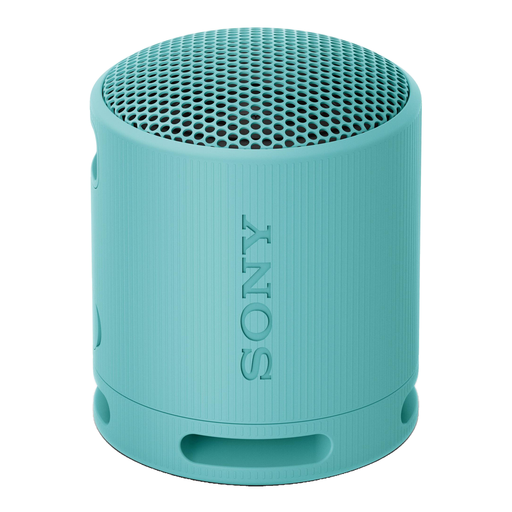
Why it suits this profile: This model is lightweight, has a carrying strap and offers up to 16 hours of battery life according to the product specifications. It’s a good choice for everyday use at home, on the go or on a short bike ride.
Its compact size, USB-C connection and IP67 rating make it a straightforward choice. The stated play time is clearly presented as a maximum, not a guaranteed duration at every volume.
274 grams, Bluetooth 5.3, IP67, a microphone for hands-free calls and support for pairing with a second speaker.
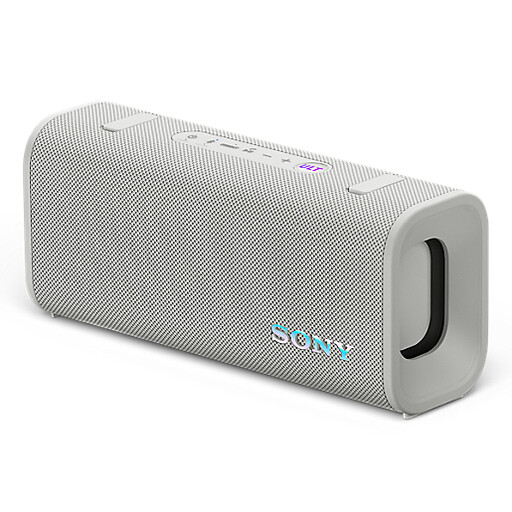
Why it suits this profile: For anyone looking for more volume and bass at a garden party, on holiday or in a larger outdoor space. According to the product description, this model offers 27 W RMS power, an equaliser and up to 24 hours of battery life.
The stated RMS power gives you a clearer indication than a marketing term such as “powerful” on its own. The equaliser lets you adjust the sound for indoor or outdoor use.
27 W RMS, IP67, stated battery life of 24 hours, 3.5mm audio input and power bank function.
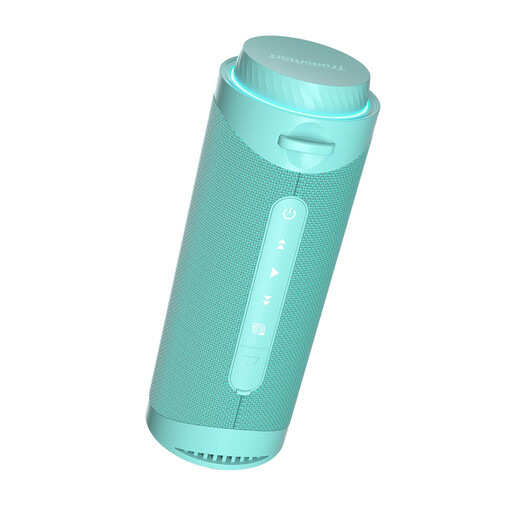
Why it suits this profile: This outdoor speaker is designed for parties, camping and use around the home. According to the product information, it combines 30 W of output power with LED lighting, TWS and IPX7 water protection.
The product description lists play time separately with and without the lighting. This helps you factor in the extra power used by the lights when making your choice.
30 W, Bluetooth 5.3, IPX7, rhythm-synchronised LEDs, microphone and stereo pairing capability.
We’ve put together a complete, up-to-date list of products that meet these strict selection criteria and current European safety regulations.
Turn on the speaker and activate pairing mode. Then open the Bluetooth settings on your smartphone and select the speaker’s name. You may see a confirmation prompt on your screen the first time you connect. Keep the speaker and phone close together while pairing.
It varies by model and how you use it. The products in this guide state a maximum play time of around 9 to 24 hours. High volume, LED lighting and calls can reduce battery life. So always check the conditions under which the manufacturer states the battery life.
Yes, these ratings indicate protection against certain types of water exposure. IP67 also means the speaker is fully dust-protected. Make sure you use the speaker within the stated limits, close any port covers securely and avoid prolonged contact with salt water, chlorine or high-pressure water.
