
Vandaag of morgen in huis

Kwaliteit gegarandeerd

Welkomstaanbiedingen ontgrendelen: GRATIS bezorging | Tot 80% korting | Gratis 30 dagen JoyPlus-proefperiode
Download de app
A portable Bluetooth speaker seems easy to pick: connect your phone, press play and you’re done. Yet many purchases disappoint. A compact speaker may not go as loud as you expect, quoted battery life often only applies at low volume, and “waterproof” doesn’t automatically mean you can safely leave it in the pool.
Use these practical checkpoints to compare a wireless speaker on things that genuinely matter in everyday use. Then you’ll find recommendations for different situations, from travel and beach days to parties and extended outdoor use.
A higher wattage doesn’t tell the whole story. The enclosure design, the drivers used and how the speaker disperses sound all play a part. Check whether power is listed as RMS power, and whether there’s information on channel count and speaker configuration.
A powerful Bluetooth speaker with 27 W RMS is a different proposition to a compact speaker with lower output. For background music in a bedroom, lots of power isn’t necessary. For a garden party or a larger room, it can be relevant.
The IP rating consists of two digits. The first is for dust protection, the second for water. With IP67, the 6 denotes full dust protection and the 7 denotes temporary immersion under specified conditions.
That doesn’t mean you can use a waterproof Bluetooth speaker in a swimming pool for prolonged periods. According to Sony’s product information, IP67 covers immersion in fresh water up to 1 metre for a maximum of 30 minutes, when the port cover is properly closed. Salt water, chlorinated water, high-pressure water jets and charging while the device is wet can still cause issues.
A claim like “24 hours of play” is usually a maximum. The actual result depends on volume, audio content, equaliser settings and lighting. On some models, the chosen sound mode also affects play time.
So check the stated battery life and your usage. For a day trip, 12 to 16 hours may be enough. For camping or several days away from mains power, a Bluetooth speaker with long battery life and possibly a power bank function is more practical.
A compact speaker should actually be easy to take with you. Consider:
A low weight can mean less maximum volume and bass headroom. So don’t choose on portability alone if you want to play music in a large outdoor space.
USB-C is a practical charging standard nowadays, as many phones, tablets and accessories use the same cable. Also check:
Bluetooth 5.3 or Bluetooth 5.4 mainly relates to the wireless link and compatibility. It doesn’t by itself guarantee a certain loudness or a specific sound quality. Also check whether your phone or tablet supports the codec you want. In the supplied product specs, several models mention AAC and SBC.
For a bedroom, kitchen or desk, a small mono speaker is often sufficient. For a party, stereo, more drivers or the ability to pair two speakers can be more appealing.
Look out for features such as:
According to Sony’s own product information, the Sound Diffusion Processor in the SRS-XB100 disperses sound in multiple directions. That’s a brand claim about its operation; treat it as a described feature and compare it with your own listening preferences, not as a guarantee of a specific experience.
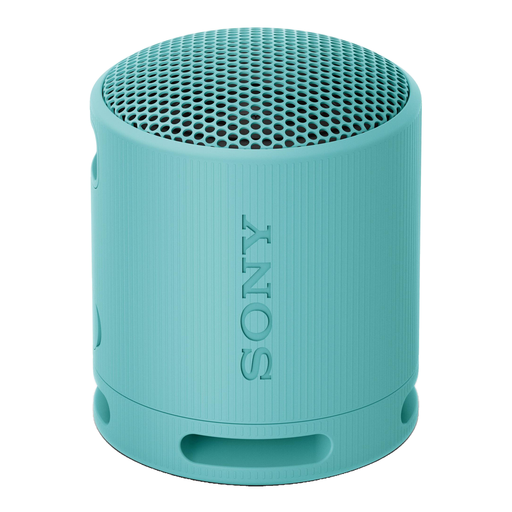
Why it fits this profile: This lightweight Sony Bluetooth speaker weighs 274 grams, has Bluetooth 5.3 and a quoted battery life of up to 16 hours. That makes it suitable for phone use at home, on the go or during short outdoor activities.
The IP67 specification is more concrete than the word waterproof alone. Battery life, dimensions and weight are listed separately, so you don’t have to rely purely on a marketing term.
274 grams, up to 16 hours of battery life, USB-C, IP67, built-in microphone and pairing with a second compatible speaker.
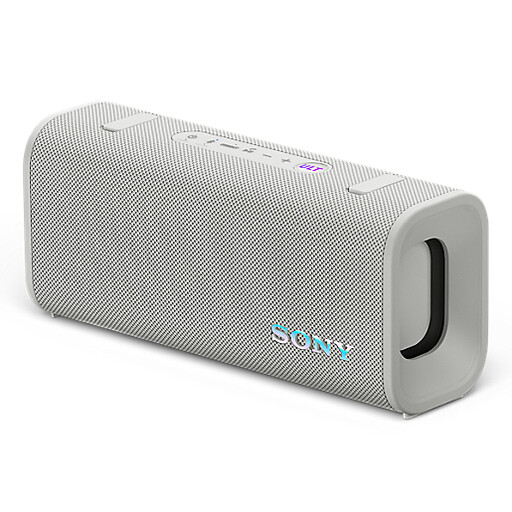
Why it fits this profile: The ULT FIELD 3 combines 27 W RMS, a quoted battery life of up to 24 hours and a 7‑band equaliser in the app. Weighing around 1.2 kilograms, it’s aimed at users who want portability with more volume.
This model lists RMS power as well as dimensions, weight and battery life. The IP67 rating must still be used as instructed; it doesn’t make the speaker suitable for unlimited submersion.
27 W RMS, up to 24 hours of battery life, IP67, 3.5 mm audio input, power bank function and adjustable equaliser.
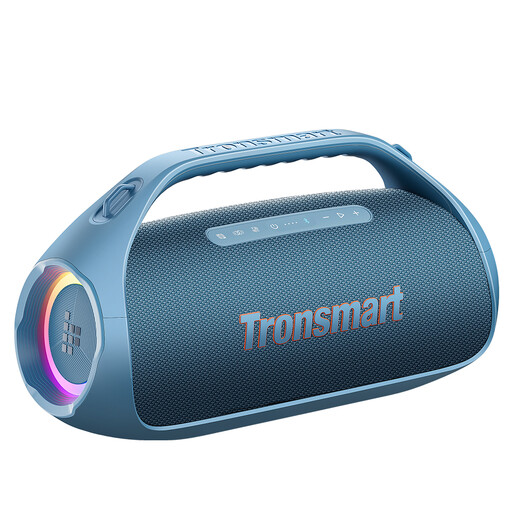
Why it fits this profile: According to the product information, this outdoor speaker is designed for larger gatherings. It offers 90 W output, up to 26 hours of battery life with lighting off, and a carry strap.
The product spec distinguishes between playback with and without LED lighting. It also lists IPX6: protection against powerful water jets, but no dust rating and no stated submersion.
90 W, up to 26 hours at 50% volume with LEDs off, IPX6, TWS pairing, in‑app equaliser and USB‑C charging port.
We’ve compiled a complete, up-to-date list of products that fully meet these strict selection criteria and comply with current European safety regulations.
Switch the speaker on and activate pairing mode. Then open Bluetooth settings on your smartphone or tablet and select the speaker’s name. On first connection, a confirmation may appear on screen. If it doesn’t work, remove an old pairing and try again. Keep the speaker close to your mobile device while pairing.
The service life of the built-in battery depends on charge cycles, temperature, volume and storage. The stated play time is a usage indication, not a fixed guarantee. Don’t store a Bluetooth speaker completely flat for long periods and avoid heat. Use a suitable USB‑C charger, and only charge a wet device once it’s fully dry.
Yes, an IP67 model is designed with dust protection and temporary immersion within the stated conditions. Close port covers firmly and follow the manual. After use at the beach, it’s wise to remove sand and salt residues; an IP rating doesn’t automatically prevent wear from salt, chlorine, drops or prolonged exposure to rain.
