
Vandaag of morgen in huis

Kwaliteit gegarandeerd

Welkomstaanbiedingen ontgrendelen: GRATIS bezorging | Tot 80% korting | Gratis 30 dagen JoyPlus-proefperiode
Download de app
A portable Bluetooth speaker may seem simple to choose: just look at the size, colour and battery life. In practice, the most important differences often lie in the details. A speaker might claim a long playtime that only applies at low volume, for example, or be water-resistant without being suitable for prolonged submersion.
Whether you’re using it at home, on the go, on holiday or while camping, three things matter most: the right IP rating, realistic battery life and a size you’ll actually want to take with you. Read on to find out what to look for and which models suit different situations.
A stated playtime isn’t a guarantee that applies to every situation. Volume, lighting, equaliser settings and the type of music all affect power consumption. The Tronsmart Bang 2, for example, is listed as offering up to 26 hours of playtime with the lights off and the volume at around 50%. With the lights on, the product specifications state up to 7 hours.
So, check:
The word “waterproof” doesn’t tell you enough on its own. Check the IP rating. The first digit indicates protection against dust; the second indicates protection against water.
So, an IP67 Bluetooth speaker is suitable for situations such as rain, sand or a brief drop into fresh water, as long as you follow the manufacturer’s instructions. Also check that the port covers are firmly closed. Salt water, chlorinated water, high-pressure jets and charging the speaker while it’s wet can still cause damage.
More watts don’t automatically mean a compact speaker will sound better. The speaker design, passive radiators, casing and positioning also affect the sound. A compact Bluetooth speaker with a single audio channel is practical for personal use, but won’t create the same stereo sound as two linked speakers.
Look out for the difference between:
For the beach, camping and cycling trips, some protection against moisture and dust is useful. According to the stated product specifications, a waterproof Bluetooth speaker with an IP67 rating is protected against dust and temporary immersion. Be sure to use the speaker within the limits set out in the manual.
A speaker weighing between 250 and 700 grams is generally easier to carry than a large party model weighing several kilos. As well as battery life, look for a strap, handle or attachment point. The Sony SRS-XB100, for example, weighs 274 grams and has an adjustable strap. The Sony ULT FIELD 1 weighs around 650 grams and offers more power, but takes up more space too.
Bluetooth 5.3 or 5.4 is listed for various models. The quality of the connection also depends on your smartphone, tablet or laptop, as well as your surroundings. Check whether you need:
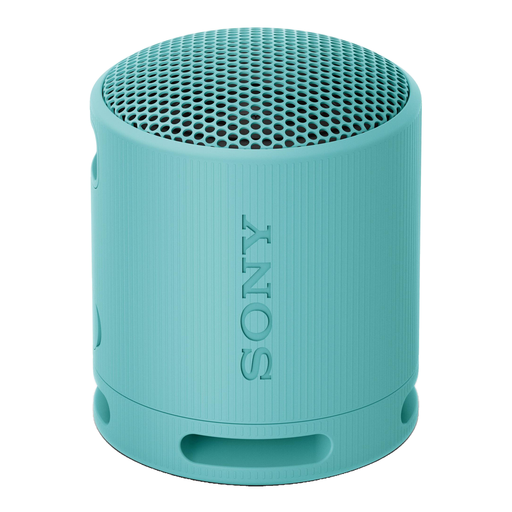
Why it suits this profile: A lightweight model for listening to music from your smartphone at home, on a walk or on holiday, without having to carry a bulky speaker.
The product specifications state a 16-hour battery life, IP67 rating and weight of 274 grams. If you use it near water, be sure to check the conditions in the manual.
Bluetooth 5.3, USB-C, built-in microphone, TWS pairing and an adjustable strap.
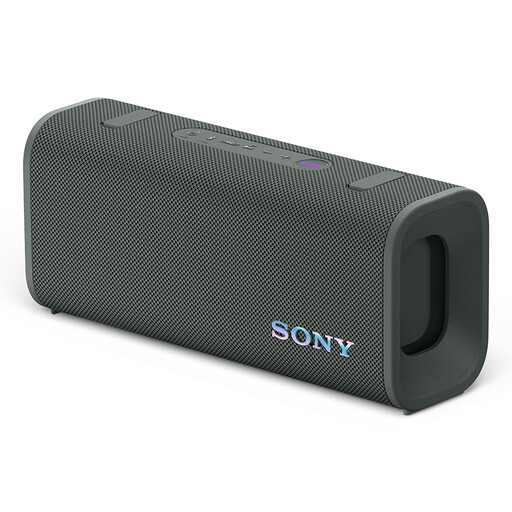
Why it suits this profile: For anyone looking for a portable speaker with more power, an equaliser and a dedicated bass mode for outdoor use.
The product information lists IP67, 24 hours of battery life and a 7-band equaliser. Performance may vary depending on volume and usage settings.
27 W RMS, USB-C, 3.5mm audio input, power bank function and a weight of around 1.2 kg.
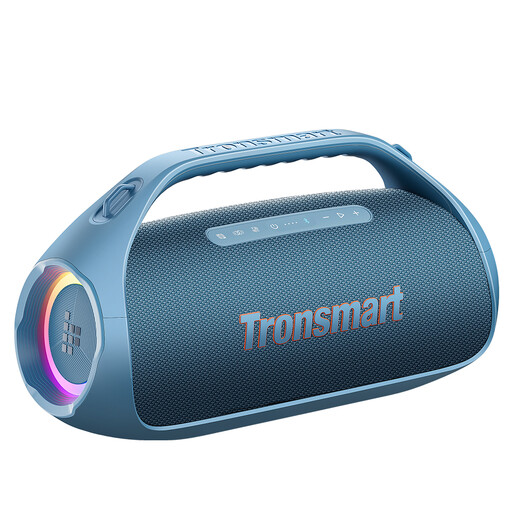
Why it suits this profile: A larger outdoor speaker for garden parties and groups, where volume, portability and long playtime are important.
The product specifications distinguish between the IPX6 rating, volume and lighting. This means you can’t assess the stated 26 hours without taking the usage conditions into account.
90 W stated output, Bluetooth 5.3, TWS and multipairing options, handle and detachable strap.
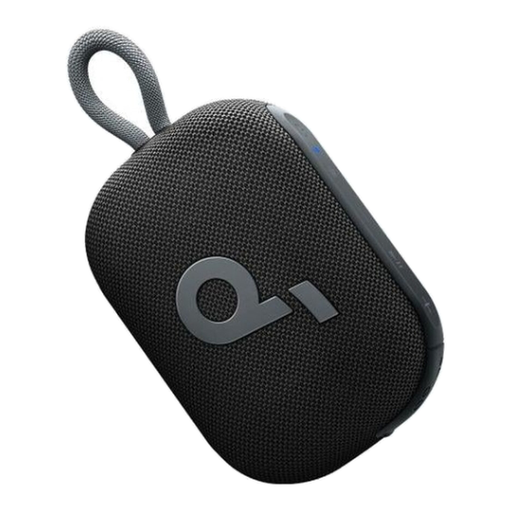
Why it suits this profile: Its low weight and built-in carrying loop make this model a good choice for walks, cycling, trips to the beach and short outings.
The stated specifications list 20 hours of battery life, an IP67 rating and a weight of around 264 grams. This makes the key portability and protection details easy to check.
5 W stated power, floating design, IP67, 20 hours of battery life and stereo pairing.
We’ve put together a complete, up-to-date list of products that meet these strict selection criteria and the applicable European safety regulations.
Switch on the speaker and activate pairing mode. Then open the Bluetooth settings on your smartphone, tablet or laptop and select the speaker’s name. You may need to confirm the connection or enter a PIN the first time you connect. Keep your device nearby while pairing and check that the volume is set correctly on both devices.
It depends on the battery capacity, volume, equaliser settings and any lighting. A stated battery life of 12, 16 or 20 hours is therefore a guide rather than a guarantee. If you use your speaker outdoors regularly, it’s a good idea to choose a model with some battery life to spare, such as a Bluetooth speaker with long battery life, and switch it off after use.
Yes. According to the rating, an IP67 model is protected against dust and temporary immersion within the stated limits. Make sure the covers are firmly closed, don’t charge the speaker when it’s wet, and only rinse off salt or chlorinated water if the manufacturer permits it. The IP code never replaces the product’s safety instructions.
