
Vandaag of morgen in huis

Kwaliteit gegarandeerd

Welkomstaanbiedingen ontgrendelen: GRATIS bezorging | Tot 80% korting | Gratis 30 dagen JoyPlus-proefperiode
Download de app
A portable Bluetooth speaker can seem straightforward to choose at first glance. Yet many buyers are swayed by a low price, a high wattage or an eye-catching design without checking whether the speaker suits their everyday use. The result: a battery that drains quickly, insufficient protection against moisture, or sound that doesn’t really carry outdoors.
Joybuy’s Product Recommendation Officer filters the key product specifications and sets the most common pitfalls alongside practical buying criteria.
Higher power can indicate a higher maximum volume, but it doesn’t automatically tell you how clear the music will sound. The enclosure, speaker size and tuning also matter. A small Bluetooth speaker with a single driver is mainly intended for personal listening or a small room. For a garden party or a larger group, a more substantial model makes more sense.
So don’t focus only on wattage; also consider:
A waterproof Bluetooth speaker with an IP67 rating is dust-tight and, by that rating, suitable for temporary immersion in fresh water. That doesn’t mean you can leave it under water for long periods. Salt water, chlorinated water, high-pressure jets and an open charging flap can all cause damage.
After outdoor use, check that the protective flap is properly closed. Only charge a speaker once it is completely dry.
A stated playtime, such as 16 or 24 hours, depends on volume, the Bluetooth connection and the type of music. At higher volumes, runtime usually drops. Also look at the charging port. USB-C is now practical for many households, as you can often use the same cable for other devices.
For cycling, walking or travel, it’s not just the dimensions that matter, but also the weight and how you carry the speaker. An integrated carry loop or adjustable strap saves you from having to hold the speaker in your hand all the time.
A compact portable speaker of roughly 250 to 700 grams usually slips easily into a bag. Heavier models often deliver more volume and bass, but are less convenient to take with you every day.
The letters and numbers in an IP code each have a role:
An IP67 Bluetooth speaker is therefore a good fit for the beach, camping or use in a damp environment. However, the rating doesn’t protect against every type of liquid or against damage from drops.
Bluetooth 5.2 or 5.3 offers a current wireless connection, but also check the supported codecs and the controls. For everyday use, these features are handy:
A wireless Bluetooth speaker doesn’t use mobile data during normal playback once the music on your phone, tablet or laptop has started. The batteries of both devices are still being used, of course.
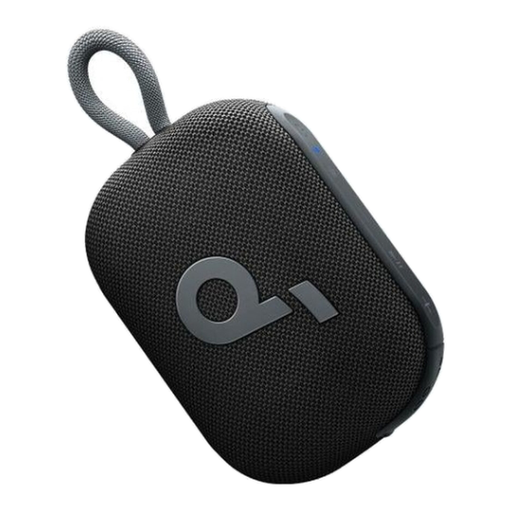
Why this fits the profile: A lightweight model for smartphone use, walks and short trips. The quoted battery life is up to 20 hours and the weight is around 264 grams.
The IP67 rating makes it clearer what the enclosure is designed for than the vague term “water-resistant”. Do still check that the ports are closed.
Quoted 20-hour battery life, 5 W audio power, integrated strap, IP67 and TWS pairing.
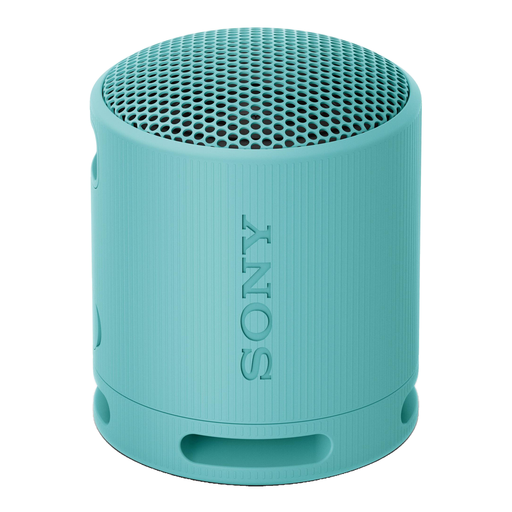
Why this fits the profile: A compact Sony Bluetooth speaker for home, on the go and outdoor use, weighing 274 grams and supplied with an adjustable carry strap.
The product information lists concrete details: IP67, Bluetooth 5.3, USB-C and up to 16 hours of battery life. According to Sony, the Sound Diffusion Processor spreads the sound in multiple directions.
Quoted 16-hour playtime, IP67, AAC and SBC codecs, microphone and the option for TWS pairing.
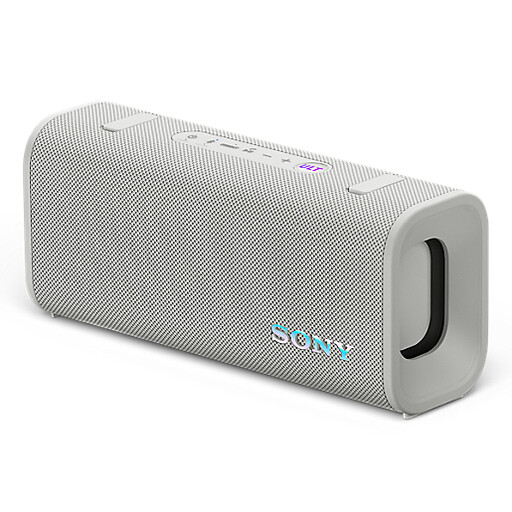
Why this fits the profile: For outdoor use, longer days and users who want more volume and bass than a small speaker typically offers.
The specifications make the size and weight explicit: approximately 1.2 kg, 27 W RMS and IP67. That makes it clear this model is portable, but not intended as an ultra-light speaker for every bike ride.
Quoted 24-hour battery life, 27 W RMS, 7-band equaliser, power bank function and 3.5 mm input.

Why this fits the profile: Handy for anyone who wants to use FM radio, AUX, a USB stick or microSD as well as Bluetooth – for example on a campsite or in a workspace.
The inputs and playback options are clearly described. At the same time, the product information doesn’t list an IP rating; don’t pick this model if water and dust resistance are required.
Bluetooth 5.3, 8 W power, FM radio, AUX, USB and microSD support, and a quoted playtime of up to 20 hours.
We’ve compiled a complete, up-to-date list of products that fully meet these stringent selection criteria and the applicable European safety regulations.
Choose a compact Bluetooth speaker if you mainly listen in a bedroom, kitchen, student room or hotel room. For a Bluetooth speaker for outdoor use, IP67, a carry loop and a quoted battery life of at least 12 hours are useful starting points. If you’re mainly after a Bluetooth speaker with powerful bass, look for larger drivers, passive radiators, RMS power and an equaliser.
Before buying, also check:
Switch the speaker on and activate pairing mode. Then open the Bluetooth settings on your smartphone, tablet or laptop and select the speaker’s name. For a first connection, you may need to confirm on both devices. Leave Bluetooth on if you want to reconnect automatically later.
That depends on the battery capacity, volume level, features in use and the battery’s age. Products in this round-up list playtimes of roughly 12 to 24 hours, but these times are maximum figures from the product information. At high volumes or when using extra features, the actual runtime can be lower.
Bluetooth itself doesn’t carry subscription costs. You do use the batteries in your phone and speaker. Music streaming over mobile data can consume data; downloaded music or audio via a local USB or microSD source doesn’t use mobile data during playback.
