
Vandaag of morgen in huis

Kwaliteit gegarandeerd

Welkomstaanbiedingen ontgrendelen: GRATIS bezorging | Tot 80% korting | Gratis 30 dagen JoyPlus-proefperiode
Download de app
A portable Bluetooth speaker may seem simple to choose: select a size, check the wattage and consider the price. In practice, speakers vary considerably in battery life, protection against water and dust, sound distribution and connectivity options. A model that sounds great on a desk is not automatically suitable for a day at the beach, a camping trip or a garden party.
With this practical selection guide, you can compare a wireless Bluetooth speaker based on verifiable features. This helps you avoid paying mainly for lighting, a high wattage figure on the packaging or an over-promising product name.
Higher wattage does not automatically mean that a Bluetooth speaker will sound better in every room. The number of drivers, cabinet construction, passive bass radiators and their positioning also affect the listening experience. A compact 5W speaker may be suitable for personal use, while a larger model with multiple drivers may be a better choice for a party.
So don’t just look for terms such as Bluetooth speaker with powerful sound. Also check the RMS power, size and speaker configuration.
A waterproof Bluetooth speaker is not necessarily resistant to salt water, high-pressure jets or prolonged submersion. The IP rating indicates the conditions against which the product has been tested according to the stated standard.
For example:
Always check the manual. For example, the Sony SRS-XB100 manual states that exposure to salt water, chlorinated water and high-pressure water should be avoided, despite its IP67 rating.
A Bluetooth speaker with long battery life will usually achieve its stated play time under specific conditions. Volume, bass level, Bluetooth connection and LED lighting all affect power consumption. For example, the Tronsmart Bang 2 states up to 26 hours at 50% volume with the LED lighting switched off, but up to 7 hours with the lighting switched on at the same stated volume.
So consider how you intend to use the speaker. Six hours may be enough for a short cycle ride. For a full day outdoors, 12 to 20 hours is more practical.
For travel and outdoor activities, three points are important:
According to the product information, the Soundcore Select 4 Go offers up to 20 hours of play time. The Sony SRS-XB100 states up to 16 hours and the Edifier ES20 up to 15 hours. These are manufacturer claims; actual battery life may vary.
A compact Bluetooth speaker is not only easy to carry, but often also produces a smaller volume of sound. Consider:
According to the product specifications, the Soundcore Select 4 Go weighs approximately 264 grams. The Sony SRS-XB100 weighs around 274 grams and has an adjustable carrying strap. This makes both models suitable for walking, cycling or travelling.
With stereo pairing or TWS, you can wirelessly connect two compatible speakers. This can create a wider stereo effect, but check that both units are exactly the same model and that the manufacturer supports the feature.
Bluetooth 5.3 or 5.4 can provide a modern connection, but range also depends on walls, obstacles and the connected device. Additional connections such as AUX, USB or a microSD card are useful if you do not want to play music exclusively from a smartphone.
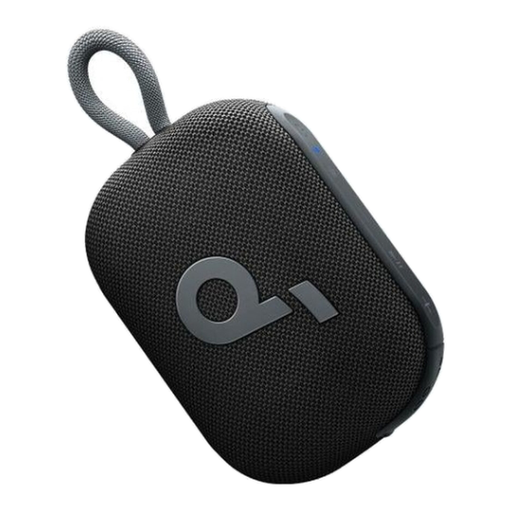
Why it suits this profile: This lightweight model is designed for simple wireless listening at home, while walking or on a picnic.
The product information states 5W of audio power, up to 20 hours of play time and IP67. This makes the key specifications clearer than a standalone claim of “powerful sound”.
Approximately 264 grams, integrated carrying loop, IP67 rating and TWS pairing for two speakers.

Why it suits this profile: A good choice for anyone who wants more sound headroom and expansion options at home, at a party or outdoors.
Rather than just quoting a wattage figure, the specifications list several concrete components: 34W RMS, dual tweeters, a mid-low driver and IP66.
Bluetooth 5.4, simultaneous connection to two devices, stereo pairing, USB-C and up to 9 hours of play time.
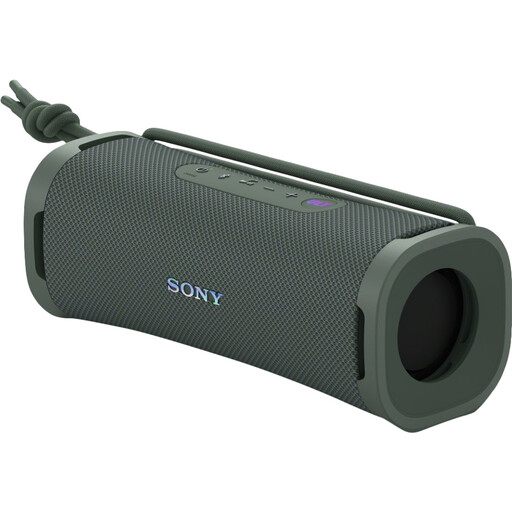
Why it suits this profile: This model is aimed at outdoor users who value a robust housing, portability and additional bass control.
The protection is specified as IP67, and according to the product information, the speaker is also designed to withstand shocks. However, always check the usage limits in the manual.
30W RMS, up to 12 hours of battery life, Bluetooth 5.3, USB-C and support for pairing with a second speaker.
LED lighting is mainly useful for creating an atmosphere at a party. A Bluetooth speaker with LED lighting will often use more energy as a result. Check whether the lighting can be switched off and whether the effects can be adjusted using buttons or an app.
For home use, the Edifier ES300 may be an interesting option thanks to Bluetooth, Wi-Fi, AirPlay 2, USB and AUX. The product information also states 60W total output power, up to 12 hours of battery life and ambient lighting. For a computer desk, the Edifier G1500 speakers make more sense: they feature USB, AUX, Bluetooth 5.3 and RGB lighting, but are less suited to being carried around.
We’ve put together a complete, up-to-date list of products that fully meet these strict selection criteria and the applicable European safety regulations.
Switch on the speaker and activate pairing mode. Then open the Bluetooth settings on your smartphone, tablet or laptop and select the speaker’s name. When connecting for the first time, you may need to confirm the pairing. Keep the device close to the speaker during the pairing process.
Its lifespan depends on charging habits, storage conditions, moisture, drops and battery quality. Charge the speaker using the recommended cable, do not leave it completely flat for long periods and allow an outdoor model to dry thoroughly after use. A stated battery life does not indicate how many charging cycles the battery will last.
This varies by model and brightness level. For example, the Tronsmart Bang 2 product information states a significantly shorter play time when the LED lighting is switched on. Turn the lighting off when you mainly need a long play time.
