
Vandaag of morgen in huis

Kwaliteit gegarandeerd

Welkomstaanbiedingen ontgrendelen: GRATIS bezorging | Tot 80% korting | Gratis 30 dagen JoyPlus-proefperiode
Download de app
A portable Bluetooth speaker is handy at home, on holiday, in the park or at a party. Yet many models look more similar on paper than they do in use. A high wattage claim, for example, doesn’t tell you everything about sound quality, and “water-resistant” doesn’t automatically mean you can use a speaker underwater for a long time.
Use this practical guide to focus on the specifications that really make a difference in the UK. That way, you can avoid paying for features you’ll hardly use or choosing a speaker that doesn’t suit the way you listen.
Claimed play time usually applies at a particular volume and with extra features, such as lighting, switched off. So, even a speaker with long battery life may not last as long in real-world use if you listen at a higher volume, switch on the lights or stream outdoors.
So don’t just look at the number of hours. Check:
An IP67 speaker is completely dust-tight and, according to its rating, suitable for temporary immersion to a specified depth and for a specified time. That makes it suitable for use in the rain or by the pool, but it doesn’t mean it can withstand salt water, chlorine, high-pressure jets or an uncovered charging port indefinitely.
Always check the full IP rating. A waterproof Bluetooth speaker must also be dry before you charge it. Make sure the protective covers are properly closed before using it outdoors.
A compact speaker is easy to carry around, but a small enclosure has physical limitations. So look at the number of speaker drivers, the RMS power and features such as passive radiators. These give you more useful context than a standalone marketing phrase such as “powerful bass”.
A mono speaker can be perfectly good for personal listening. For a wider stereo sound, a model with stereo pairing or two linked speakers may be a better choice.
Bluetooth 5.3 or 5.4 can provide a modern, stable connection, but your experience also depends on your smartphone, tablet or laptop. Check that the speaker supports the codecs you want. Many models in this range use AAC and SBC.
Also look out for extra connections. A USB-C port is mainly for charging. A 3.5mm jack, USB stick or microSD support can be useful if you don’t always want to stream from your phone.
For everyday use, 8 to 12 hours is often enough. If you spend long days outdoors, it may be worth looking at models with a stated play time of 16, 20 or 24 hours. Bear in mind that volume, bass mode and lighting can all affect battery life.
Weight determines whether a speaker is truly portable:
For a Bluetooth speaker for outdoor use, a sealed enclosure and a suitable IP rating are important. IP66 protects against dust and powerful jets of water. IP67 adds protection against temporary immersion. IPX6, as found on some party speakers, indicates water resistance but says nothing about dust protection.
No rating means you can skip normal care. Wipe away sand and moisture, keep the connections clean and follow the manufacturer’s instructions.
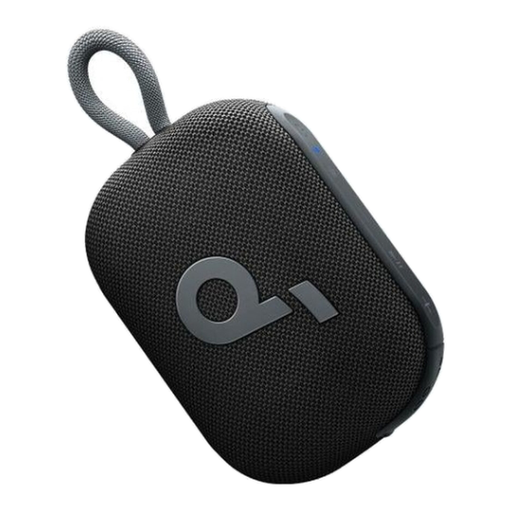
Why it suits this profile: This compact speaker weighs around 264 grams and has an integrated carry loop. That makes it suitable for everyday use, cycling, walking and short trips.
The product description states a play time of up to 20 hours and IP67 protection. Make sure the port is closed, and bear in mind that actual play time depends on volume and use.
IP67, around 5 W sound output, TWS pairing and a stated battery life of up to 20 hours.
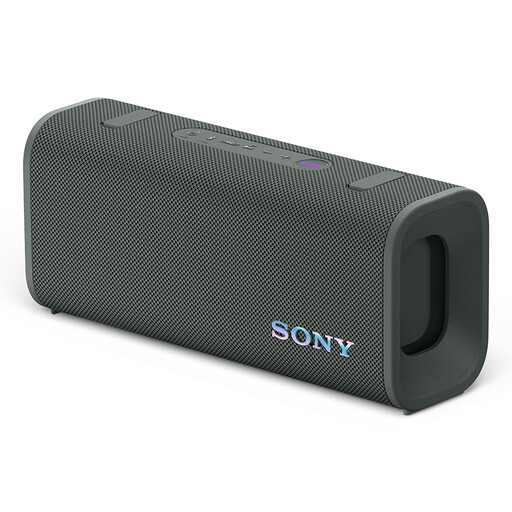
Why it suits this profile: This model is designed for listeners who want more power and options for adjusting the sound at home, in the garden or for a larger group.
The specifications list 27 W RMS, IP67 and battery life of up to 24 hours. According to Sony, ULT mode is designed to emphasise low frequencies. The effect may vary depending on the music and volume.
27 W RMS, stated battery life of 24 hours, 7-band equaliser, USB-C and 3.5mm audio input.
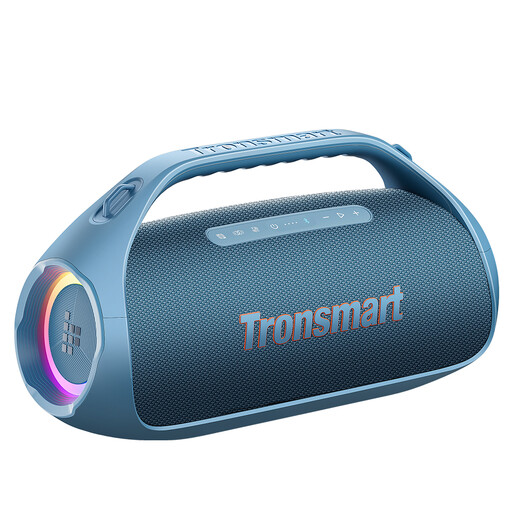
Why it suits this profile: With its higher stated power and larger size, this outdoor speaker is well suited to parties, garden get-togethers and groups of several listeners.
The product details state 90 W, IPX6 and up to 26 hours of play time with the lights switched off. Play time can be significantly shorter with the lights on and the volume turned up.
90 W stated power, Bluetooth 5.3, TWS, LED lighting and up to 26 hours of play time under the stated conditions.
We’ve put together a complete, up-to-date list of products that meet these strict selection criteria and current European safety regulations.
Switch on the speaker and activate pairing mode. Then open the Bluetooth settings on your smartphone, tablet or laptop and select the speaker’s name. On some Sony models, Fast Pair can speed up the connection to compatible Android devices. Disconnect unused devices if the speaker automatically pairs with another one.
It depends on the volume, music file, Bluetooth connection and extra features. A model with a stated battery life of 12 to 24 hours may not last as long when playing loudly or with the lights on. Charge the speaker using the supplied cable and don’t leave it completely flat for long periods.
IP67 means that, according to its rating, the device can be temporarily submerged under specified conditions. It’s not an invitation to take it swimming or leave it in water for a long time. Salt water, chlorine, sand and a port that isn’t properly closed can cause damage. Always check the manual and dry the speaker completely before connecting it to the charger.
