
Vandaag of morgen in huis

Kwaliteit gegarandeerd

Welkomstaanbiedingen ontgrendelen: GRATIS bezorging | Tot 80% korting | Gratis 30 dagen JoyPlus-proefperiode
Download de app
A portable blender seems simple: add the ingredients, press the button and drink. In practice, portable blenders vary considerably in motor power, capacity, battery life and ease of cleaning. A compact model can be useful for the office or gym, but may be less suitable for frozen fruit. A high-powered blender, on the other hand, can take up unnecessary space if you usually make just one small smoothie.
As a Joybuy Product Recommendation Officer, I therefore focus mainly on verifiable product specifications. Below, you’ll learn which pitfalls to avoid and which type of portable blender, blender to go or mini blender best suits the way you use it.
Brands often highlight the number of rotations per minute. This figure is useful, but it doesn’t tell you how long the appliance can run continuously, which ingredients it is suitable for or how much liquid it needs. A compact cordless blender can work perfectly well with soft fruit and yoghurt, but may struggle with large ice cubes or fibrous vegetables.
Therefore, always check:
According to the product description for the Nutribullet Flex, this model is suitable for ice and frozen ingredients. This is a manufacturer’s product specification, not a general guarantee that every recipe will have the same consistency.
A drinking cup with a leak-proof lid is useful in a bag, but check whether this refers to the blending cup, the drinking lid or both. The lid must also be fully tightened, and the seal must be kept clean. Test a new blender with water first before carrying it filled in your work bag.
Also pay attention to the blade design. With some models, you need to replace the blade assembly with a drinking lid. This is practical, but it does mean you’ll need to carry an extra part or keep it at home.
A rechargeable blender doesn’t depend on a mains socket, but battery life varies depending on the model and how it is used. According to the product description, the Nutribullet Portable provides more than 15 blends after around one hour of charging. The Xiaomi Portable Blender EU has a USB-C connection and a capacity of 400 ml, but the product information provided does not state how many blends it can make per charge.
So don’t just look for “cordless”. Also check:
For one smoothie, 400 to 600 ml is usually practical. A smaller cup is lighter and fits more easily in a rucksack. With 590 ml, you have more room for liquid, fruit and ingredients such as porridge oats. If you want to make a larger portion or two small portions, it’s better to look at 700 ml or more.
Pay attention to the difference between total and usable capacity. The Tefal Minimix has a total jug capacity of 1 litre and a usable capacity of 700 ml. The included Tritan travel bottle has a capacity of 810 ml. These figures therefore refer to different components.
An electric smoothie blender with a cord generally has more continuous power than a mini blender with a battery. The models in this selection range from 150 W for the Ninja Blast to 600 W for the Nutribullet Original. Cordless models often state battery voltage or rotation speed instead of wattage.
Use wattage as a guideline, not as the only point of comparison:
According to the product information, the Ninja Blast BC251EUGY has a 150 W motor, a rechargeable USB battery and two 530 ml cups. The Nutribullet Original is a 600 W corded model with a 700 ml cup.
BPA-free Tritan is mentioned in several product descriptions. It is lightweight and designed for reusable drinking cups. Also check whether the components are dishwasher-safe. This often applies to the cup and lid, but not to the motor base or blade assembly.
A removable blade assembly makes cleaning easier, but the blades are sharp. Unplug the appliance or remove the charging cable before cleaning. Do not immerse the motor base in water. Do not blend hot or carbonated drinks if the manufacturer advises against it, as pressure may build up.
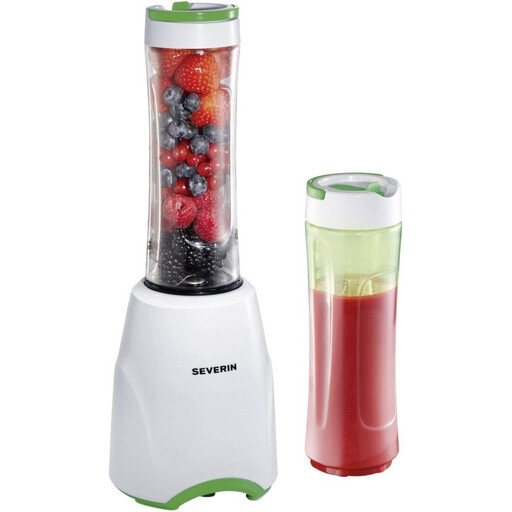
Why it suits this profile: This model is ideal for anyone looking for a straightforward smoothie maker with drinking cups for use at home or in the office. It is corded, so it doesn’t depend on a battery.
There’s no need to estimate unclear battery life. The blender has 300 W, two speeds and two removable 600 ml Tritan cups.
300 W power, two speeds, two cups and dishwasher-safe components according to the product description.
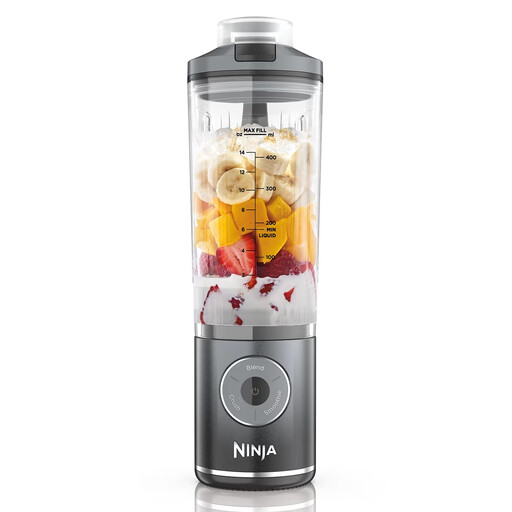
Why it suits this profile: For users who want a cordless blender for work, travel or the gym, with more than one cup included in the set.
The product description states that it has a leak-proof lid and a rechargeable USB battery. Before transporting it, always check that the lid is locked securely.
150 W motor, two BPA-free 530 ml Tritan cups, one-touch operation and dishwasher-safe components according to the product information.
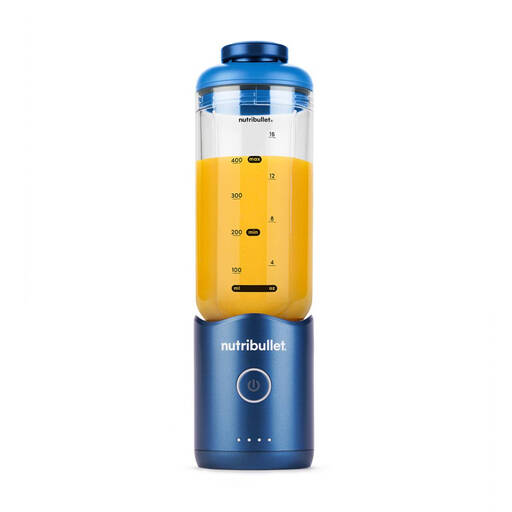
Why it suits this profile: The Flex is aimed at users who regularly blend on the go and value a compact cup, USB-C charging and a removable blade assembly.
The 3-stage LED indicator shows the charging status. The product description also states that it is suitable for ice and frozen ingredients.
590 ml capacity, 7.4 V battery, USB-C charging cable and removable blade assembly. The cup must be fully extended before use.
We’ve put together a complete, up-to-date list of products that fully meet these strict selection criteria and the applicable European safety regulations.
This varies by model. Check whether the manufacturer explicitly states that it is suitable for ice or frozen ingredients. The product description for the Nutribullet Flex mentions both uses. For models without this information, it’s safer to use soft fruit and plenty of liquid.
This depends on the portion size, ingredients and blending time. According to the product description, the Nutribullet Portable provides more than 15 blends after around one hour of charging. Treat this as the stated product specification; actual usage may vary.
A corded model uses electricity while blending and doesn’t have a battery that needs charging. A rechargeable blender also uses electricity, but through its battery and charger. The difference in daily energy consumption is usually less important than the purchase price, capacity and number of preparations. Above all, choose based on where you want to use the blender and which ingredients you usually prepare.
