
Vandaag of morgen in huis

Kwaliteit gegarandeerd

Welkomstaanbiedingen ontgrendelen: GRATIS bezorging | Tot 80% korting | Gratis 30 dagen JoyPlus-proefperiode
Download de app
Making a smoothie in the kitchen is easy. Taking a blender to the office, gym or train, however, calls for different features. A portable blender needs to be compact, securely sealed and equipped with enough battery power. Otherwise, it can quickly end up unused in a kitchen cupboard.
Pay particular attention to these three common pitfalls:
The right choice therefore depends on how you intend to use it. If you want to make one smoothie a day, a cordless mini blender is often a good fit. For multiple portions, ice cubes or daily use, a larger personal blender with mains power may be more practical.
For one person, a capacity of around 400 to 600 ml is usually a sensible choice. That is enough for a smoothie or protein shake while keeping the appliance compact. For example, the Xiaomi Portable Blender has a stated capacity of 400 ml. Nutribullet Portable models offer approximately 475 ml, while the Nutribullet Flex and Ninja Blast list 590 ml and 2 x 530 ml respectively.
Check the dimensions as well. A blender for use on the go should fit into a rucksack or gym bag without taking up unnecessary space. A handle, as found on some Nutribullet models, can make it easier to carry. A wide cup is more stable, but generally takes up more room.
A rechargeable blender works without a power socket, but the battery determines how flexible it really is. Look at:
According to the Nutribullet Portable product description, a charge of around one hour can support more than 15 blending cycles. This is a manufacturer specification, not a universal guarantee of use; actual runtime depends on the ingredients, temperature and blending time.
A USB-C blender is convenient for commuters and travellers, but check that the charging port is dry before connecting the appliance. Only use the cable and adapter specified as suitable in the instructions.
Not every smoothie blender is suitable for frozen fruit or ice. The Nutribullet Flex states that it supports ice and frozen ingredients. According to the product information, the Xiaomi Portable Blender is mainly intended for smoothies, shakes and juices; the specifications do not mention an ice function.
With compact models, add the liquid first, followed by soft ingredients. Hard pieces of fruit, large ice cubes and overfilling can put strain on the motor. Always check the maximum fill marking.
Also consider the materials and maintenance requirements. BPA-free Tritan is listed as the cup material for several models. This describes the stated material, rather than making a health or nutritional claim. A removable blade makes cleaning easier, but sharp components require extra care. The motor base must not be submerged.
The following choices are based on verifiable information from the product descriptions, such as capacity, power supply, materials and included accessories.
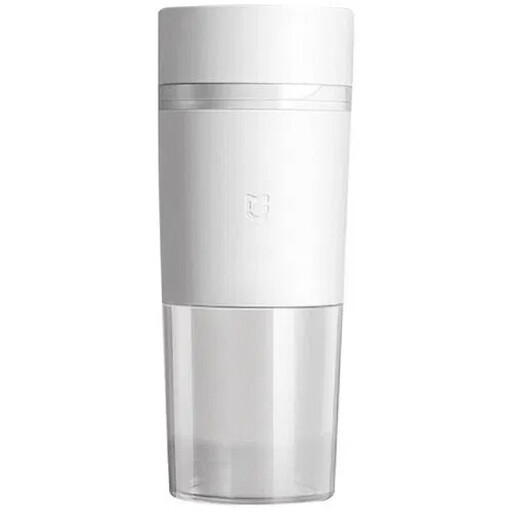
Why it suits this profile: The 400 ml capacity and USB-C connection are well suited to users who occasionally want to use a compact smoothie blender at the office, at home or while travelling short distances.
The product information clearly states that it is battery-powered and has a USB-C charging port. Its limited capacity makes overfilling less likely, but it is less suitable for large portions.
400 ml capacity, rechargeable battery and USB Type-C. The specifications also warn against hot liquids and submerging the motor base.
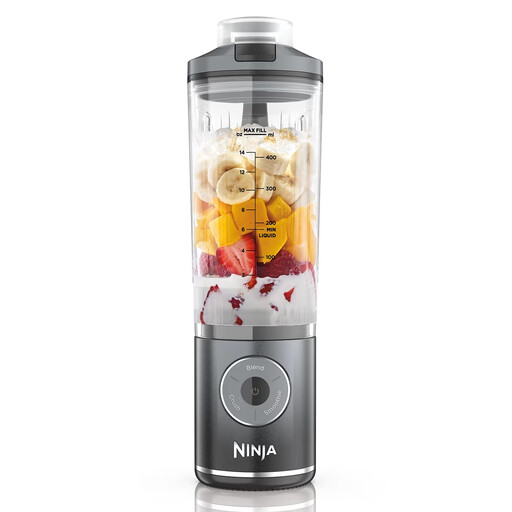
Why it suits this profile: This cordless blender combines a stated motor power of 150 W with two 530 ml Tritan cups. That is practical if you regularly make smoothies and want to use an extra cup.
The product description mentions a leak-proof lid design, one-button operation and dishwasher-safe parts. Before carrying it, still check that the lid is properly locked.
150 W, two 530 ml cups, USB charging and a compact design. According to the product information, the cups are made from BPA-free Tritan.
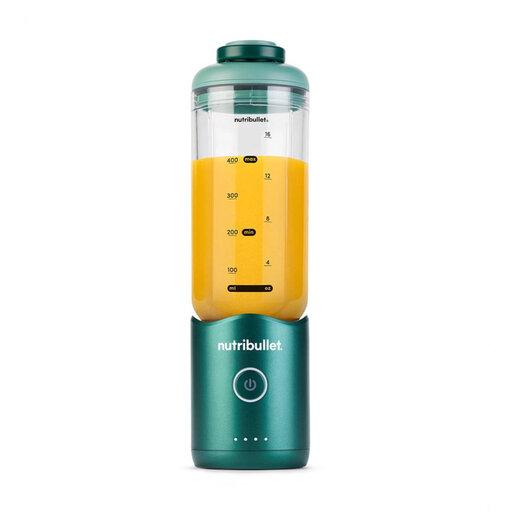
Why it suits this profile: The 590 ml capacity is suitable for a generous individual portion. The product information lists a rechargeable battery, USB-C and a removable blade.
The removable blade makes maintenance easier, while the three-part LED indicator shows the charge level. The instructions remain the definitive guide for ice, frozen ingredients and maximum blending time.
590 ml capacity, 17,000 revolutions per minute according to the product specifications, USB-C and a dishwasher-safe removable blade.

Why it suits this profile: This model runs on mains power, so it is not a cordless blender for use on the go. It is, however, suitable for anyone who wants to blend at home and take the cup with them afterwards.
The product description mentions a replaceable drinking lid, a safety feature and dishwasher-safe removable parts. The power cord makes this model less suitable for travelling.
250 W power, 500 ml Tritan cup, stainless-steel blades and a non-slip base.
We have put together a complete, up-to-date list of products that fully meet these strict selection criteria and the applicable European safety regulations.
Switch off the appliance and disconnect the charging cable. Remove the cup and blade according to the instructions. Rinse the removable parts with water and a little washing-up liquid immediately after use. Only put parts in the dishwasher when this is expressly stated. Keep the motor base and USB-C port dry.
Its lifespan depends on charging habits, ingredients and frequency of use. Do not drop, open or expose a built-in lithium battery to extreme heat. Do not use the blender for extended periods without liquid, and follow the maximum blending time specified in the instructions. Products in this selection are generally offered with a statutory guarantee of at least 2 years; this does not represent a fixed expected lifespan.
A USB-rechargeable blender uses relatively little electricity per charge, but the difference in energy costs is usually limited. The main saving is convenience: you do not need a power socket and can prepare a single portion directly in the drinking cup. For multiple portions or heavy ingredients, a corded blender may work more efficiently. Choose based on how you use it every day, rather than on the battery label alone.
