
Vandaag of morgen in huis

Kwaliteit gegarandeerd

Welkomstaanbiedingen ontgrendelen: GRATIS bezorging | Tot 80% korting | Gratis 30 dagen JoyPlus-proefperiode
Download de app
A portable blender might seem simple at first: add your ingredients, press a button and enjoy your drink. But some models can disappoint in everyday use. The cup might be too small for a full smoothie, the battery could run flat just when you need it, and a stylish leakproof lid isn’t always suitable for carrying in a bag for long periods.
Use this buying guide to compare the key features of a blender to go, including capacity, power source, battery, ease of cleaning and drinking lid. That way, you can choose a portable blender to suit home, office, gym or travel.
Brands often list the number of revolutions per minute. This is a measurable specification, but it doesn’t guarantee a smooth result. The shape of the cup, the blades, the amount of liquid and the order in which you add the ingredients all play a part too.
A cordless blender running at 17,000 rpm may be suitable for soft fruit and shakes. For lots of frozen ingredients, however, check the product information to see whether it’s specifically suitable for ice or frozen fruit. Never use hot or fizzy drinks if the instructions say not to.
A 590 ml or 700 ml cup can’t necessarily be filled to the brim. Always leave room for blending and follow the maximum fill line. Around 400 to 600 ml is often practical for one smoothie. If you want to make two portions at once, look for a larger personal blender or a model that comes with extra cups.
Some compact smoothie blenders have a cup with a drinking lid but need to be plugged into a socket. That may be fine on a small kitchen worktop, but less convenient at the gym or on a train. Check whether the model has a rechargeable battery, a USB-C connection or a mains cable.
A blender with a drinking cup holding 400 to 500 ml is suitable for one smaller portion and takes up little space. Models with a capacity of around 590 to 710 ml offer more room for a meal replacement shake or a larger smoothie, but are usually longer or heavier.
Look out for:
For mains-powered models, power is usually given in watts. A smoothie blender rated at 250 to 400 watts is designed for everyday drinks made with soft ingredients. Models rated at 600 watts or more are generally worth considering if you regularly want to blend seeds, firm vegetables or frozen ingredients.
With a cordless model, you may see a voltage rating such as 7,4 V instead of watts. So don’t compare cordless and mains-powered models on a single figure alone. Check which ingredients are suitable, how long you can blend for and what the manufacturer recommends. Nutribullet’s own information says that some Flex models are suitable for ice and frozen ingredients. Always follow the instructions for use.
A rechargeable blender is only useful if the battery has enough charge. Check the stated charging time and the number of blends per charge. For example, the Nutribullet Blender To Go lists a charging time of around one hour and more than fifteen blends per charge. This is based on the product information; the actual number will depend on how you use it and which ingredients you blend.
A USB-C blender is handy at the office, in the car with a suitable adapter or when travelling. Just make sure the motor base and charging port don’t get wet. A detachable blade unit and dishwasher-safe parts can save time, but check which components can and can’t go in the dishwasher.
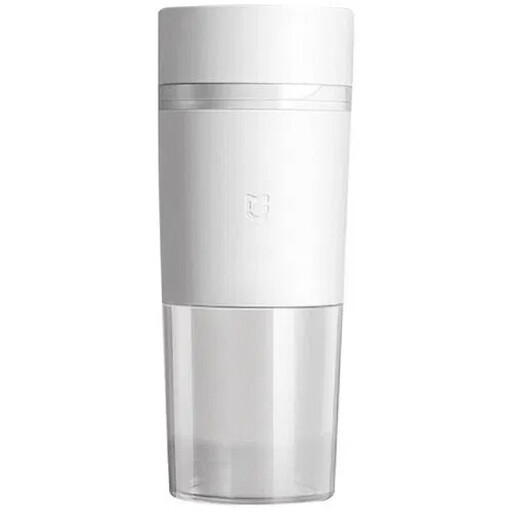
Why it suits this profile: The 400 ml capacity is ideal for a single smoothie, and its compact size suits anyone short on space.
The product information clearly states that it has a 400 ml capacity and a rechargeable USB-C battery, so you won’t accidentally choose a mains-powered model.
400 ml capacity, rechargeable and USB-C. Check which cable is included and the maximum fill line before buying.
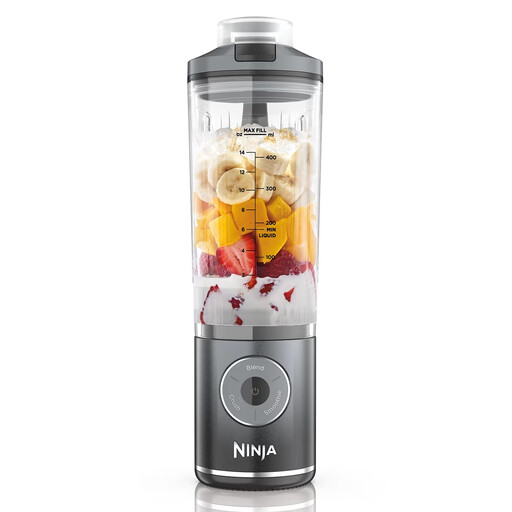
Why it suits this profile: This model pairs a 150 W motor with two 530 ml Tritan cups, making it suitable for use at home, in the office or on the go.
The set includes two cups, a leakproof design and USB charging, so you’re not limited to making just one drink at a time.
Two 530 ml BPA-free Tritan cups, one-button operation and dishwasher-safe parts, according to the product description.
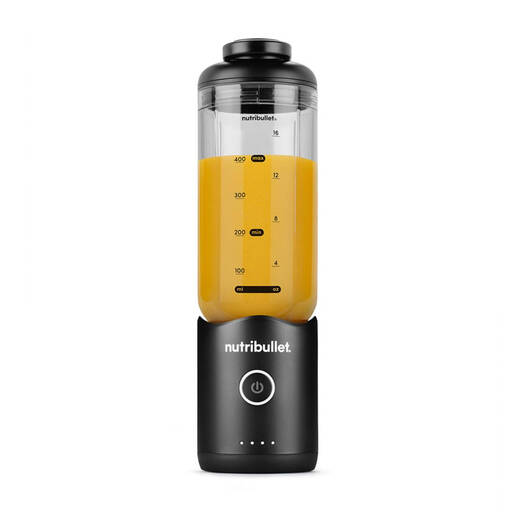
Why it suits this profile: The 590 ml cup, detachable blade unit and suitability for ice and frozen ingredients, according to the product description, make it a good fit for regular use.
The detachable blade unit makes cleaning more straightforward. The LED indicator shows how much battery charge remains.
590 ml capacity, 7,4 V battery, USB-C charging and a foldable design, according to the product specifications.
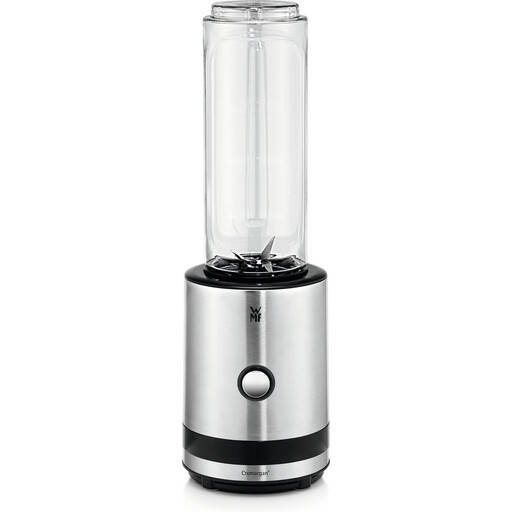
Why it suits this profile: This mains-powered model is ideal if you mainly blend at home and want to take your smoothie with you afterwards.
The product description lists two 600 ml drinking cups and leakproof lids, so there’s no need to pour your smoothie into another container after blending.
300 W power, 23,000 rpm, two cups and dishwasher-safe drinking bottles, according to the product information.
We’ve put together a complete, up-to-date list of products that meet these strict selection criteria and the applicable European safety regulations.
It depends on the model. Check whether the manufacturer specifically says it’s suitable for ice or frozen ingredients. Always add enough liquid, and don’t use pieces that are larger or harder than the instructions allow.
Battery life depends on its capacity, the ingredients and how long you blend for. Manufacturers sometimes state how many blends you can make per charge. Treat this as a guide and fully charge the appliance before using it for the first time.
A rechargeable blender uses relatively little electricity per blend. The main ongoing costs are usually ingredients, replacing the blade unit if needed and the battery’s lifespan. Clean the cup as soon as you’ve finished using it and stick to the maximum blending time to help prevent unnecessary wear.
