
Vandaag of morgen in huis

Kwaliteit gegarandeerd

Welkomstaanbiedingen ontgrendelen: GRATIS bezorging | Tot 80% korting | Gratis 30 dagen JoyPlus-proefperiode
Download de app
A portable blender may seem simple at first glance: add the ingredients, press the button and you’re done. However, small differences in battery life, cup design, blade construction and cleaning can have a major effect on everyday use. A model that’s ideal for making a smoothie at the office may not be suitable for frozen fruit or ice.
So don’t just look for terms such as “powerful”, “compact” or “for on the go”. Above all, check the specifications and usage limitations.
With a cordless blender, power isn’t always stated in the same way. Some brands quote wattage, while others list revolutions per minute or battery voltage. What’s more, a higher figure doesn’t automatically mean that every ingredient will be processed without difficulty.
A rechargeable blender with a small cup is mainly intended for a single serving. For frozen fruit, nuts or ice, check whether the manufacturer explicitly says that these ingredients are suitable. Always use enough liquid and don’t fill the cup above the indicated marking.
A blender with a travel cup can be carried safely in a bag, but only if the lid is tightened properly and the seal is clean. Check whether the product has a separate drinking lid and whether the cup is actually designed for transport. A blender lid with a blade unit isn’t always the same as a sealable to-go lid.
With a mini blender, removable parts are practical. However, the motor base must generally not be immersed in water. Check whether the cup, lid and blade parts are dishwasher-safe. With a cordless model, the charging port must also be kept dry.
Sharp blades require extra care. Unplug or disconnect the charging cable, switch off the appliance and never touch the blade edges with your fingers. Don’t blend hot or carbonated liquids if the instructions prohibit this.
For one smoothie, 400 to 600 ml is often practical. According to the product information, the Xiaomi Portable Blender EU has a capacity of 400 ml. The Nutribullet Portable models offer approximately 475 ml, while the Nutribullet Flex is listed as having a capacity of 590 ml.
A larger cup is useful for a post-workout shake or a longer train journey, but it also takes up more space. Also look out for the difference between total capacity and usable capacity. For example, the Tefal BL16GE30 is listed with a usable capacity of 0.7 litres, alongside a larger total jug capacity.
A 150 to 300-watt motor may be suitable for soft ingredients such as banana, yoghurt and soft fruit. On paper, a model with 400 watts or more offers greater reserves for larger portions. However, the blade shape, liquid ratio and maximum operating time remain important.
If you’re looking for a smoothie blender that can also process frozen ingredients, look for a clear product specification or instructions confirming this. According to the Nutribullet Flex product description, this model can process frozen ingredients and ice. Always check the instructions before adding hard ingredients.
A corded blender, such as a 400 or 600-watt model, may be more powerful than a compact battery blender. The trade-off is that you need a power socket. So decide whether you mainly prepare drinks at home and take them with you afterwards, or whether you genuinely want to blend while out and about.
A USB-C blender is convenient if you already carry a suitable charger, power bank or laptop. However, check whether USB-C is actually included and whether the appliance may only be charged with a specific cable.
The Nutribullet Portable product information states an approximate charging time of one hour and support for more than 15 blends. This is a claim from the brand’s product information and isn’t a guarantee for every usage situation. The ingredients, portion size and age of the battery all affect the result.
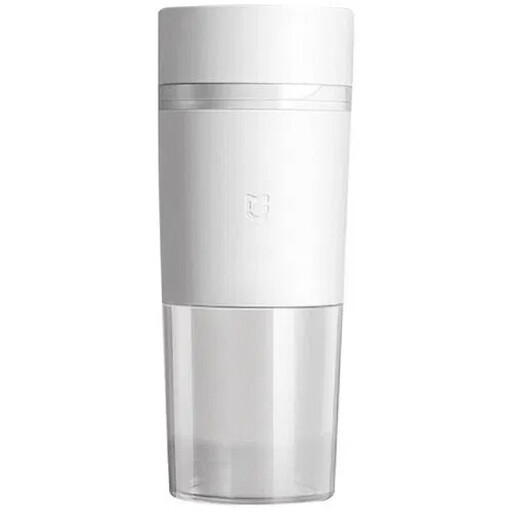
Why it suits this profile: The 400 ml capacity is suitable for a single serving, while the compact design is ideal for use at the office, during a short break or while out and about.
The product information lists a rechargeable battery and USB Type-C connection. Before buying, check the included cable and the charging instructions.
400 ml capacity, portable design and USB Type-C according to the product specifications.
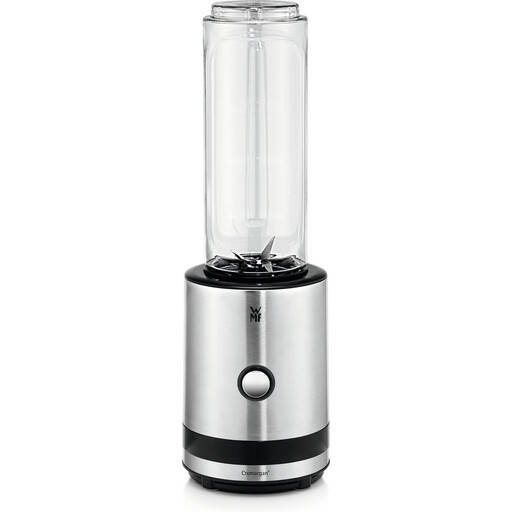
Why it suits this profile: This model combines a stainless steel housing with two 600 ml Tritan drinking bottles, making it convenient for regular use at home and on the go.
The product description mentions a leakproof drinking lid, non-slip design and a safety feature that only allows blending when the jug is positioned correctly.
300 watts, four stainless steel blades, 23,000 rpm according to the product information, and dishwasher-safe bottles.
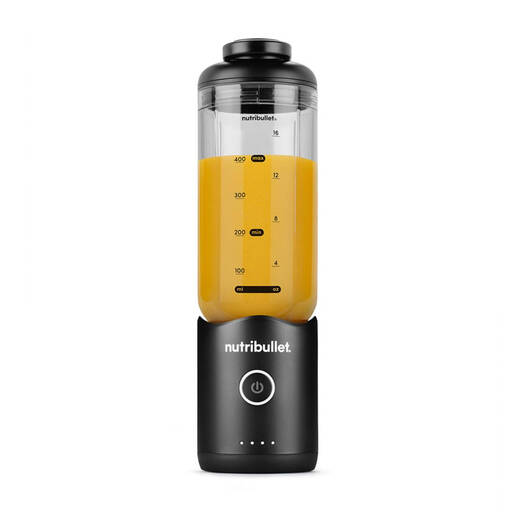
Why it suits this profile: The 590 ml cup, removable blade unit and built-in battery indicator are well suited to sportspeople, commuters and travellers who often want to blend independently.
The removable blade unit makes cleaning more straightforward. According to the product description, the LED indicator helps you keep an eye on the charge level.
590 ml capacity, 7.4-volt battery, USB-C charging cable and, according to the product information, suitability for ice and frozen ingredients.
We’ve put together a complete, up-to-date list of products that fully meet these strict selection criteria and the applicable European safety regulations.
A battery blender uses little electricity while blending, so charging costs are generally limited. Battery life mainly depends on the number of charging cycles, storage temperature and how often you process hard ingredients. The statutory guarantee in the EU for these product listings is at least two years; additional rights may apply under the relevant Dutch law.
It varies from model to model. Check whether frozen ingredients or ice are explicitly mentioned in the product description or instructions. Add enough liquid and use smaller pieces. A small battery blender doesn’t automatically offer the same capabilities as a powerful corded blender.
This depends on the number of charging cycles, the battery and how you use it. A product listing may state a certain number of blends per charge, but according to the brand’s own information, this remains dependent on the portion, ingredients and conditions. Don’t leave the battery connected to a charger for extended periods if the instructions advise against it.
Yes, provided the capacity and cleaning requirements fit your routine. For one smoothie a day, 400 to 600 ml is often sufficient. If you want to prepare multiple portions or hard ingredients, it may be better to look for a corded model with a larger cup and a more powerful motor.
