
Vandaag of morgen in huis

Kwaliteit gegarandeerd

Welkomstaanbiedingen ontgrendelen: GRATIS bezorging | Tot 80% korting | Gratis 30 dagen JoyPlus-proefperiode
Download de app
A portable baby cot may seem straightforward to choose at first. But small differences in height, fixings and finish can affect how well it works beside your bed or when visiting family. For babies aged 0 to 5 months, you’ll want a solution that suits your bedroom, is easy to clean and won’t become impractical after just a few weeks.
When comparing options, don’t focus only on terms such as “3-in-1” or “breathable”. Always check the technical specifications, recommended age, maximum weight and how the cot attaches to the parents’ bed.
A bedside baby crib should line up properly with the height of the parents’ mattress. A model with just one or two settings won’t necessarily suit a high bed, divan bed or thick mattress. So, measure the distance from the floor to the top of your mattress before ordering.
A baby cot with 5 height settings gives you more flexibility, but check the exact heights too. The product details may list heights of 67, 70, 74, 77 or 81 cm, for example. The actual height of your mattress from the floor may differ.
Some models, including the 3-in-1 cribs discussed here, specify a 10-degree angle. According to the product description, this angle is intended to help reduce spills. It is not a guarantee of a safe sleep environment and should not be taken as a medical or health claim.
Use the cot according to the instructions. For sleep, it’s important to have a suitable, firm mattress and a clear sleep space. Don’t put pillows, duvets, large soft toys or loose cot bumpers in with your baby. Also check that the base is level if the instructions say this is the sleep position.
A baby cot with castors is handy if you want to move it between the bedroom and living room. Castors are only practical if they can be locked securely. Check that the cot has brakes and, once it’s in place, make sure it can’t roll away.
If you’re using it as a baby co-sleeper, you’ll also need to attach the supplied straps correctly. A cot beside the parents’ bed should be stable and must not slide away from the bed.
Compare three measurements:
The models listed have a weight capacity of 9 kg and, according to the product information, are suitable for babies aged 0 to 5 months. Don’t use a cot for longer or with a heavier baby than the manufacturer specifies. Your baby’s development, such as rolling over or pulling themselves up independently, may also mean it’s time to move on sooner. Follow the instructions and, if in doubt, ask a midwife, health visitor or GP for advice.
A breathable mesh baby cot can make it easier to see your baby without having to lean over the side all the time. However, mesh is no substitute for good ventilation around the cot. Don’t place the crib next to a radiator, curtain or other heat source, and keep the panels unobstructed.
Check that the mesh panels are securely finished and that there are no loose seams, protruding parts or gaps where clothing or fingers could get caught. Check this when the cot arrives and after assembly.
A baby cot can quickly get dirty from milk, spit-up and leaking nappies. A cover with a zip or removable upholstery can make cleaning easier. Check whether the cover can be washed according to the instructions and make sure the mattress won’t become misshapen if it gets damp.
A clear instruction manual, a sturdy frame and a well-fitting mattress base are all practical features. Keep the assembly instructions and regularly check the screws, straps, brakes and locks.
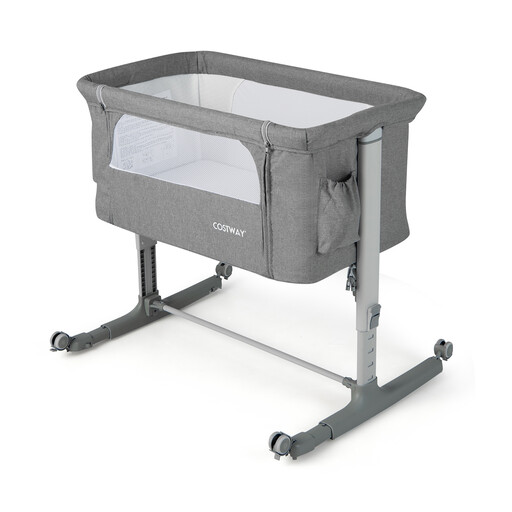
Why it suits this profile: This model combines a bedside crib, a standard baby crib and a rocking cradle. That means you don’t need to buy several different sleep spaces for use at home straight away.
Five height settings make it easier to match the cot to your bed. The straps are designed to attach the cot to the parents’ bed.
3-in-1 use, mesh panels on two sides, four lockable castors and a travel bag included.
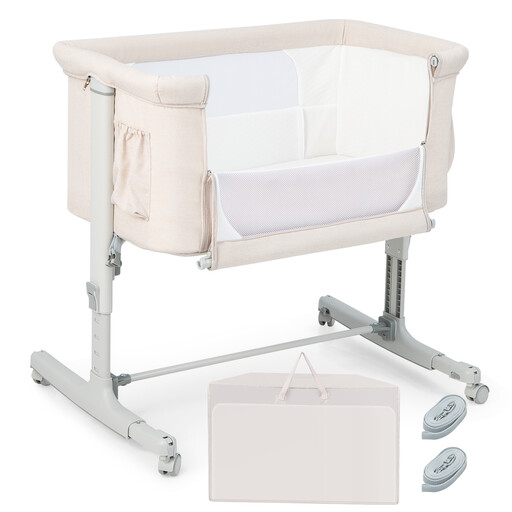
Why it suits this profile: The beige finish works well in many calm, neutral interiors. It also offers the same practical combination of adjustable height, portability and travel-friendly use.
The product information includes a carry bag, so you won’t need to arrange a bulky transport solution yourself. The zip design also makes everyday cleaning easier.
Mattress size of 76 x 43 cm, five adjustable settings, a steel frame and an Oxford travel bag, according to the product details.
Why it suits this profile: If you regularly move the crib between rooms or take it on trips, you’ll appreciate the castors, folding feet and included carry bag.
The four castors have brakes and the design includes attachment straps. Lock both systems in place every time before laying your baby down.
Net weight of 8 kg, side storage, mesh panels and a zip-off cover, according to the product description.
We’ve put together a full, up-to-date list of products that meet these strict selection criteria and the applicable European safety regulations.
First, measure the mattress height and choose a suitable setting. Place the cot on a level surface, attach the straps according to the instructions and check that there’s no gap between the two beds. Apply the castor brakes and check the locks before using the cot.
It depends on the model. According to the specifications, the products listed are intended for babies aged 0 to 5 months and weighing up to 9 kg. Stop using the cot sooner if your baby reaches the developmental limits for the crib or if the instructions say to do so.
That depends on the design. According to the product description, a model with a sturdy frame, a suitable mattress and secure fixings can also be used as a standard crib or bassinet. Always check the official usage guidance, maximum period of use and care instructions before using a travel cot every day.
