
Vandaag of morgen in huis

Kwaliteit gegarandeerd

Welkomstaanbiedingen ontgrendelen: GRATIS bezorging | Tot 80% korting | Gratis 30 dagen JoyPlus-proefperiode
Download de app
A portable air conditioner seems simple enough: plug it in, put the hose through the window and enjoy the cool air. In practice, the size of the room, how hot air is vented outside and the noise level all affect how well it works for you. A model with a high BTU rating won’t necessarily suit every bedroom or living room.
There are three common pitfalls to avoid:
Cooling capacity is usually given in BTU per hour or kilowatts. A 7000 BTU model is generally designed for smaller rooms, while 9000 to 12000 BTU models offer more capacity for larger spaces. The right room size also depends on:
Treat the stated room size as a guide, not a guarantee. According to the product information, the Humhold 7000 BTU is designed for rooms up to 28 m², while the Humhold 12000 BTU is suitable for rooms up to 45 m². This information comes from the seller’s product specifications, so consider it alongside the conditions in your home.
An air conditioner that’s too small will run at full power for longer. A much larger model may cool the room faster, but its size, weight and electricity consumption may make it less practical.
For a bedroom air conditioner, noise levels matter more than many buyers expect. Check the difference between:
According to its product specifications, the Midea PortaSplit-E 12K has a sound pressure level of 39 dB(A) in quiet mode and 49 dB(A) on high. The Humhold 7000 BTU is listed as producing less than 49 dB in sleep mode. These figures can be checked, but how disruptive the noise feels also depends on how close you are to the appliance and the room’s acoustics.
So, a quiet portable air conditioner is about more than just a marketing name. Check which setting the noise level refers to, and consider using a timer so the air conditioner doesn’t have to run all night.
A portable air conditioner vents hot air outside through an exhaust hose. A portable air conditioner with a window kit is therefore easier to install than one that requires you to make an opening yourself. Check the following in advance:
A window kit won’t automatically make a perfect seal on every type of window. A 3 or 4 metre sealing strip can help reduce gaps around a window, but check the measurements and fitting method first.
A portable air conditioner with a remote control is handy in a bedroom or living room. A timer stops the appliance running for longer than necessary. Wi-Fi control can be useful when you want to operate it remotely, but check whether you’ll need a separate app and a stable network connection.
A portable air conditioner with a dehumidifier can be useful on humid days. The appliance may not work in the same way in this mode as it does in cooling mode; with some models, the condensate tank may fill up more quickly. Check the instructions.
A portable air conditioner with a heating function can offer extra flexibility in spring and autumn. As well as checking the heating capacity, look at the stated outdoor temperatures at which the function can be used.
Check energy information such as energy class, EER, SEER and power consumption. An energy-efficient air conditioner won’t necessarily use little electricity in every situation. The running cost depends on the temperature you set, how long you use it, the insulation and your electricity tariff.
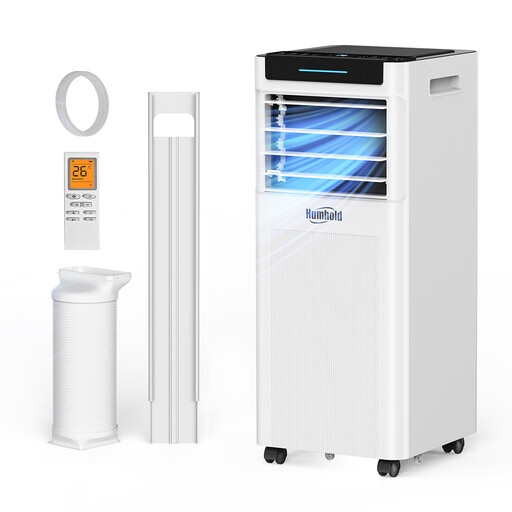
Why it suits this type of buyer: According to the product specifications, this compact model is designed for bedrooms, home offices and smaller living spaces up to 28 m². The window kit and remote control are included.
The cooling capacity is clearly stated as 7000 BTU and 2,0 kW. This makes it easier to compare the model with the size of your room.
3-in-1 use, R290 refrigerant according to the product specifications, a 24-hour timer and a stated sleep-mode noise level of less than 49 dB.
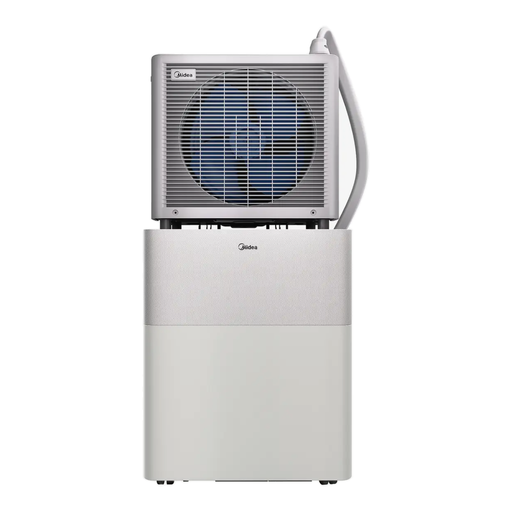
Why it suits this type of buyer: Its separate indoor and outdoor units offer an alternative to a traditional portable air conditioner, with 12000 BTU of cooling capacity and a heating function.
Noise levels are listed for each setting; according to the product specifications, quiet mode is 39 dB(A). Bear in mind, though, that you’ll need to install the outdoor unit.
A++ for cooling and A+ for heating according to the product specifications, plus cooling, heating, dehumidifying and fan functions.
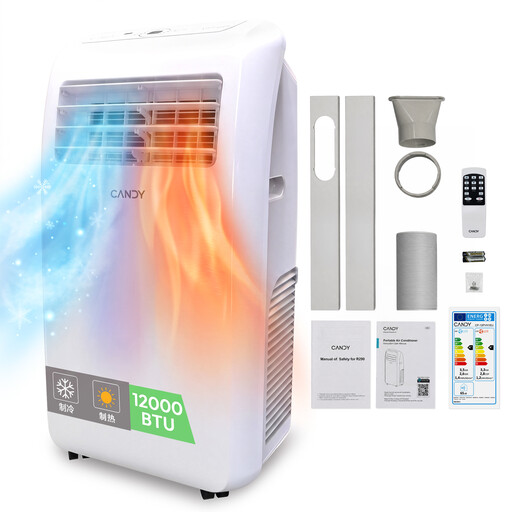
Why it suits this type of buyer: This model is designed for households looking for heating and dehumidifying functions as well as cooling. The manufacturer states that it can cool rooms up to 35 m².
Cooling and heating capacities are listed separately, so you don’t have to guess how the appliance will perform in winter from a single BTU figure.
4 functions, A+ according to the product specifications, remote control, 24-hour timer and included window kit.
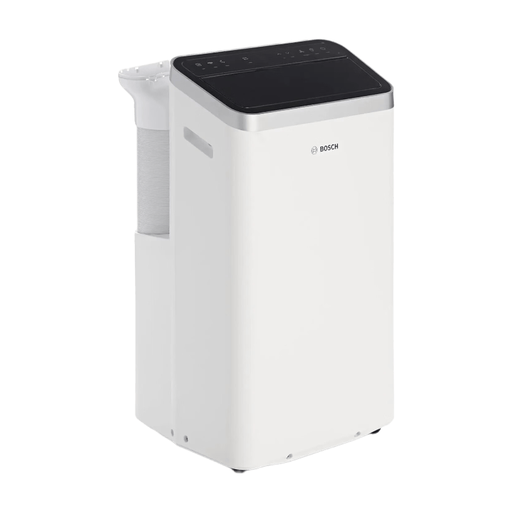
Why it suits this type of buyer: The wheels and integrated handle come in handy when you move the appliance between the living room, bedroom and home office.
The window kit and exhaust hose are included according to the product information. Check, however, that your window opening is at least 60 cm wide.
2,6 kW cooling capacity, automatic, quiet and sleep modes, remote control and a 24-hour timer according to the product specifications.
We’ve put together a complete, up-to-date list of products that meet these strict selection criteria and the applicable European safety regulations.
That’s usually not practical. The exhaust hose needs to vent hot air outside. Without a seal, that air can get back into the room through the window. Check that the window kit supplied is suitable for your type of window. If in doubt, a suitably sized sealing strip may help.
Many models list their power consumption in watts or kilowatts. A 1000-watt appliance theoretically uses 1 kWh if it runs continuously at that power for one hour. In practice, the compressor switches on and off. Your actual costs depend on the temperature you set, how long you use it, the insulation and your electricity tariff.
Its lifespan depends on how you use, store and maintain it. Clean the filter as instructed in the manual, keep the air vents clear, and store the appliance upright in a dry place. Switch off any damaged appliance and have repairs to the compressor or refrigerant circuit carried out by a qualified technician.
