
Vandaag of morgen in huis

Kwaliteit gegarandeerd

Welkomstaanbiedingen ontgrendelen: GRATIS bezorging | Tot 80% korting | Gratis 30 dagen JoyPlus-proefperiode
Download de app
A portable air conditioner gives you flexibility: you can move it between the bedroom, living room and home office. However, not every portable air conditioner is suitable for every room. A low price or a long list of features tells you little about how it will perform day to day.
Look out for these common pitfalls:
Cooling capacity is often given in BTU or kW. A 6,000 BTU model is generally intended for a smaller room than a 12,000 BTU model. Use the stated square metres as a guide only. A south-facing room, a poorly insulated loft room or a space with lots of appliances may need more cooling capacity.
Also check:
A 3-in-1 air conditioner usually combines these three functions. In fan mode, it moves the air but doesn’t actively cool it. Dehumidifier mode can reduce that clammy feeling, but it isn’t a substitute for permanent ventilation in your home.
Noise levels are measured in dB. A difference of a few decibels may be noticeable, but comparisons are only useful when the testing conditions are the same. Check whether the figure applies to sleep mode, the lowest fan speed or normal operation.
For a bedroom air conditioner, useful features include sleep mode, a timer and adjustable fan speed. A remote-controlled air conditioner means you won’t have to get out of bed to change the temperature or mode. Consider where you place it, too: a hard floor, vibrating hose or poorly fitting window kit can create extra noise.
A portable air conditioner usually expels warm air outside through a hose. Place the appliance on a level surface, keep the air inlet clear and avoid sharp bends in the hose. Use the supplied window kit if it’s suitable for your type of window.
Before buying, check:
In high humidity, even a self-evaporating system can reach its limit. A water tank or drainage outlet may still be needed. Also clean the filter according to the product manual, and only put it back once it’s completely dry.
The choices below are based on product specifications that can be verified in the supplied product information. Any claims about performance or comfort are presented as product features or according to the brand’s product description.
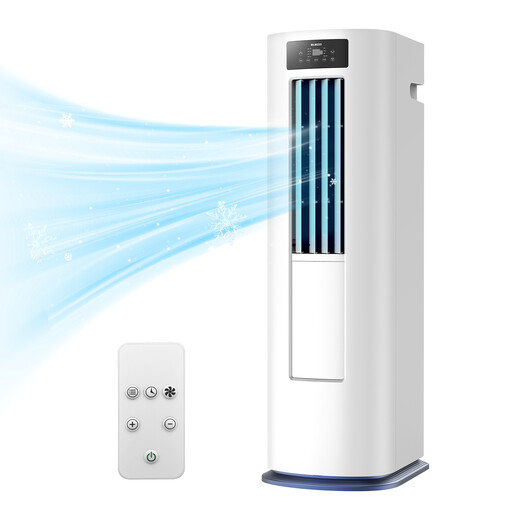
Why it suits this type of user: This model is designed for smaller indoor spaces and combines cooling, dehumidifying and fan functions. The supplied window kit, remote control and 24-hour timer make it straightforward to use as a first purchase.
The product specifications state an airflow of 250 m³/h, energy class A and a window installation kit. Check that 6,000 BTU is suitable for the size and insulation of your room.
3-in-1 operation, remote control, 24-hour timer and automatic protection when the water tank is full, according to the product description.
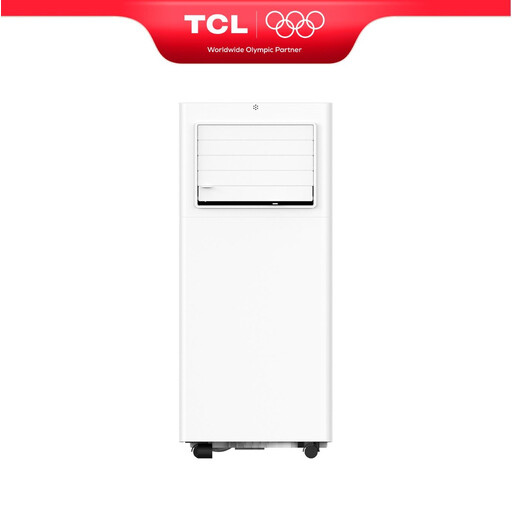
Why it suits this type of user: With a higher capacity of 9,000 BTU, sleep mode, a washable dust filter and a sliding-window kit, this model is a good fit for households that value a fixed set-up and a choice of control features.
The product description says installation accessories are included. The washable filter means you won’t need replacement filters straight away, but it does require regular maintenance.
Cooling, fan and dehumidifying functions, plus two fan speeds, sleep mode, remote control and a 24-hour timer.
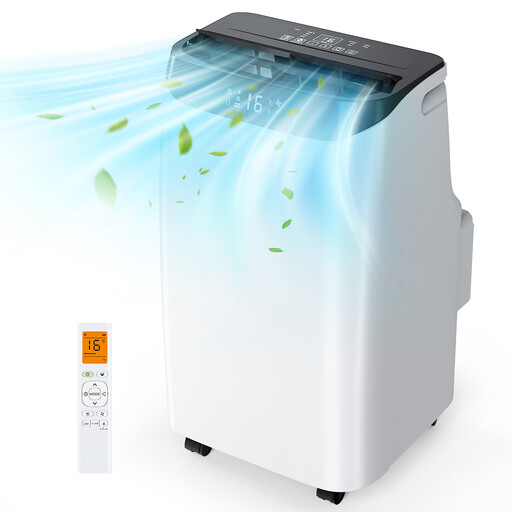
Why it suits this type of user: With a cooling capacity of 3.5 kW, a thermostat range of 16 to 31 °C and a stated coverage area of up to 45 m² according to the product description, this model is designed for larger or more intensively used spaces.
The product specifications list a window sealing kit, self-evaporation and a 0.5-litre backup tank. You may still need to empty it manually in high humidity.
12,000 BTU, three functions, automatic 0–80° oscillation, sleep mode with a stated noise level below 48 dB, and a 24-hour timer.
We’ve put together a complete, up-to-date list of products that meet these strict selection criteria and the applicable European safety regulations.
An energy-efficient air conditioner won’t necessarily use little electricity in every situation. Consumption depends on the power input, how long it’s used, the temperature setting and the room’s insulation. Check the energy label and technical specifications for the power rating in watts.
Practical steps:
A timer can be particularly useful in the bedroom or home office to limit how long the appliance runs. Bear in mind that the actual cost depends on your electricity tariff and the number of hours it operates.
Place the air conditioner close to a suitable window, attach the exhaust hose and seal the window kit as well as you can. Keep the air inlet and outlet clear. Connect the appliance to a suitable earthed socket and follow the manual for the specific model.
Its lifespan depends on use, maintenance, storage and the quality of the installation. Clean the filter regularly, keep the air openings clear and store the air conditioner somewhere dry if you won’t be using it for a long time. When buying, also check the warranty and available service information.
Calculate it using: power in kW × electricity price per kWh. A 1 kW appliance running for one hour uses around 1 kWh under ideal conditions. In practice, the compressor switches on and off, so consumption can vary. Check the stated power input and your own electricity tariff.
