
Vandaag of morgen in huis

Kwaliteit gegarandeerd

Welkomstaanbiedingen ontgrendelen: GRATIS bezorging | Tot 80% korting | Gratis 30 dagen JoyPlus-proefperiode
Download de app
As summers get warmer, a portable air conditioner is no longer a luxury for many, but a necessity for a comfortable home. However, the market is flooded with models making all sorts of promises. Without the right knowledge, the risk of making the wrong choice is high. As a Joybuy Product Recommendation Officer, I'm here to help you cut through the marketing jargon and make the right decision for your situation.
Before you pull out your wallet, watch out for these common pitfalls:
To make a smart purchase, focus on the specifications that truly matter. These are the three most important points to check.
The cooling capacity, expressed in BTU, determines how effectively the air conditioner can cool a room. A simple rule of thumb for a reasonably insulated room:
So, first, look at the area of the room you want to cool, and only then choose the corresponding power level.
The noise level is expressed in decibels (dB). Every 3 dB difference represents a doubling of the sound.
Pay close attention to whether the manufacturer lists the sound pressure (what you hear) or the sound power (source strength); sound pressure is the more realistic value.
An energy-efficient air conditioner will save you a lot of money in the long run. Check the energy label; models with a label of A or A+ are significantly more efficient.
Additionally, many models offer extra features that are useful year-round:
Below are some models that align well with different needs, based on their specifications.
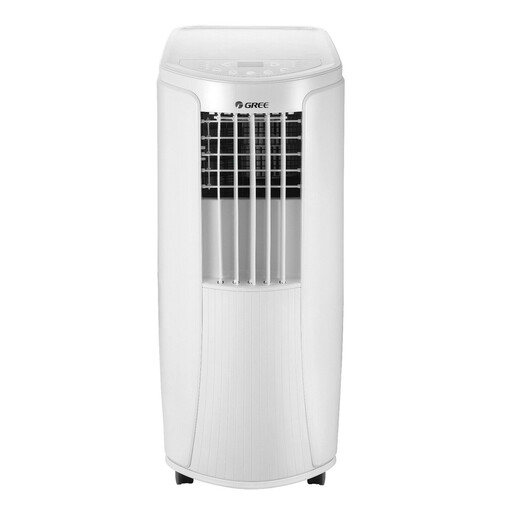
Why This Fits Their Persona: This user not only wants to cool down in the summer but also wants to efficiently add supplemental heat in the colder months. This model offers a complete climate solution in one device.
With a noise level starting from 49 dB(A), this is a relatively quiet option that avoids the decibel surprise. The A+ energy label for cooling ensures a manageable energy bill.
The heat pump function for heating (3.3 kW) makes this an energy-efficient air conditioner for year-round use. The dehumidifying capacity of 1.8 L/hour is an added bonus.
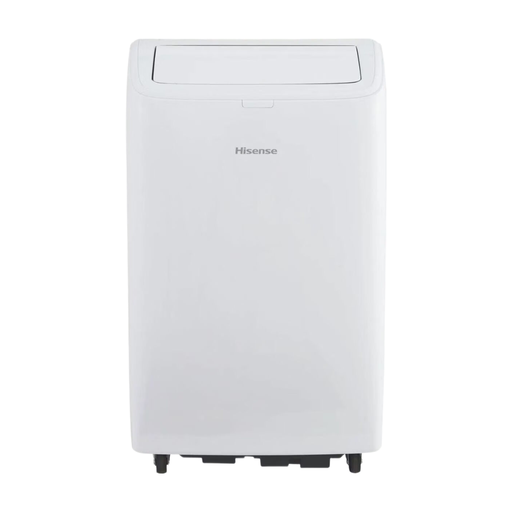
Why This Fits Their Persona: For those to whom a cool bedroom is essential for a good night's sleep. Convenience, quiet operation, and effectiveness are the priorities.
The sound pressure of 52-54 dB(A) is clearly specified and acceptable for a bedroom. The included window kit directly addresses the exhaust hose frustration.
The Wi-Fi control is a major advantage; you can operate the air conditioner from your bed or even on the go. The 4-in-1 functionality (cooling, heating, ventilating, dehumidifying) offers great versatility.
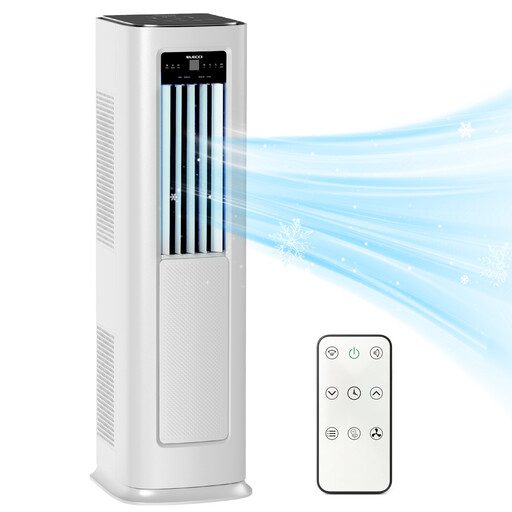
Why This Fits Their Persona: This user is looking for a powerful, no-nonsense solution to cool the living room quickly and effectively on hot days. Performance and ease of use are paramount.
This model tackles the BTU trap by not only mentioning its 12000 BTU power but also specifying its powerful airflow of 400 m?/h. The included installation kit prevents setup issues.
The focus on powerful air circulation ensures fast and even cooling of the entire room. The Energy Label A and the 24-hour timer help manage consumption.
We have compiled a complete, up-to-date list of products that meet these strict selection criteria and local regulations.
A portable air conditioner always produces noise, typically between 50 and 65 dB. Models below 55 dB are considered quiet and are the recommended choice for a bedroom. Always check the specifications for the sound pressure (dB(A)) on the lowest setting for the most realistic indication.
Consumption depends on the power (wattage), the energy label, and how often you use it. An energy-efficient air conditioner with an A-label and a power rating of 1300 watts (1.3 kWh) running for 4 hours a day will consume 5.2 kWh per day. Multiply this by your electricity rate to calculate the daily cost. Features like a timer can help limit consumption.
Yes, absolutely. An AC without an outdoor unit (a monoblock model) vents hot air through a hose. Without a proper seal at the window, warm air will constantly leak back inside. This makes the air conditioner much less efficient and leads to unnecessarily high electricity consumption. Many models come with a basic kit, but for an optimal seal, a separate window seal strip is often a smart investment.
