
Vandaag of morgen in huis

Kwaliteit gegarandeerd

Welkomstaanbiedingen ontgrendelen: GRATIS bezorging | Tot 80% korting | Gratis 30 dagen JoyPlus-proefperiode
Download de app
A portable 12V compressor fridge is useful for camping, road trips, lorries, boats and motorhomes. You can take chilled food and drinks with you without relying on ice. However, not every 12V cool box is suitable for long-term use or freezing food.
The following pitfalls often lead to the wrong purchase:
A compressor cool box uses a compressor to actively cool its contents. As a result, the temperature can generally be lowered much further than with a thermoelectric electric cool box. Models with an adjustable temperature range below zero can also be used as a portable freezer.
Thermoelectric models are often compact and suitable for drinks or snacks during short car journeys. For example, the Cecotec Bolero MiniCooling 6L uses thermoelectric cooling and, according to the product information, does not have a freezer compartment. This makes this type more suitable as a travel fridge than as a car fridge with a freezer function.
Do not just look at a marketing term such as “fast cooling”; check the stated range in degrees Celsius. According to BINGI’s own product information, the BINGI Portable Car Fridge Freezer 22L has an adjustable range of -18 °C to 15 °C. According to the product specification, this means the appliance is designed for both cooling and freezing.
According to its own product information, the EUHOMY 21L Compressor Cooler Box has a range of -20 °C to 20 °C. In practice, actual performance depends on factors including the ambient temperature, the amount of contents and how often you open the lid.
For use in a car, lorry or boat, you will usually need 12V DC. In a lorry or some motorhomes, 24V may be relevant. Therefore, check whether the fridge supports both voltages.
For use at home or at a campsite, 100–240V AC is practical. This allows you to connect the same fridge to a wall socket or campsite hook-up, provided the connection and supplied cable are suitable.
Also look out for:
According to BINGI’s own product information, the 22-litre model monitors the battery voltage in three stages. According to EUHOMY’s own product information, the Low, Medium and High protection levels can be adjusted. Treat these functions as helpful safeguards, not as a guarantee that a vehicle battery will remain sufficiently charged in all circumstances.
A capacity of 20 to 22 litres is often suitable for two people on a weekend away. You can fit bottles, lunch items and a few frozen products inside. For longer holidays or larger groups, a 65-litre RV fridge, such as the AAOBOSI 65L Camping Refrigerator Compressor RV Fridge, may be a more logical choice. With models of this type, always check the available storage space, weight and how they can be lifted.
Before buying, measure:
A portable fridge should stand on a flat, stable surface. According to BINGI’s product instructions, the appliance must stand upright and level for at least six hours before first use, allowing the compressor oil to settle. The same instructions state that you should leave at least 10 cm of clear space around the ventilation openings.
A small 4L mini fridge such as the MELISSA Portable Mini Fridge works, according to the product information, with a cooling range of 8 °C to 18 °C and a heating range of 50 °C to 65 °C. The temperature cannot be adjusted. This may be handy for cans, snacks or cosmetics, but the model is not intended to be used as a portable freezer.
A compressor fridge for a motorhome or car is more suitable when you want to store frozen food. A passive insulated cool box, such as the Mobi Garden 10L Insulated Cooler, does not cool by itself. According to the product information, this box maintains its temperature with ice or ice packs and does not run on electricity.
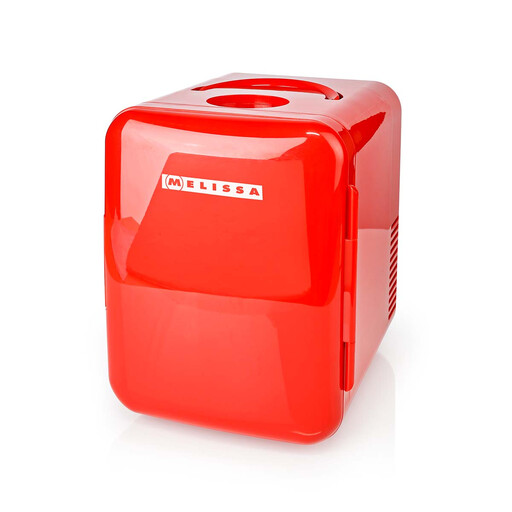
Why it suits this profile: A compact choice for short car journeys, the office, a bedroom or a small camping trip with limited cooling needs.
The product information clearly states the 4-litre capacity, the 8–18 °C range and the absence of an adjustable temperature. So do not expect a freezer.
4L capacity, 12V and 100–240V connections, plus a heating function according to the product description.
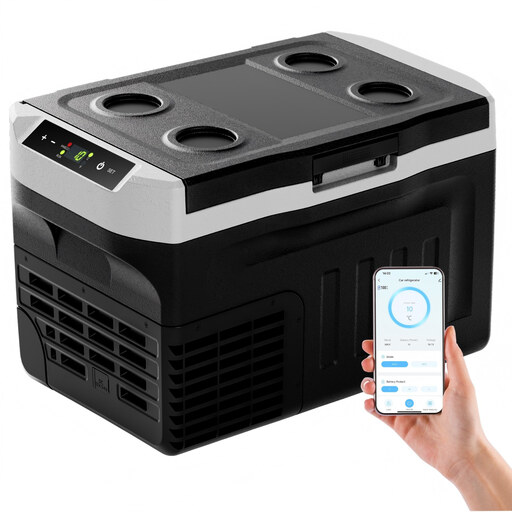
Why it suits this profile: For travellers who value temperature control, multiple power options and app-based operation.
The product information explicitly lists ECO and MAX modes, 12/24V DC, 220–240V AC and three battery protection levels.
21L capacity, an adjustable range of -20 °C to 20 °C according to the product listing, app control and three power options.

Why it suits this profile: Suitable for motorhome owners, lorry drivers and boat owners who need both 12V and 24V and also want the option to freeze food.
The product specifications list a compressor, -18 °C to 15 °C, 12/24V DC, 100–240V AC and built-in three-stage battery protection.
22L capacity, suitable for use as a fridge and freezer according to BINGI’s own product information, with ECO and MAX modes.
We have put together a complete, up-to-date list of products that fully meet these strict selection criteria and the applicable European safety regulations.
This can happen if the fridge continues running for a long time while the engine is switched off. Therefore, choose a model with battery protection and, where possible, use a separate leisure battery or power station. Also check the Low, Medium or High settings and follow the product manual.
Its lifespan depends on use, ventilation, transport and maintenance. Place the cool box on a stable surface, keep the ventilation openings clear and avoid exposing it to rain or direct jets of water. After transporting a compressor fridge, leave it upright first in accordance with the supplied instructions.
The cost depends on the power consumed, the temperature setting, the outdoor temperature and how long it is used. An ECO mode can limit consumption while maintaining the temperature, but always compare the stated wattage and power source. A passive cool box does not use electricity, but requires ice or ice packs and does not actively cool.
