What should you look for?
First check which software you need, then work out how much local storage and portability your projects call for.
| What to consider |
What should you check? |
Who is this important for? |
| Software compatibility |
Ask which programmes and versions your course requires, then check the operating system on the exact laptop configuration. |
I want to avoid finding that a required programme won’t run locally. Around 31% of consumers prioritise compatibility with required software. |
| Capacity for models |
Compare the requirements of your largest project with the RAM, available SSD capacity and any explicit GPU requirements for the software. |
I want to work with my datasets and models locally without choosing hardware my software doesn’t need. Around 31% of consumers prioritise capacity for their models. |
| Keeping project files safe |
Check whether project folders are included in a backup to an external drive or network location. If you’re handling personal data, follow your course’s instructions. |
I want to be able to restore project versions if anything happens to the files on my laptop. Around 19% of consumers prioritise keeping files safe and appropriately protected. |
| Portability |
Compare the stated weight, screen size and battery details of the exact configuration with how you plan to use the laptop. |
I carry my laptop around often, so I want to balance its weight against the screen space. Around 19% of consumers make portability their top priority. |
Laptop options at Joybuy
These laptops are aimed at local study and project work. Compare software requirements, storage and portability for each configuration; a dedicated GPU is only relevant if your programme or project needs one.
 No image available
HP OmniBook X Flip NG AI PC 16-as0050nd D75LQEA#ABH
The larger screen may suit you if you want more space to work with local project files; check that the required software runs on this configuration.
16-inch IPS touchscreen with a resolution of 1920 × 1200. Windows 11 Home.
View at Joybuy
 No image available
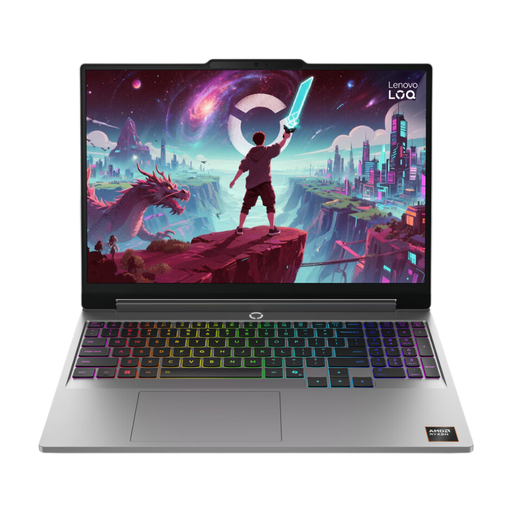
Lenovo LOQ 15AHP11
Consider this configuration only if your software or models require a dedicated GPU; the GPU alone doesn’t guarantee a benefit for your particular study task.
NVIDIA GeForce RTX 5070 laptop GPU, 16 GB RAM and 512 GB SSD. Windows 11 Home. Stated weight: 2.1 kg.
View at Joybuy
 No image available
HP OmniBook 3 AI PC 14-ht0013nd
A 14-inch Windows laptop may suit study and everyday work; compare the 8 GB RAM with the requirements of your programmes and projects before choosing.
8 GB RAM, 512 GB SSD and Windows 11 Home. The screen is 14 inches with a resolution of 1920 × 1200.
View at Joybuy
 No image available
Auusda T161N
The stated SSD capacity may be useful if you want to keep lots of project files locally; also check that the processor suits your software.
Intel i3 1000NG4 processor, 16 GB DDR4 RAM and 1 TB SSD. The screen is 16-inch Full HD IPS.
View at Joybuy
 No image available
Auusda T156A
Compare this configuration with the requirements of your study software and the files you want to keep locally; the listed components alone don’t predict how well your model will run.
AMD 3050e processor, 16 GB DDR4 RAM and 512 GB SSD. The screen is 15.6-inch IPS.
View at Joybuy
Frequently asked questions
Does your laptop need to run Windows?
Not for every programme. Microsoft describes Power BI Desktop as a Windows app, and Esri lists Windows as a supported operating system for ArcGIS Pro; AnyLogic also lists supported macOS platforms. Check which programmes and versions your course actually uses.
How do you back up local project files?
Microsoft describes File History, which lets you save copies to an external drive or network location. Check that your project folder is included and try restoring a file; saving it only on the internal SSD isn’t a backup.
Do you automatically need a gaming laptop for ArcGIS Pro?
No. The title of your study task doesn’t automatically mean you need a dedicated GPU. Esri distinguishes between minimum and recommended system requirements; compare the requirements for your version of ArcGIS Pro and the way you work with the exact laptop before choosing one with a GPU.
What if you store project files containing personal data locally?
The Dutch Data Protection Authority says that appropriate security depends on how the data is processed. Backups and encryption are examples of measures, not universally required laptop specifications; follow your course’s or project organisation’s instructions too.
What warranty and cooling-off period apply to a purchase in the Netherlands?
According to the Dutch government, there is no fixed statutory warranty period in the Netherlands, but you are entitled to a product that meets the terms of your agreement. For eligible online consumer purchases, a 14-day cooling-off period often applies, subject to conditions and exceptions that you should check for your specific purchase.


