
Those who make lunch at home and like to portion it themselves
If you make hot porridge at home several times a week, a large pack lets you decide how much to use for each lunch. Also consider whether you can keep the pack dry after opening.


If you regularly make hot porridge at home for lunch, a large pack lets you choose how much to put in each bowl. Portion sachets are more convenient if you don’t want to weigh it out or would like to take a measured portion with you. Just compare the amount in each sachet with what you need for lunch. If you have coeliac disease, always check the gluten-free labelling on the exact product.
If you make hot porridge at home several times a week, a large pack lets you decide how much to use for each lunch. Also consider whether you can keep the pack dry after opening.
If you have access to a microwave or a pan at work, individual portions save you the job of weighing it out. Just check that the amount in one sachet is enough for your lunch.
If you have a food allergy or coeliac disease, the label on the exact product is what matters. Ordinary oat products are not automatically suitable for a gluten-free diet.
First decide whether you want to portion it yourself or prefer a pre-measured serving. Then check the preparation instructions, ingredients and how much you actually use for lunch.
| What to consider | Check | Who it matters to |
|---|---|---|
| Amount per lunch | Net weight and the number of portions you can make from a pack. | If I often have lunch at home, I want to measure out what I need for each bowl. Around 33% of consumers are said to prioritise being able to portion it themselves. |
| Preparation and convenience | Preparation time, the amount of liquid needed and the weight of each individual sachet. | When I have a short lunch break, I want to make a hot bowl without weighing anything out. Around 27% of consumers are said to prioritise convenience. |
| Ingredients and allergens | Ingredients, nutritional information, allergen information and any gluten-free labelling on the exact pack. | If I need to avoid soya or cereals containing gluten, I want to know what the pack says before I buy. Around 27% of consumers are said to consider this the main priority. |
| Oat texture and storage | Fine or jumbo oats, best-before date and storage instructions after opening. | I want a texture I enjoy and a pack I can store properly. This is said to be the deciding factor for around 13% of consumers. |
Albert Heijn lists Quaker Oats Express Natural sachets at 27 g, while the Quaker Oats value pack lists portions of 40 g. So the sachets and the value pack do not contain the same amount of dry oats per portion.
Compare the weight of each sachet with the amount you usually use for a hot lunch.
Ordinary oat products may list other gluten-containing cereals in their allergen information. The Dutch Coeliac Association recommends choosing oats with the Crossed Grain trademark if possible, or otherwise a product with a gluten-free logo or claim.
Always check the labelling and allergen information on the pack of the product you’re buying.
Milk, a plant-based alternative and toppings all contribute to your prepared lunch. The nutritional value of dry oats does not include these additions.
Check the nutritional information for the oats, and take into account anything you add separately.
Among the varieties reviewed, you can choose between a plain 600 g pack and Oats Express Natural in individual sachets.
The 450 g porridge oats reviewed have extra-fine flakes for preparing with water or milk.
The own-label range reviewed includes fine wholegrain porridge oats in a 1 kg pack, as well as smaller sizes.
The own-label range reviewed includes fine and jumbo wholegrain porridge oats in 1 kg packs.
The product information reviewed lists 500 g of fine wholegrain porridge oats, and also mentions a 1 kg variety with fine or jumbo oats.
The Lidl product page reviewed lists a 500 g pack of oat flakes.
These products suit different hot lunches: a pre-measured portion of oats, fine flakes from a pack, or an oat product whose ingredients you may want to compare. Check each product’s packaging to see whether the quantity and preparation method suit your lunch.
 Image unavailable
An option if you prefer portion packs to weighing out oats yourself for a hot lunch. Check how much oats you use per lunch and, if you have an allergy, read the latest allergen information.
 Image unavailable
For anyone who wants to measure out their own portion of fine oat flakes at home for a hot lunch. Albert Heijn describes these Brinta Porridge Oats as extra fine. Follow the instructions on your pack and check the allergen information if you need to avoid wheat or rye.
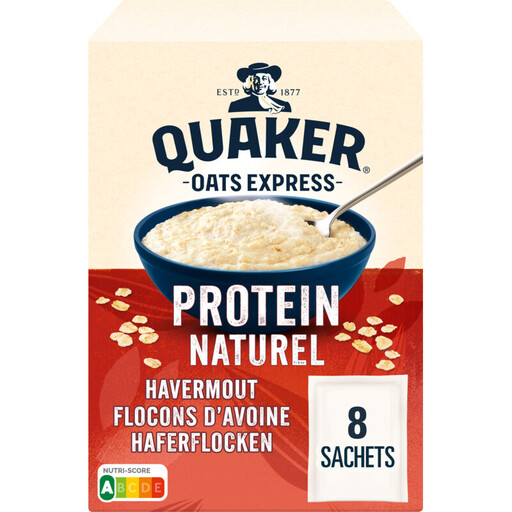 Image unavailable
An option if you want to take the ingredients of a Protein variety into account when choosing oats for a hot lunch. This variety contains soya protein and soya lecithin. Don’t choose it if you have a soya allergy, and check the latest pack for other allergen information.
No. A large pack is most useful if you regularly measure out your own porridge and can store it properly after opening. If you want to take a pre-measured portion with you, compare sachets too and check how much each one contains.
Choose a variety with preparation instructions that suit the pan or microwave you have available. For Brinta Porridge Oats, Albert Heijn recommends simmering gently for about 1 minute or microwaving for 2 minutes. Follow the amount of liquid and instructions on your own pack.
Seal the pack well after use and store it according to the instructions on the packaging. Quaker recommends storing its Oats value pack in a cool, dry place. Also check the best-before date on your own pack.
Don’t assume they are without checking the exact pack. The Dutch Coeliac Association recommends choosing oats with the Crossed Grain trademark if possible, or otherwise a product with a gluten-free logo or claim. Also read the allergen information for the product you choose.
No. Milk, plant-based alternatives and toppings also contribute to the nutritional value of your prepared lunch. The Netherlands Nutrition Centre lists 4.4 g of fibre and 5.1 g of protein in an average 40 g portion of porridge oats; these figures do not automatically describe your product or your complete meal.