
Same-day & Next-day Delivery

Quality Guaranteed

Unlock Your Welcome Offers: FREE Delivery | Up to 80% OFF | Free 30-day JoyPlus trial
Download the APP
A breakfast made with porridge oats and muesli should above all suit your routine, taste and nutritional preferences. Yet many packs look very similar. For example, a product with fruit on the front may contain only a small percentage of fruit. Likewise, “no added sugars” does not automatically mean that there are no natural sugars present.
Use this practical checklist to compare ingredients, nutritional values, preparation and pack size before you buy porridge oats or buy muesli.
When choosing porridge oats with no added sugars or sugar-free muesli, it is important to look at two things side by side:
According to the product information, Quaker Zs Cruesli Raisin & Hazelnut contains no added sugars or sweeteners, but it does contain 9.4 grams of sugars per 100 grams. These sugars come partly from raisins and other ingredients. Quaker Zs Cruesli Natural lists 3.8 grams of sugars per 100 grams.
So do not rely solely on the large claims on the front of the pack. Always check the full packaging and allergen information.
Crunchy muesli, cruesli and granola often get their texture from oil, flour, syrup or sugar. As a result, their energy content may be higher than that of simple oat flakes. For example, Quaker Cruesli 4 Nuts lists 462 kcal and 19 grams of fat per 100 grams. According to the product details, Quaker Oatmeal contains 375 kcal and 8 grams of fat per 100 grams.
That does not make a crunchy product unsuitable. It does mean that portion size matters. A generous bowl with yoghurt and extra nuts can quickly add up to several portions.
A 720 or 838-gram pack may seem good value, but it is only practical if you use the product regularly and seal it properly. For someone who alternates between different breakfast cereals, a 375 to 450-gram pack may be more convenient. Also pay attention to multipacks with separate sachets, extra ingredients or an included product. Check what proportion of the total weight actually consists of porridge oats or breakfast cereals.
If you are looking for wholegrain porridge oats, it is best to start with the first ingredients on the label. If it says “100% oat flakes” or “100% wholegrain oats”, the composition is straightforward. According to the product information, Quaker Oatmeal consists of 100% wholegrain oats. Brinta Oatmeal lists 100% oat flakes.
Muesli usually has a more extensive composition. Quaker Cruesli Nuts & Seeds contains, among other ingredients, 37% wholegrain oat flakes, 15% wholegrain wheat flakes, pumpkin seeds, hazelnuts and almonds. Exact percentages are more useful than general terms such as “with nuts and seeds”.
Always compare products on the same basis: per 100 grams. This prevents a small serving on the packaging from appearing more favourable.
Brinta Oatmeal lists 9.7 grams of fibre and 13 grams of protein per 100 grams. Quaker Oats Express Protein lists 22 grams of protein per 100 grams and, according to the ingredients list, consists of 85% wholegrain porridge oats and 15% soya protein. This is a targeted choice for anyone specifically looking for high-protein porridge oats, but soya is an allergen.
Claims about fibre, protein or other nutrients should always be read alongside the nutritional table. Statements about the effects of nutrients come from the brand’s product communications and are not personal health advice.
For a quick breakfast, fine oat flakes or individual sachets are practical. Brinta states that its extra-fine flakes can be prepared with water or milk in just a few minutes. According to the product information, Quaker Oats Express Protein is ready in two minutes.
Also check:
An opened pack of oat flakes or muesli tastes best when stored in a cool, dry place and sealed properly.
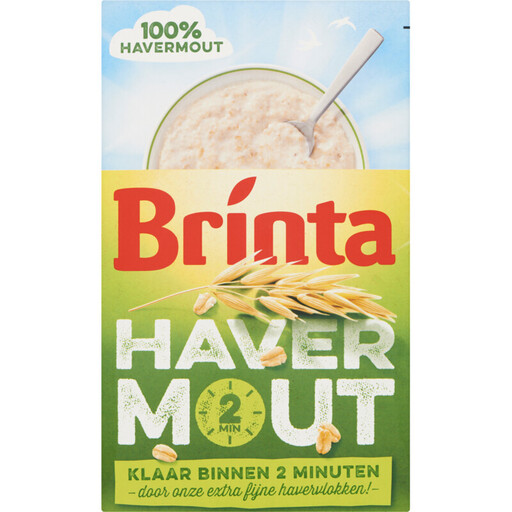
Why it suits this profile: The ingredients list is simple and, according to the product information, contains 100% oat flakes. You can prepare it with water, milk or fruit.
No long list of syrups, chocolate or flavourings; the base ingredients are clearly shown.
9.7 g of fibre and 13 g of protein per 100 g; 450 g per pack and suitable for hot preparation.
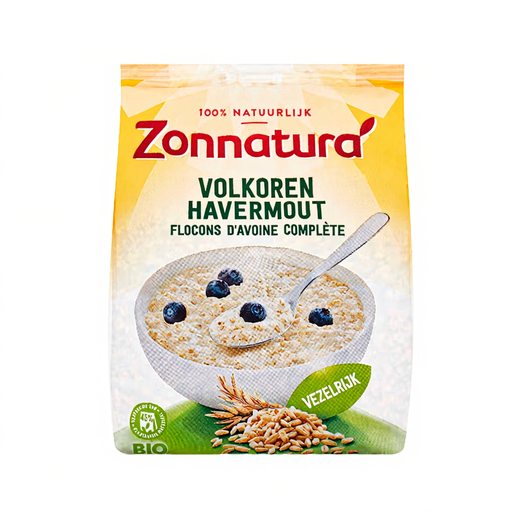
Why it suits this profile: An option for anyone who values organic porridge oats and a short ingredients list.
The product information lists organic wholegrain oat flakes; no flavourings or sweeteners are needed as a base.
500 g pack, 11 g of fibre and 11 g of protein per 100 g; contains organic oats according to the label.
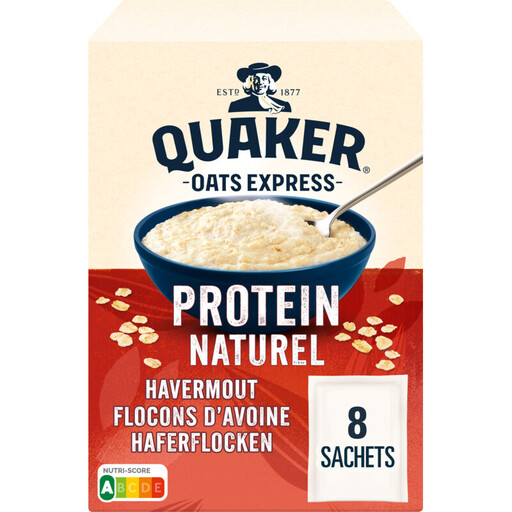
Why it suits this profile: Designed for sportspeople and busy users who want to prepare high-protein porridge oats in a short time.
The protein source and its proportion are clearly stated in the ingredients: 15% soya protein alongside 85% wholegrain porridge oats.
22 g of protein per 100 g, no added sugars according to the product information, and ready in approximately two minutes.
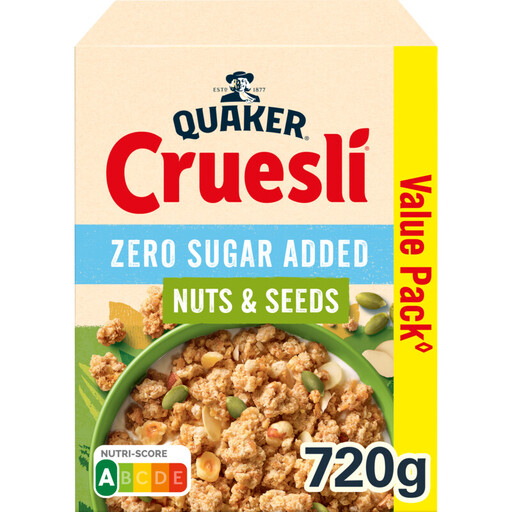
Why it suits this profile: The large pack is suitable for households that regularly serve yoghurt with crunchy muesli and nuts.
The table lists 3.8 g of sugars and 23 g of fibre per 100 g, so you can base your choice on concrete values.
720 g contents, 9.5 g of protein per 100 g, plus nuts and seeds such as pumpkin seeds, hazelnuts and almonds.
We have put together a complete, up-to-date list of products that fully meet these strict selection criteria and the applicable European safety regulations.
Porridge oats are practical when you want to make a warm bowl and add your own fruit, yoghurt or nuts. Fine flakes and instant sachets save preparation time. Muesli can be eaten straight away with milk, yoghurt or a plant-based alternative. Choose according to your morning routine and check whether the product needs cooking.
The exact best-before date is shown on the packaging. Store the product according to the instructions: in a cool, dry place, away from direct sunlight and sealed properly after opening. Do not use a pack if it is damaged. For muesli, an airtight seal is particularly important to preserve its crunchy texture.
That depends on the recipe. Breakfast cereals with nuts and fruit can provide extra flavour and texture, but may also contain oil, syrup or sugar. Plain porridge oats often have a shorter ingredients list. So compare the fibre, protein, sugars, fat and energy per 100 grams rather than looking only at the product name.
