
Breakfast lovers who like to keep a supply at home
You usually have breakfast at home, want to get several portions from one pack and don’t mind measuring them out yourself.


If you want several quick breakfasts at home, choose a large bag of porridge oats if measuring out your own portions fits into your routine. Choose individual sachets when a set portion matters more than measuring it yourself. Loose, fine flakes are another option if you want to make a warm bowl quickly without using separate sachets. None of these options is a ready-to-eat breakfast on the go without a bowl and liquid.
You usually have breakfast at home, want to get several portions from one pack and don’t mind measuring them out yourself.
You want to put a set portion straight into a bowl. Even with individual sachets, you’ll still need to add liquid and prepare the oats.
You compare ingredients, nutritional information and allergens before deciding whether a pack suits your needs.
The three options mainly differ in how much measuring is involved and how they’re prepared. First, decide what you’re happy to do yourself on a busy morning; then check the pack’s instructions and label.
Choose this if: you want to get several breakfasts at home from one pack and measure out your own portions.
Bear in mind: loose porridge oats still need to be measured and prepared.
Choose this if: you want loose flakes and the quick microwave method described suits your routine.
Bear in mind: the preparation time applies to the specified portion, amount of liquid and microwave power.
Choose this if: you want to put a set amount into a bowl without measuring it out.
Bear in mind: you’ll still need liquid and time to prepare a sachet.
| What to consider | What to check when buying | Who it matters to |
|---|---|---|
| Supply and portions | Check the net weight and number of portions; compare the stated portion size with the amount you use. | If I often have breakfast at home, I want to know how many mornings one pack will last. For around 42% of consumers, having enough in stock is the top priority. |
| Measuring and preparation | Check whether the portions are pre-measured and what liquid, preparation method and equipment the instructions specify. | On busy mornings, I don’t want to weigh out oats first, but I can prepare a bowl. A set portion matters most to around 33% of consumers. |
| Ingredients and allergens | Read the ingredients, nutritional information and allergen declaration on the exact pack you’re buying. | I want to know whether I’m choosing plain porridge oats or a mix with other ingredients, and whether the label suits my dietary needs. Around 25% of consumers prioritise checking the label. |
A large bag is most practical if you use porridge oats regularly. The number of portions stated on the pack may not match the amount you serve yourself for breakfast.
Compare the net weight and stated portion size with your own breakfast routine.
The stated time applies to a particular preparation method. Even individual sachets need a bowl and liquid; for microwave preparation, the amount of liquid and the power setting may also matter.
Read the full preparation instructions and check that you’ll have the equipment you need at breakfast time.
According to the Voedingscentrum, oat products are only suitable for people with coeliac disease if the pack carries the official Crossed Grain trademark. Ingredients and the possible presence of other cereals also vary between products.
Check for the trademark and read the current ingredients and allergen information on the pack you’re buying.
An oat mix may contain other cereals, milk ingredients or sugar as well as oats. So the size of the pack and whether it contains individual sachets don’t tell you much about its ingredients.
Read the ingredients and nutritional information per 100 g; for sachets, also check whether the pack contains separate additions.
Worth considering if you’re comparing loose porridge oats in a large pack with Oats Express Naturel in individual sachets.
Worth considering if you’re looking for loose, extra-fine oat flakes for a warm bowl.
Worth considering as an example of a supermarket own-brand pack of fine wholegrain oat flakes.
These products show different ways to stock up on oats for several quick breakfasts: loose porridge oats, fine flakes and individual portions. The Family Whole products are blended oat mixes, not packs of plain porridge oats, so compare their ingredients separately.
 Image unavailable
For mornings when you don’t want to measure: the pack contains 12 individual sachets.
The product description says it takes two minutes to prepare in a microwave or pan. Check the pack for how much liquid you need and the relevant preparation instructions.
The allergen information lists oats and possible traces of soya, barley and wheat. If you have a relevant allergy, check the current label.
 Image unavailable
For a warm bowl made with a pack of loose, extra-fine oat flakes; you measure out the portion yourself.
The 450 g pack states that it contains 11 portions. The preparation method described by Albert Heijn uses 40 g of flakes and 250 ml of milk, microwaved for two minutes at 900 W.
The allergen information lists oats and possible traces of rye and wheat. Check the current label if this matters to your choice.
 Image unavailable
For several breakfasts at home if you want to measure and prepare loose porridge oats yourself.
The pack states that it contains 15 portions and describes the oats as 100% wholegrain, with no added sugar. Before preparing, check the instructions for the amount of liquid and the method you’ve chosen.
The allergen information lists oats and possible traces of wheat and barley; if you have a relevant allergy, read the current label.
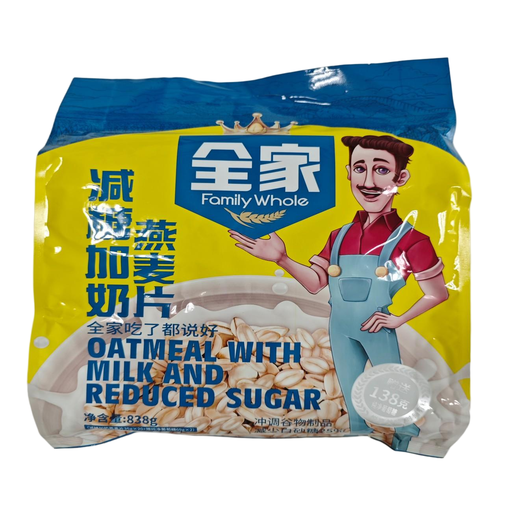 Image unavailable
For anyone who wants to make individual portions with boiling water: the pack states that it contains 20 sachets and that each sachet needs around 175 ml of water. You’ll still need to boil the water.
This is a blended mix containing 30% oats, other cereals and milk powder, not plain porridge oats. The ingredients also include sugar and maltodextrin; the mix is listed as containing 17 g of sugars per 100 g. Separate glucose sachets are included.
The ingredients information lists oats, wheat, soya, milk and black sesame seeds. Check the current label if you have a relevant allergy.
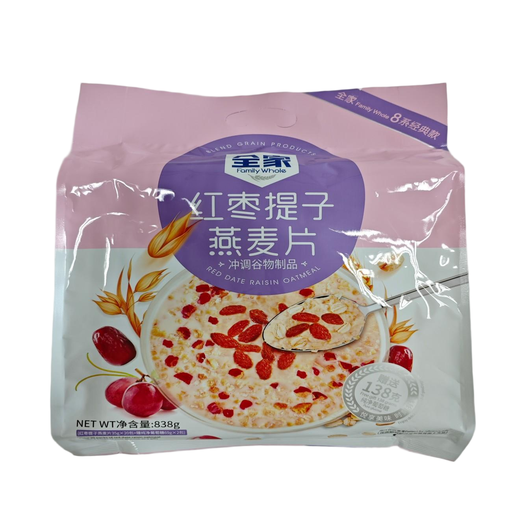 Image unavailable
For anyone who wants to prepare individual portions with boiling water: the pack states that it contains 20 sachets of 35 g and that each sachet needs around 175 ml of water. Boiling the water is still part of the preparation.
The mix contains 25% oats, other cereals, raisins, dates and sugar; it is not plain porridge oats. The nutritional information states that the mix contains 28 g of sugars per 100 g. The pack also contains separate glucose sachets.
The ingredients information lists oats, wheat, barley and soya. Check the current label if you have a relevant allergy.
Yes, if you can measure out a portion at home and have a bowl, liquid and a way to prepare it. The 600 g Quaker pack described by Albert Heijn says to cook it for around two minutes or microwave it for three minutes; check the full instructions for your pack.
According to the Voedingscentrum, ordinary porridge oats are not automatically suitable for people with coeliac disease; the oat product must carry the official Crossed Grain trademark on the pack. Also check the current ingredients and allergen information for the specific product.
Start with the ingredients, net weight, portion size, nutritional information and allergens. This helps you distinguish loose porridge oats from a mix with other cereals or additions, and check which preparation instructions apply to the product.
No. Check the full ingredients list and nutritional information too. An oat mix may contain other cereals, sugar or separate additions in the pack, for example; what you add to the bowl yourself also contributes to the finished breakfast.