If you have a food allergy, check the label on the pack you’re buying first, then choose the pack size: both regular and gluten-free porridge still contain oats. Sachets are handy when you want to prepare individual portions quickly; a larger pack means measuring it out yourself and isn’t automatically instant. If you need to avoid gluten, look for an explicit gluten-free label, but don’t assume this makes the product suitable for an oat allergy.
Who is this choice relevant for?
Families avoiding specific allergens
Every time you buy, compare the ingredients and warnings on the pack with the allergens the people who’ll be eating it need to avoid. Gluten-free porridge still contains oats, so it isn’t suitable for someone with an oat allergy.
Families who want individual portions
Sachets save you measuring things out on busy mornings. Just make sure the ingredients and allergen warnings are suitable for every family member who’ll be eating them.
Families who want to stock up
A larger pack can be handy if you use porridge regularly, as long as you don’t mind measuring it out yourself. The pack size alone tells you nothing about preparation time or whether it’s suitable for someone with an allergy.
What should you look for?
Start with the allergens that need to be avoided. Then compare portion sizes and preparation with the amount of porridge you want to keep in the house for your family.
| What to consider |
What to check when buying |
Who it matters to |
| Specific allergens |
Read the ingredients and warnings on the current pack. If avoiding gluten, check for a gluten-free label and make sure oats are suitable for the person who’ll be eating it. |
If a family member needs to avoid a particular allergen, I don’t want to rely on the product name alone. For around 36% of consumers, excluding the allergen in question is the top priority. |
| Speed and portions |
Compare the number of sachets, the amount in each sachet and the preparation time. Check the allergens for each variant too. |
On busy mornings, I want to be able to dish out portions without measuring each one. For around 29% of consumers, portion convenience comes first. |
| Family-sized stock |
Check the net weight, number of portions and preparation method; a larger pack isn’t automatically instant. |
When several family members eat porridge regularly, I want enough in one pack to last. Around 21% of consumers prioritise having enough stock. |
| Ingredients in each variant |
Compare the ingredients and nutritional information for the exact plain, flavoured or Protein variant, including soya and sugars where listed. |
When choosing between variants, I want to know exactly what’s in them. For around 14% of consumers, the ingredients are the first thing they consider. |
Common mistakes
-
Mistaking a large pack for instant sachets
According to the Albert Heijn product information reviewed, the 600 g Quaker pack needs to be cooked or prepared in a microwave, while Quaker Oats Express Naturel is sold in individual sachets.
Check the preparation method and number of portions, not just the weight on the front.
With a large pack, you’ll need to measure out each portion yourself.
-
Assuming a short ingredients list means it’s suitable for someone with an allergy
According to Albert Heijn, the Quaker Havermout voordeelverpakking contains wholegrain oats and states that it may contain barley and wheat. Oats themselves also need to be considered if you have an oat allergy.
Read both the ingredients and any warnings about possible traces. If you need to avoid gluten, look for an explicitly gluten-free product, but don’t assume it’s suitable for an oat allergy.
-
Assuming one pack has the same ingredients as another
According to Quaker, Oats Express Protein Naturel contains soya protein and soya lecithin. Jumbo lists sugar as an ingredient in Havermout Porties Original. The variant makes a difference.
Check the exact product name and label for every plain, flavoured or Protein variant.
-
Only reading the online listing
Albert Heijn warns that product, ingredient and allergy information can change.
Use the product page to narrow down your options, then read the label on the pack you’ve actually bought before using it.
Brands and retailers to consider
Quaker
Among the products reviewed, Quaker offers both Oats Express sachets and a larger pack of regular porridge oats.
- Quaker lists 12 portions for Oats Express Naturel; the value pack shown by Albert Heijn contains 600 g.
- The Naturel products reviewed state that they may contain other cereals; Oats Express Naturel also states that it may contain soya. According to Quaker, the Protein Naturel variant contains soya protein and soya lecithin.
Albert Heijn
The own-label range includes explicitly gluten-free wholegrain porridge oats for people who don’t need instant sachets.
- Albert Heijn describes AH Glutenvrij Volkoren havermout as being produced in a completely gluten-free environment.
- This product contains oats and isn’t an instant portion pack. Albert Heijn advises checking the current label because online product information can change.
Jumbo
The range reviewed includes larger packs, portion products and gluten-free porridge oats.
- Jumbo offers, among other products, a 1 kg value pack and Havermout Porties Original, with 5 portions of 27 g.
- Jumbo lists sugar as an ingredient in the Porties Original product reviewed. Check the allergen information for each individual product.
Leev
An option to consider if you’re looking for gluten-free porridge oats and don’t need individual instant portions.
- The Joybuy product information for the Leev 450 g pack reviewed lists wholegrain gluten-free porridge oats as an ingredient.
- Gluten-free porridge still contains oats. If a family member needs to avoid allergens, check the pack before use.
Instant porridge on Joybuy
These are instant Quaker variants for anyone who values individual portions and quick preparation. For both variants, check that the ingredients and warnings are suitable for the people who’ll be eating them; neither is a substitute for choosing explicitly gluten-free porridge oats.
 Image unavailable
Quaker Express Oatmeal 324 g
An option for busy mornings when you want individual portions, as long as the allergen information is suitable for everyone who’ll be eating it.
The product information lists 12 sachets and a preparation time of 2 minutes. It contains oats and may contain soya, barley and wheat. Check these warnings against the current label before buying and using the product.
View on Joybuy
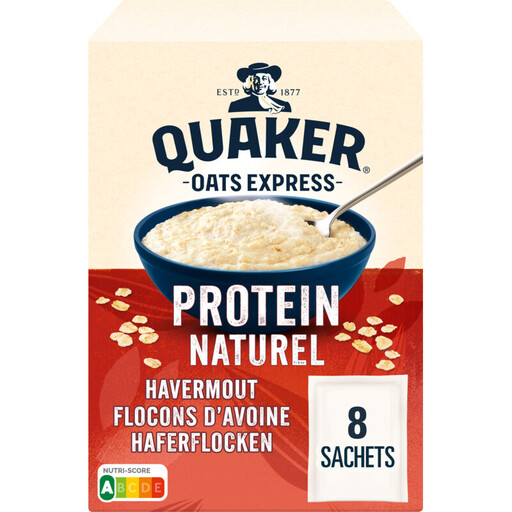 Image unavailable
Quaker Oats Express Protein 302 g
An instant option to compare if you’re looking specifically at the ingredients in a Protein product and soya isn’t an allergen the person who’ll be eating it needs to avoid.
The product information lists a preparation time of 2 minutes. The ingredients include oats, soya protein and soya lecithin; it may contain barley and wheat. Check the number of portions and the current allergen information on the pack.
View on Joybuy
Frequently asked questions
Is regular porridge automatically gluten-free?
No. If you need to avoid gluten, don’t assume porridge is gluten-free based on its name. Look for an explicit gluten-free label and check the current pack. This doesn’t remove the oats themselves.
Can someone with an oat allergy eat gluten-free porridge?
No. A gluten-free label doesn’t mean the product is oat-free. According to Albert Heijn, AH Glutenvrij Volkoren havermout lists gluten-free wholegrain oat flakes as an ingredient.
Are regular Quaker Oats Express and the Protein variant the same for someone with a soya allergy?
No. According to Quaker, Oats Express Protein Naturel contains soya protein and soya lecithin. Albert Heijn doesn’t list soya as an ingredient in Oats Express Naturel, but does state that the product may contain soya. So always read the label for the exact variant.
Is the allergen information on a product page enough?
No. Use the page to make an initial comparison, but check the physical label too. Albert Heijn points out that ingredient and allergy information can change.


