
Student with a set mealtime
You want to eat after your evening class, so the main thing is planning when the dish can cook safely. FoodSafety.gov advises against leaving raw meat to wait for a delayed start.


Don’t choose based on a timer alone: only use a slow cooker while you’re at an evening class if the manual for that exact model says it’s safe to cook unattended. FoodSafety.gov advises against leaving raw meat to wait for a delayed start. You could prepare the stew earlier while you’re at home and chill it safely, or cook it when you get home using a multi-cooker with a pressure-cooking function.
You want to eat after your evening class, so the main thing is planning when the dish can cook safely. FoodSafety.gov advises against leaving raw meat to wait for a delayed start.
You’re making stew for your household or saving portions for later, and want to match the amount in the pot to your recipe. For leftovers, it’s important to cool them quickly and keep them chilled; the Voedingscentrum offers practical guidance.
You want to cook slowly on quieter days, but also be able to cook after getting home from a late class. A multi-cooker with both slow-cooking and pressure-cooking functions gives you those two options.
First decide when you want to make the stew and whether you’ll be at home while it cooks. Then compare the pot capacity and the parts you’ll need to clean afterwards.
Choose this option if: you can schedule the cooking for a time when you’re able to follow the supervision guidance in the model’s manual.
Bear in mind: a keep-warm setting or dial doesn’t automatically mean unattended use is permitted; Tomado and Tristar explicitly warn against it in their manuals.
Choose this option if: you want to slow-cook at another time, but also want to be able to pressure-cook after you get home.
Bear in mind: extra functions and controls don’t replace the model’s manual. An app or delayed-start setting doesn’t confirm that cooking while nobody is at home is permitted.
Choose this option if: you want to eat after class without leaving an appliance running unattended.
Bear in mind: you’ll need to cook earlier, then cool and chill the leftovers safely, as advised by the Voedingscentrum.
| What to consider | What to check before buying | Who is this important for? |
|---|---|---|
| Planning mealtimes | Check the model’s manual for guidance on supervision, cooking times and keeping food warm. FoodSafety.gov advises starting to cook immediately after preparation, rather than using a delayed start. | If you want to eat at a set time after class, your cooking schedule needs to work without leaving raw meat waiting for hours. Around 33% of consumers are mainly concerned about planning mealtimes when buying. |
| Cooking meat safely | Check how to start the dish and keep it warm according to the manual. If you’re unsure whether it’s cooked through, the Voedingscentrum advises checking that it is fully cooked. | If you want to cook pork safely, pay attention to starting it safely, cooking it thoroughly and storing leftovers correctly. Around 27% of consumers are mainly concerned about food safety when buying. |
| Portion size | Compare the stated pot capacity and portion guidance for the exact model with your recipe and the filling instructions in the manual. | If you’re cooking for your household or want to save portions, the pot needs to suit the quantity. Around 20% of consumers are mainly concerned about portion size when buying. |
| Cleaning and controls | Check which parts are removable and which the manufacturer says are dishwasher-safe. | If you want to spend less time washing up and using the controls after a late class, check which parts can be cleaned separately and how many functions you need. Around 20% of consumers are mainly concerned about cleaning and controls when buying. |
Raw meat could be left waiting before the appliance starts heating. FoodSafety.gov advises starting the slow cooker immediately after preparation, rather than using a timer to start cooking later.
Plan your cooking around starting it straight away and following the safety instructions for the exact model.
The manuals for Tomado and Tristar warn against leaving the appliance unattended while it’s in use or plugged in.
Check the manual for your chosen model before planning to cook while you’re out. Otherwise, prepare the dish in advance and chill it safely, or cook when you get home.
A keep-warm setting doesn’t cook pork thoroughly. Leftovers also need to be cooled quickly and kept chilled.
Check that the meat is cooked through and follow the Voedingscentrum’s storage guidance for leftovers.
Pot capacity doesn’t tell you whether the controls suit your cooking schedule or what the manual says about supervision.
Alongside capacity, compare the cooking functions, removable parts and usage instructions.
The TSC3501B is a manually operated slow cooker with a 3.5-litre ceramic inner pot.
According to Tristar, the VS-3915 has a 3.5-litre ceramic inner pot, two heat settings and a keep-warm setting.
The Chalkboard 24180-56 is a slow cooker with a removable 3.5-litre ceramic pot.
The Dutch product page for the Pro WiFi 5.7 L lists slow cooking, pressure cooking, sautéing and keeping food warm.
These product picks are designed for slow cooking or for using a multi-cooker with other cooking functions. Always check the instructions for the exact model when planning how you’ll cook.
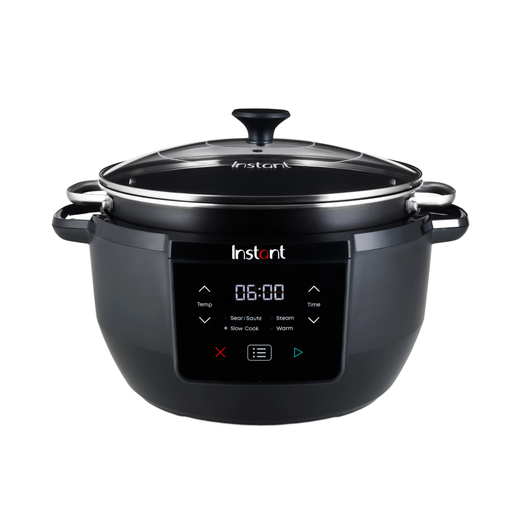 No image available
Suitable if you want to make a larger quantity of stew and are looking for functions beyond slow cooking.
The product name lists 7.1 L, 4-in-1, sautéing, steaming and 10 portions. Don’t use the inner pot on a hob or in an oven.
 No image available
Suitable if you want to pressure-cook after getting home or slow-cook at another time.
The product name lists 6 L, 1000 W, 14 functions, a stainless steel inner pot and automatic keep-warm. Don’t force the lid open while the appliance is under pressure.
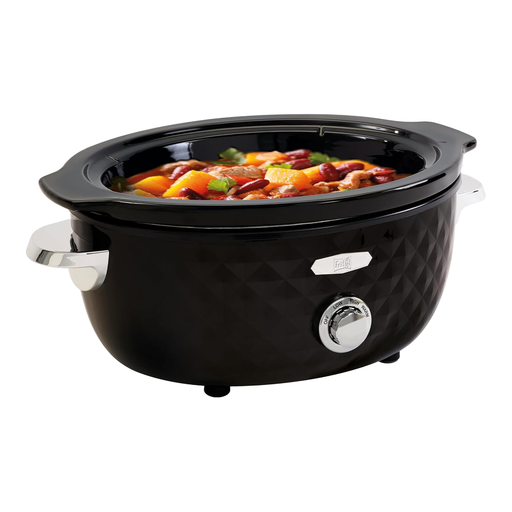 No image available
Suitable if you want to slow-cook a smaller quantity of stew.
The product name lists a ceramic pot and four heat settings. The pot and outer casing get hot, so use oven gloves. Don’t place the pot on a hob or in an oven.
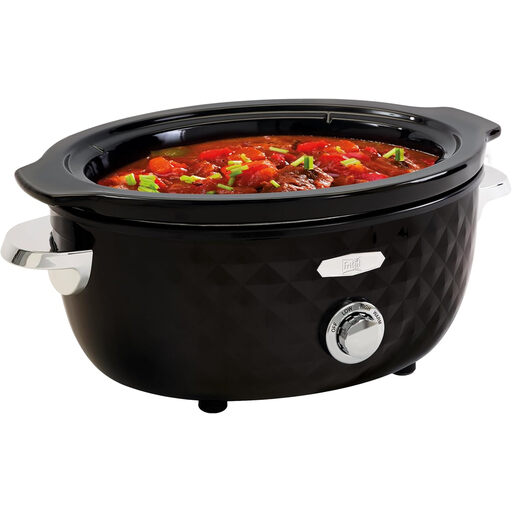 No image available
Suitable if you want to slow-cook a larger quantity of stew.
The product name lists a ceramic pot and four heat settings. Let a hot pot cool before putting it in the fridge or rinsing it with cold water.
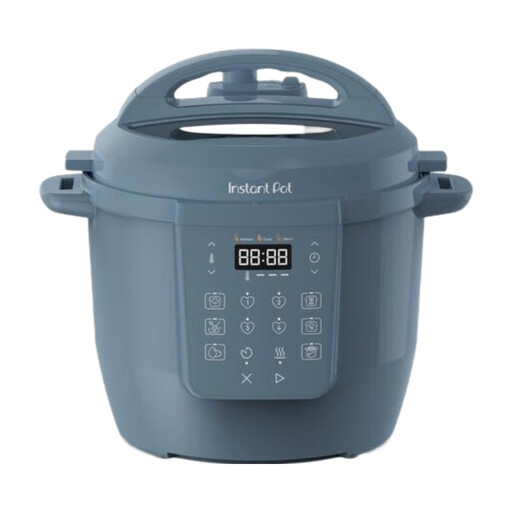 No image available
Suitable if you want to pressure-cook after getting home or slow-cook at another time.
The product name lists 5.7 L, slow cooking and steaming. Don’t force the lid open while the float valve is raised, and keep your face and hands away from escaping steam.
No. Don’t leave raw meat waiting for a delayed start. FoodSafety.gov advises starting the slow cooker immediately after preparation; defrost frozen meat safely before use.
The manuals for Tomado and Tristar warn against unattended use. Follow the instructions for the exact model, and don’t assume it’s permitted based on a keep-warm setting or a general product description.
Cool leftovers quickly, seal them well and put them in the fridge; don’t leave them out of the fridge for more than two hours. The Voedingscentrum advises keeping cooked pork products chilled for no longer than two days.
Check that the specific appliance has the required CE marking and read the model’s instructions. The Dutch government says that electrical appliances in the EU must have a CE marking; this doesn’t override warnings about supervision.