What should you look for when choosing?
Compare products on a like-for-like basis, work out the nutritional values for your own portion and include any ingredients added during preparation.
| What to consider |
What should you look for? |
Who should pay particular attention? |
| Total carbohydrates per portion |
Check both ‘carbohydrates’ and ‘of which sugars’. Multiply the carbohydrates per 100 g by the amount you eat in grams, then divide by 100. |
If I want to fit popcorn into my carbohydrate plan, I need to know how many total carbohydrates are in my portion. Around 36% of consumers make carbohydrate planning their top buying priority. |
| Calories in your portion |
Compare kcal per 100 g and per portion. Check whether the nutritional values are for uncooked corn or ready-to-eat popcorn. |
If I want to limit the energy in my snack, I compare the amount I eat and keep an eye on the carbohydrates too. Around 29% of consumers put limiting calories first. |
| Additions |
Check the ingredients list and the values for fat, saturates, salt and sugars. If you’re popping your own, factor in anything you add as well. |
If I want to decide how much oil, salt or sweet flavouring goes into my popcorn, a simple base product better suits my needs. Around 21% of consumers make control over ingredients their top priority. |
| Portion and preparation |
Check the pack weight, the number of servings listed on the label and the instructions. Set aside your portion before you start snacking. |
If I want a snack that needs little preparation or want to make hot popcorn, I check the number of portions and the preparation steps. Around 14% of consumers put convenience first. |
Popcorn products on Joybuy
This selection includes ready-to-eat popcorn, including sweet-flavoured products and varieties for microwave preparation. Compare the values shown per 100 g with your own portion. According to the European Commission, the claim ‘low calorie’ may only be used for solid foods containing no more than 40 kcal (170 kJ) per 100 g.
 No image available
SNACK MAZE Cinema Butter Popcorn 240 g
A ready-to-eat popcorn option with a cinema butter flavour. Check the nutritional information on the pack before choosing a portion.
View on Joybuy
 No image available
LYFEN Popcorn 180 g
The product information describes popcorn that can be eaten straight from the tin. Compare the values with the amount you have.
Per 100 g: 530 kcal, 68,2 g carbohydrates and 33,1 g sugars.
The stated energy value is above the threshold for the ‘low calorie’ claim for solid foods.
View on Joybuy
 No image available
Pop Corn 3 x 100 g
The product information describes three 100 g bags for microwave preparation; follow the instructions on the pack.
Per 100 g: 510 kcal, 59,6 g carbohydrates and 1 g sugars.
The stated energy value is above the threshold for the ‘low calorie’ claim for solid foods.
View on Joybuy
 No image available
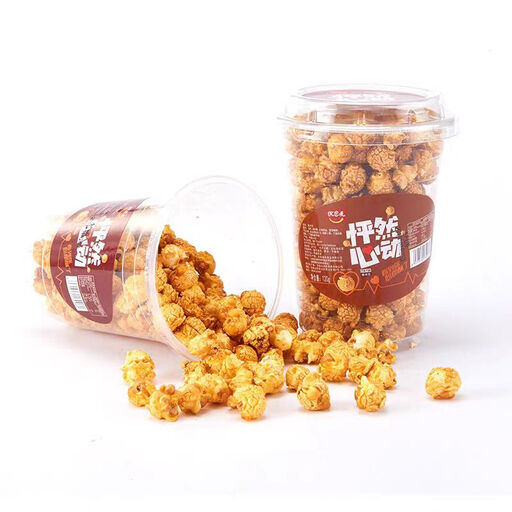
Yousmai Pengranxindong Caramel Popcorn 120 g
A ready-to-eat popcorn variety with a caramel flavour. Keep the values per 100 g in mind when choosing your portion.
Per 100 g: 502 kcal, 65 g carbohydrates and 35 g sugars.
The product information lists sugar and glucose syrup. The stated energy value is above the threshold for the ‘low calorie’ claim for solid foods.
View on Joybuy
 No image available
g'woon Salted Popcorn 100 g
A ready-to-eat salted popcorn variety. Compare the nutritional values with your own portion.
Per 100 g: 543 kcal, 57,5 g carbohydrates and 1,2 g sugars.
The stated energy value is above the threshold for the ‘low calorie’ claim for solid foods.
View on Joybuy
Frequently asked questions
Is low-sugar popcorn automatically suitable for people with diabetes?
No. A low sugar content alone isn’t enough to tell. Also check the total carbohydrates and how much you eat. Follow your own dietary and treatment guidance; product information can’t guarantee an individual blood glucose response.
When can popcorn be called ‘low calorie’?
According to the European Commission, the ‘low calorie’ claim may be used for solid foods containing no more than 40 kcal (170 kJ) per 100 g. A small portion doesn’t automatically make a product with a higher value low calorie. ‘Reduced energy’ requires a reduction of at least 30%, and the reason for the reduction must be stated.
How do I calculate the nutritional values of homemade popcorn?
Use the nutritional values for the dried corn and add those for the oil and any other ingredients you use. Then divide the total by the amount of the recipe you eat; the weight of popped popcorn isn’t measured on the same basis as the weight of dried corn.
Can popcorn treat or prevent diabetes?
No. The NVWA states that health claims about preventing, treating or curing a disease are prohibited for food products. A popcorn product should therefore not be presented as a treatment for diabetes.
How do I use AH Microwave Popcorn Salt?
For this specific variety, follow Albert Heijn’s instructions: heat for 2–3 minutes at 800 Watt or 3–4 minutes at 600 Watt, and stop when there are 1–2 seconds between pops. Stay by the microwave and open the pack carefully, as it will be hot and steamy.


