Making popcorn yourself gives you more control over added oil than buying it ready-made, but the nutritional values for dried kernels are not the same as those for prepared popcorn. Albert Heijn lists 4 g of fat and Jumbo 4.5 g of fat per 100 g of dried popcorn kernels; both figures are above the European Commission’s threshold for the ‘low fat’ claim of no more than 3 g per 100 g of solid food. When choosing ready-made popcorn, it’s also worth considering sugar, salt, school rules and the risk of choking.
Who is this choice relevant for?
For those who make it themselves and want to control what goes in
When you make popcorn yourself, you decide how much oil and seasoning to add. Albert Heijn and Jumbo list nutritional values for their dried kernels; these are not the same as the values for prepared popcorn.
For lunchbox packers looking for convenience
If the popcorn needs to be ready to pack straight away, compare sugar and salt as well as fat on the label. Jumbo’s product information lists 48.6 g of sugars per 100 g for its sweet popcorn.
For parents who check suitability first
If allergies, safe eating or school rules are the deciding factors, check the packaging and consider your child’s individual needs. The Netherlands Nutrition Centre lists popcorn among foods that can cause children to choke, and recommends that children aged 4 to 12 have food and drink from the Wheel of Five at school.
What should you look for when choosing?
First decide whether making your own popcorn or being able to portion it straight away suits you better. Then compare the nutritional information on the same product basis and check that it’s suitable for school.
| What to consider |
What should you look for? |
Who is this most important for? |
| Fat and added ingredients |
Check whether the figures apply to dried kernels or prepared popcorn; count any added oil separately. |
If I want to decide how much oil goes in, I’d rather choose kernels I can pop myself. Around 36% of consumers prioritise keeping an eye on fat. |
| Sugar and salt |
Check fat, sugars and salt together per 100 g, then consider how much you’ll pack. |
If I’m looking for a lower-fat option, I also want to know how much sugar or salt it contains. Around 29% of consumers prioritise sugar and salt. |
| Safety and school rules |
Check allergens, school rules and whether the eating conditions are suitable for your child. |
If allergies, safe eating or school rules are decisive for me, I check them before packing popcorn. Around 21% of consumers prioritise suitability and safety at school. |
| Preparation and storage |
Check whether the popcorn is ready to eat, whether the packaging reseals securely and what the storage instructions say. |
If I don’t have much time to prepare, ready-to-eat popcorn is more practical than kernels I still need to pop. Around 14% of consumers prioritise convenience. |
Common pitfalls
-
Looking only at the fat content of sweet popcorn
A lower fat figure doesn’t tell you how much sugar a product contains. Jumbo Popcorn Zoet lists 48.6 g of sugars per 100 g.
Compare fat and sugars together, and think carefully about how much you pack.
-
Treating the nutritional values for dried kernels as those for prepared popcorn
The values for popcorn kernels apply to the kernels themselves; oil and other additions change the composition of the popcorn you eventually eat.
Compare the kernels and added ingredients separately, and take the preparation method into account.
-
Assuming ‘organic’ or a particular flavour means ‘low fat’
A product name or flavour doesn’t tell you whether a product meets the threshold for a ‘low fat’ claim. The European Commission sets a limit of no more than 3 g of fat per 100 g for solid foods.
Check the fat content per 100 g, and don’t base a nutrition claim on the name alone.
-
Judging whether it’s suitable for school by the nutritional values alone
Nutritional values don’t tell you whether popcorn is suitable given the eating conditions, allergies or school rules. The Netherlands Nutrition Centre lists popcorn among foods that can cause children to choke.
Check the school rules and consider your child and the conditions in which they’ll be eating.
Brands worth comparing
Albert Heijn
The own-brand range includes dried popcorn kernels and ready-to-eat salted popcorn.
- The product information lists ingredients, nutritional values and allergens. AH Biologisch Popcorn mais lists 4 g of fat per 100 g of dried kernels.
- AH Zoute popcorn lists 29 g of fat and 1.53 g of salt per 100 g. The organic label doesn’t mean it’s low in fat.
Jumbo
The own-brand range includes dried popcorn kernels and ready-to-eat sweet popcorn.
- Jumbo Popcorn Maïs lists maize as an ingredient and 4.5 g of fat per 100 g of dried kernels.
- Jumbo Popcorn Zoet lists 4.6 g of fat and 48.6 g of sugars per 100 g, so the sweet variety also calls for attention to sugar.
Lidl
Lidl Netherlands lists Snack Day Popcorn zoet as a relevant product range.
- The product name makes it easy to identify the sweet popcorn variety.
- A sweet product name alone doesn’t tell you how much fat or sugar the popcorn contains; check the nutritional information on the packaging.
ALDI
ALDI Netherlands lists Sun Snacks Zoute popcorn in a 100 g pack.
- The product page identifies a ready-to-eat salted popcorn variety.
- The flavour doesn’t tell you how much fat the product contains; check the nutritional information on the specific pack.
Popcorn kernels at Joybuy
This product selection is for anyone who wants to pop their own kernels and control what they add during preparation.
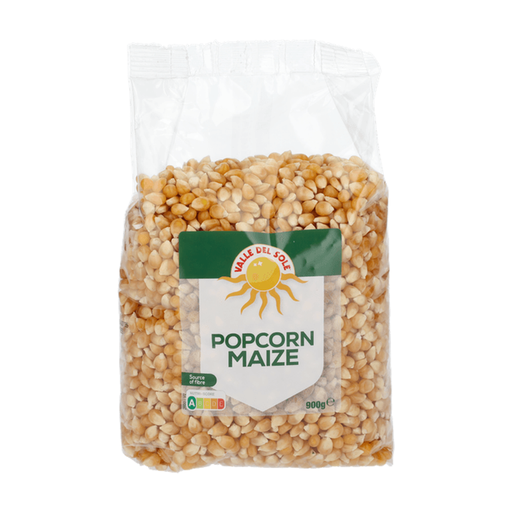 Image unavailable
Valle Del Sole Popcorn Maize (Butterfly), 900 g
The product description explains how to pop the kernels in a pan, so you can choose what to add yourself.
The nutrition table lists 5 g of fat, 5 g of sugar and 0 g of salt per 100 g. The pan preparation method described uses 2 tablespoons of vegetable oil; the information provided doesn’t support a claim that the prepared popcorn contains less fat.
View at Joybuy
Frequently asked questions
Is popcorn a substitute for a school lunch?
No, don’t treat popcorn as a substitute for the main part of lunch. The Netherlands Nutrition Centre recommends that children aged 4 to 12 have food and drink from the Wheel of Five at school too.
Does ‘low fat’ mean the same as ‘reduced fat’?
No, the terms aren’t necessarily equivalent. For a ‘low fat’ claim on solid foods, the European Commission sets a limit of no more than 3 g of fat per 100 g. That limit alone doesn’t determine the conditions for a comparative claim such as ‘reduced fat’.
From what age can children safely take popcorn to school?
Don’t treat any age as a general guarantee of safety. The Netherlands Nutrition Centre warns that popcorn can cause choking; consider your child and the conditions in which they’ll be eating.
Can I use AH Biologisch Popcorn mais if my child has a gluten or soya allergy?
Check the exact packaging. Albert Heijn states that AH Biologisch Popcorn mais may contain cereals containing gluten, soya and wheat.
How do I compare dried popcorn kernels with ready-to-eat popcorn?
Don’t compare dried kernels directly with prepared popcorn: added oil and seasoning change the finished snack. Albert Heijn lists 4 g of fat and Jumbo 4.5 g of fat per 100 g of dried popcorn kernels; for ready-to-eat popcorn, check the nutritional values for the specific product.


