
Film fans keeping an eye on portions
You fancy popcorn for a film or games night, but want to know how much energy is in your own bowl. Compare products by the same weight and portion out some of the bag before you start.


If you’re keeping an eye on your energy intake during the autumn half-term, compare the stated kcal per 100 g and weigh the portion you actually eat. For the varieties reviewed, Albert Heijn lists 419 kcal per 100 g for sweet popcorn and 543 kcal per 100 g for salted popcorn. The sweet variety also contains 45 g of sugars per 100 g, so a lower energy value won’t necessarily suit everyone’s preferences.
You fancy popcorn for a film or games night, but want to know how much energy is in your own bowl. Compare products by the same weight and portion out some of the bag before you start.
You don’t mind preparing popcorn and want to choose the oil, sugar, salt and seasonings yourself. Remember to include any extras, and distinguish dried popping corn from prepared popcorn.
You want minimal preparation: choose ready-to-eat popcorn for an instant snack, or microwave popcorn if you want to make it at home. When snacking with children, supervision during preparation and the risk of choking are separate considerations; the Netherlands Nutrition Centre advises against giving popcorn to young children.
Start with how much you plan to eat, then compare the product type and ingredients. This helps you weigh up portion size, convenience and taste without assuming that a small portion makes a product low in calories.
| What to consider | What should you check? | Who is this important for? |
|---|---|---|
| Energy in your portion | Compare kcal per 100 g and weigh the amount you eat. Calculate using kcal per 100 g × portion weight / 100. | If I want to know how much energy is in my own bowl, I weigh my portion rather than counting the whole bag. This is the top priority for around 36% of consumers. |
| Ingredients and nutritional content | Check the nutritional information for the exact variety, including sugars, salt and fat; also check the ingredients and allergens. | If I’m keeping an eye on sugar, salt, fat or allergens as well as energy, I compare the ingredients and nutritional information for the variety I’ve chosen. Ingredients and nutritional content are the top priority for around 29% of consumers. |
| Preparation and convenience | Check whether the popcorn is ready to eat or needs preparing, what equipment you’ll need and what instructions apply to the packaging. | If I want minimal preparation or only have certain equipment available, I choose a product type that suits me. Convenience or preparation is the top priority for around 21% of consumers. |
| Packaging and storage | Check the weight of each inner bag, the stated number of portions and the storage advice after opening. | If I want to spread the popcorn over several snack occasions, I check how it’s portioned and whether the packaging can be resealed. Packaging and storage are the top priority for around 14% of consumers. |
A small portion can contain less energy than a larger portion of the same product. That doesn’t, by itself, mean the product meets the regulated ‘low calorie’ claim.
The European Commission sets a maximum of 40 kcal (170 kJ) per 100 g for the ‘low calorie’ claim on solid foods. So compare nutritional values on that basis and state the portion weight too.
The AH Salted Popcorn reviewed lists 543 kcal per 100 g; AH Sweet Popcorn lists 419 kcal per 100 g and 45 g of sugars per 100 g. These values apply to those specific varieties, not to all salted or sweet popcorn.
Check the nutritional information for the exact variety and decide whether energy, sugar or salt matters most to you.
The amount in a pack and the amount you eat aren’t necessarily the same. AH Sweet Popcorn lists eight portions of 25 g; the Jumbo microwave pack contains three cooking bags of 90 g each.
Weigh the amount you plan to eat beforehand, then reseal any leftover ready-to-eat popcorn properly, following the storage advice.
The nutritional value of dried popping corn doesn’t include the oil, sugar or other ingredients you add during preparation.
Add up the ingredients you use and divide the total by the portions you actually eat.
The range includes loose organic popping corn, ready-to-eat sweet and salted popcorn, and microwave popcorn.
Jumbo Microwave Popcorn Salted is an option if you want to pop popcorn at home in individual cooking bags.
The Snack Day varieties listed are sea salt popcorn and sweet popcorn, both in 200 g packs.
ALDI lists SUN SNACKS Salted Popcorn in a 100 g pack.
This selection includes microwave popcorn and ready-to-eat sweet and salted popcorn; compare the stated nutritional values on the same weight basis.
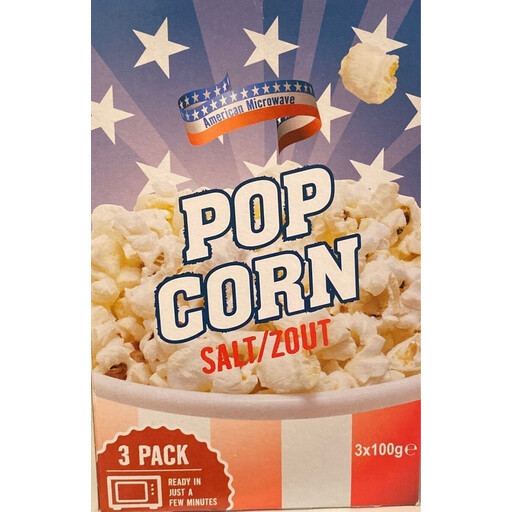 No image available
A good choice if you want to make microwave popcorn at home and compare the stated energy per equal amount.
Pack: 3 bags of 100 g.
Stated energy: 510 kcal per 100 g.
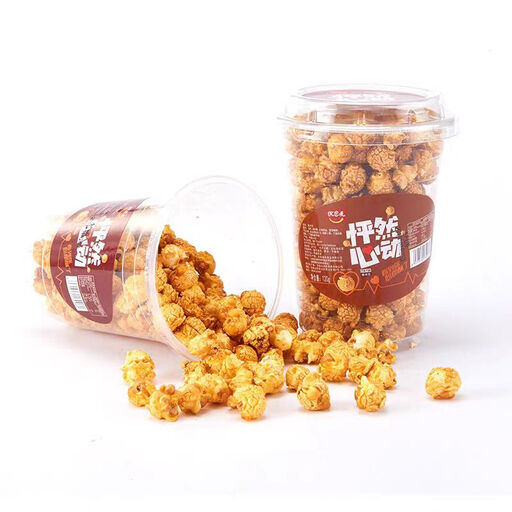 No image available
A good choice if you’re looking for ready-to-eat caramel popcorn and want to compare the nutritional information per equal amount.
Stated energy: 502 kcal per 100 g.
Stated sugars: 35 g per 100 g.
Contains milk.
 No image available
A good choice if you want ready-to-eat salted popcorn and want to compare the stated energy and salt per equal amount.
Stated energy: 543 kcal per 100 g.
Stated salt: 1,5 g per 100 g.
For solid foods, the European Commission sets a maximum of 40 kcal (170 kJ) per 100 g for the commercial ‘low calorie’ claim. So state the specific nutritional value and portion size; a small portion doesn’t automatically make the product eligible for the claim.
Weigh the amount you eat and calculate kcal per 100 g × grams eaten / 100. For the ready-to-eat varieties reviewed, Albert Heijn uses a portion size of 25 g; the Netherlands Nutrition Centre gives 40 g as a bowlful of popcorn. These are different portion sizes and may not be the same recipe.
Not without taking account of the product’s state and all its ingredients. The stated value for AH Organic Popcorn Corn applies to dried corn; include oil and any other additions, then work out how much of the prepared amount you eat.
Follow the instructions on the exact pack, as cooking times and power settings vary by product. Jumbo warns that children shouldn’t prepare its microwave popcorn without adult supervision, and that you shouldn’t restart it after an interruption. Don’t assume that the instructions for another variety apply.
No. AH Organic Popcorn Corn states that it may contain cereals containing gluten, soya and wheat. Check the packaging for the exact variety, and don’t assume it’s suitable for someone with an allergy just because its main ingredient is corn.