What should you look for when choosing?
First decide whether you want to hand out ready-to-eat popcorn or prepare it at home. Then compare the contents of each bag, the flavour mix and the needs of the people who’ll be eating it.
| What to consider |
What to look for |
Who should pay particular attention? |
| Portion packs |
Count the ready-to-eat inner bags and check the weight of each bag and flavour. The stated number of nutritional portions isn’t necessarily the same as the number of packs. |
If you want to know in advance how many individual snacks you can hand out, the number of bags and their contents are what matter. Around 27% of consumers prioritise portion packs. |
| Sharing and flavour |
Check whether the pack contains sweet or salted popcorn and how much of each flavour is included in any mix. |
For a sharing bowl, choose flavours that suit your group without assuming everyone likes the same things. Around 27% of consumers prioritise sharing and flavour choice. |
| Preparation |
Distinguish between ready-to-eat popcorn and microwave bags. If it needs cooking, follow the instructions and warnings on the pack. |
If you can prepare popcorn at home, a microwave multipack may suit you; for an instant snack, you’ll need a ready-to-eat product. The format is the deciding factor for around 20% of consumers. |
| Ingredients and eating safely |
Check the ingredients and allergens for each flavour, along with any warnings on the current label. For children, bear in mind the Netherlands Nutrition Centre’s choking warning. |
If ingredients, dietary requirements or the circumstances in which people will eat the popcorn are important, it’s worth checking the specific variety. Around 13% of consumers prioritise these factors. |
| Stock and multipack contents |
Check whether a multipack contains several products, how many inner bags they include and what storage instructions apply. |
If you’re buying popcorn for different occasions, choose an amount that suits how much you’ll use. Around 13% of consumers prioritise getting the most from their stock. |
Popcorn to prepare at home
This Joybuy selection focuses on microwave popcorn for preparing in separate batches at home.
 No image available
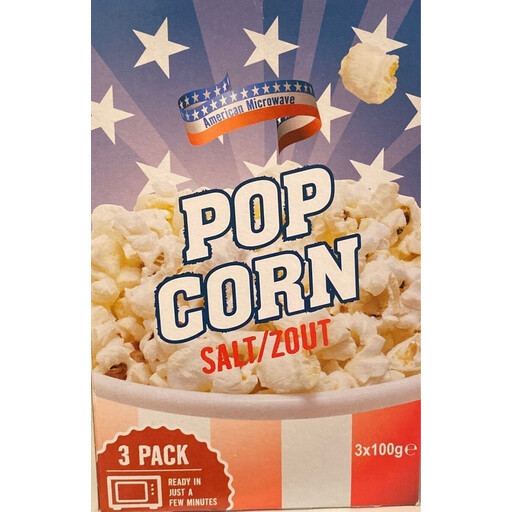
Pop Corn 3 x 100 g
A good choice for drinks and nibbles at home when you want to prepare and share popcorn; the product description says it’s cooked in the microwave.
The pack contains 3 x 100 g. The product description mentions sweet and salted popcorn.
This popcorn is for preparing at home, not ready-to-eat portion bags to take with you or hand out.
View at Joybuy
Frequently asked questions
Are nine servings the same as nine bags?
No. AH Magnetron Popcorn Zout lists 270 g, a 30 g serving size and nine servings; that doesn’t mean there are nine individual packs. Check the number of bags separately from the serving information.
What should I bear in mind when children eat or prepare popcorn?
Be aware of the choking risk. The Netherlands Nutrition Centre warns that children can choke on popcorn and advises staying nearby and having children sit calmly while they eat. For the microwave product described, Jumbo warns that children must not prepare it without adult supervision.
Is a small bag of popcorn automatically suitable as a daily school snack?
No, a small size alone doesn’t make it suitable. The Netherlands Nutrition Centre gives a small cup of plain popcorn as an example of a treat for children aged 4–12; this isn’t a general recommendation for every sweet or salted variety as a daily lunchbox snack.
How should I store popcorn for a later snack?
Follow the instructions on the specific product’s packaging. For AH Magnetron Popcorn Zout, Albert Heijn advises storing it in a cool, dry place and protecting it from direct sunlight. Don’t assume that unopened packaging means there’s a set storage period for popcorn once it’s been opened or portioned out.
What information should I check if I have an allergy?
Read the ingredients and allergen information for the exact flavour and pack. The Netherlands Food and Consumer Product Safety Authority explains that allergens must be clearly listed in the ingredients; don’t assume that all flavours have the same ingredients.


