
Portion-conscious coffee-break snackers
You want to keep track of the calories in a coffee-break snack. Compare the weight of your portion and the nutritional information on the label, not just the size of your bowl.


For your morning coffee, first decide how many grams of popcorn you want to eat, then use the kcal per 100 g for that exact variety to work out the energy in your portion. A generous-looking bowl doesn’t tell you how much energy your portion contains. The Albert Heijn and Jumbo varieties reviewed here, for which nutritional information is available, don’t meet the EU requirement for a ‘low-calorie’ claim: no more than 40 kcal per 100 g for solid foods, according to the European Commission. Then choose between convenience, flavour and making it yourself.
You want to keep track of the calories in a coffee-break snack. Compare the weight of your portion and the nutritional information on the label, not just the size of your bowl.
You’re looking for something you can take with you and eat during a short break, without any preparation. Ready-to-eat popcorn fits the bill.
You want to choose the ingredients yourself and can prepare popcorn in advance. Keep the nutritional information for dry maize separate from that of the prepared portion.
First decide on your portion, then check whether it needs preparing, and finally compare the flavour and ingredients of the exact variety.
The percentages below show which need comes first for consumers in these coffee-break scenarios. Nutritional examples from Voedingscentrum and product labels from Albert Heijn and Jumbo show why portion weight and product variety matter.
| What to consider | What to look for | Who is this most important for? |
|---|---|---|
| Calories per portion | Weigh your portion and calculate: kcal per 100 g × grams eaten ÷ 100. Compare products using the same weight in grams. | If I want to know how much energy my portion contains with my coffee, I’d rather weigh it than go by the size of a bowl. Around 42% of consumers put calories per coffee break first. |
| Convenience during your break | Check whether the popcorn is ready to eat or needs preparing, and how many portions the pack contains. | When I’m short on time, I want to eat the popcorn straight away without getting any equipment ready. Around 25% of consumers prioritise a convenient snack they can eat immediately. |
| Ingredients and preparation | Read the ingredients and nutrition table; include any oil or other additions in your calculation for the prepared portion. | If I want to decide what to add myself, I choose a preparation method that lets me weigh the ingredients. Around 17% of consumers put control over the recipe first. |
| Flavour and allergens | Choose the flavour you want, then check the nutritional information and allergens on the pack. | When I’m mainly looking for a savoury, sweet or caramel flavour, I also want to know which ingredients go into it. Around 16% of consumers give flavour preference the greatest weight. |
A bowl may weigh more or less than you think. Voedingscentrum uses 40 g in a general example; this isn’t a standard portion for every product or every coffee break.
Weigh the amount you actually eat and use the nutritional information for that specific variety.
Calories and sugars are separate nutritional values. Albert Heijn lists 45 g of sugars per 100 g for the sweet popcorn reviewed here, and 57 g per 100 g for the caramel variety.
Compare both values if you’re keeping an eye on calories as well as sugar.
Albert Heijn lists 374 kcal per 100 g for its dry organic popping maize. The pan method described uses oil, so the nutritional value of the prepared popcorn may be different.
Include all the ingredients you use, then divide the calculated amount by the number of portions you eat.
The own-label options reviewed range from dry popping maize to salted, sweet and caramel popcorn.
The options reviewed include ready-to-eat salted popcorn and microwave popcorn.
The Dutch product listing describes Snack Day Popcorn Sea Salt in a 200 g pack.
The Dutch product listing names SUN SNACKS Salted Popcorn in a 100 g pack.
The selection includes caramel and salted popcorn, a microwave variety and popping maize for making your own. Compare the exact nutritional information and portion size for each product before choosing.
 No image available
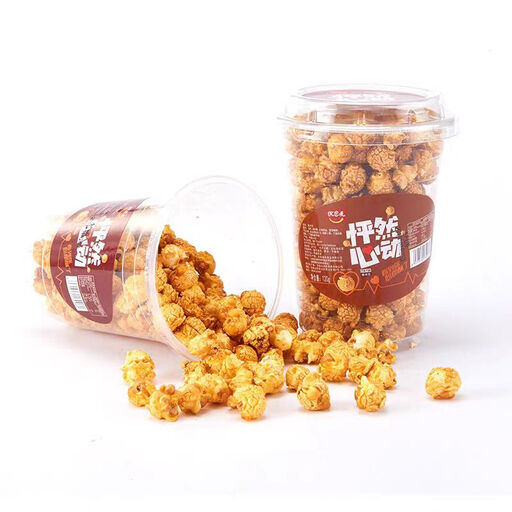
Ready-to-eat caramel popcorn for anyone looking for a sweet snack with their coffee.
The product description lists 502 kcal and 35 g of sugars per 100 g. Milk is listed as an allergen.
 No image available
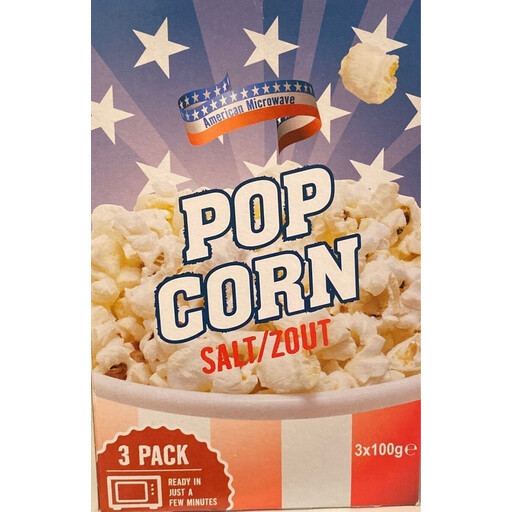
A microwave variety for anyone who wants to prepare popcorn at home and portion it out themselves.
The product description lists 510 kcal per 100 g and a pack containing 3 bags of 100 g. Follow the preparation instructions on the pack.
 No image available
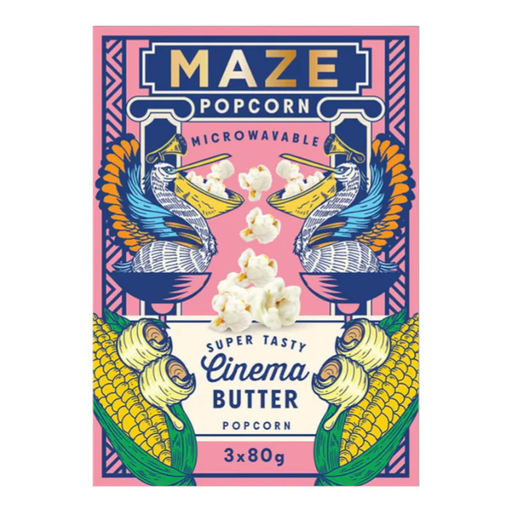
Butter-flavoured popcorn for anyone looking for that taste in a snack to enjoy with their coffee.
 No image available
A salted popcorn variety for anyone who fancies a savoury flavour with their morning coffee.
The product description lists 543 kcal per 100 g.
 No image available
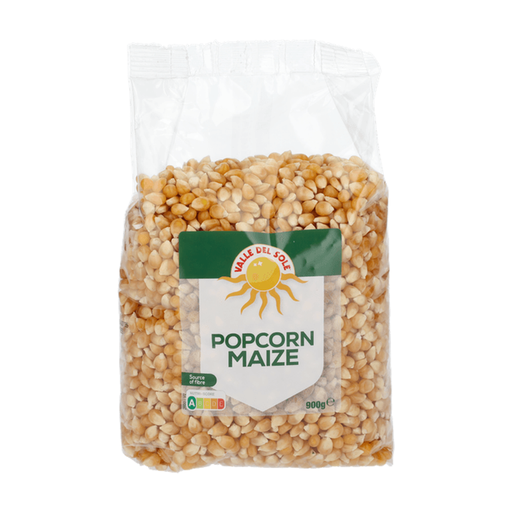
Loose popping maize for anyone who wants to make popcorn in advance and choose their own additions.
The product description lists 350 kcal per 100 g for the maize as sold. The pan method described uses vegetable oil; include it when calculating the nutritional value of your prepared portion.
Not just because the portion is small. According to the European Commission, the ‘low-calorie’ claim for solid foods requires a maximum of 40 kcal (170 kJ) per 100 g. You can state the calorie content of a weighed portion without basing the claim on that portion.
Compare products in the same state and include any additions. The European Union states that nutritional values on labels relate to the product as sold. If you pop the maize yourself, calculate the ingredients you use and divide the total by your portions.
No, don’t assume that. The Jumbo Salted Microwave Popcorn reviewed here is sold as 3 bags of 90 g. Follow the instructions on the pack and portion out the prepared popcorn according to how much you want to eat.
Read the packaging for the exact variety. The AH Caramel Popcorn reviewed here lists milk and lactose; AH Organic Popcorn Maize lists the possible presence of cereals containing gluten, soya and wheat. This information applies to these varieties.
Multiply the kcal per 100 g on the label by the weight of your portion in grams, then divide by 100. Weigh the amount you actually eat and use the label value for the correct variety.