
Home poppers who prioritise fat content
You want to control how much oil you add, so you’d rather choose popcorn kernels. Bear in mind that adding no oil is not the same as choosing a low-fat option.


If you want to control how much oil and seasoning you add, choose popcorn kernels; the Netherlands Nutrition Centre’s recipe uses 1 teaspoon of oil for every 50 grams of kernels. For convenience, compare ready-to-eat or microwave popcorn by its nutritional values per 100 grams and the size of your own portion. No added oil does not automatically mean low in fat: the Netherlands Nutrition Centre lists 1.6 grams of fat per 40 grams of generic popcorn made without oil, or 4 grams per 100 grams. According to the European Commission, a ‘low fat’ claim for solid foods requires a maximum of 3 grams of fat per 100 grams.
You want to control how much oil you add, so you’d rather choose popcorn kernels. Bear in mind that adding no oil is not the same as choosing a low-fat option.
You want to put popcorn on the table without any extra preparation. Check the nutritional values on the exact pack; a flavour name such as ‘salted’ tells you nothing about its fat content.
You want to customise the flavourings and take allergies into account. Keep the labels from the popcorn and seasonings. The American Academy of Pediatrics lists popcorn as a choking hazard and advises avoiding it until a child is four or older, depending on their development and maturity. This is US safety guidance, not a legal age limit in the Netherlands.
Choose this if: you want to control how much oil and seasoning you add.
Bear in mind: making it takes attention, a suitable pan and a well-fitting lid.
Choose this if: avoiding added oil is your main priority when preparing popcorn.
Bear in mind: the maize itself contains fat; the Netherlands Nutrition Centre’s generic figure works out at 4 grams per 100 grams.
Choose this if: you don’t want to prepare popcorn during the get-together.
Bear in mind: you don’t control the ingredients yourself, so compare the label on the exact variety.
Choose this if: you want to pop pre-packaged popcorn yourself and have a microwave available.
Bear in mind: prepare the pack according to its instructions; the preparation method says nothing about the fat content.
For a neighbourhood get-together, it helps to decide what matters most to you first: fat content, portion size, convenience, variety of flavours or whether it’s suitable for your guests.
| What to consider | What should you check? | Who is this most important for? |
|---|---|---|
| Total fat | Compare the fat per 100 grams on the same basis: product as sold or as prepared. If you’re popping it yourself, include the added oil. | If I want to cut down on added fat, I compare the total fat content on the same basis and take account of the oil I add. Total fat is the top priority when shopping for around 31% of consumers. |
| Portion and energy | Compare the values per 100 grams and work them out for the weight of your own portion. | If I want to know how much I’m serving, I don’t look only at the nutritional values per 100 grams. Portion size and energy are the top priorities for around 19% of consumers. |
| Ease of preparation | Check whether you’re buying popcorn kernels, microwave popcorn or ready-popped popcorn, and follow the instructions on the pack. | If I want to keep preparation to a minimum during the get-together, I look at how many steps are involved. Easy preparation and serving are the top priorities for around 19% of consumers. |
| Variety of flavours | Check the ingredients in seasoning mixes and compare the sugar and salt on the label too. | If I want to offer different flavours, I want to be able to choose the seasonings myself. Creating your own range of flavours is the top priority for around 19% of consumers. |
| Suitability for guests | Keep the labels and check the ingredients and allergens. The American Academy of Pediatrics advises against giving popcorn to children under four; this is not a legal age limit in the Netherlands. | If I’m expecting guests with allergies or young children, I check in advance what’s in the popcorn and seasonings. Catering for these guests is the top priority for around 12% of consumers. |
For a ‘low fat’ nutrition claim on solid foods, the European Commission sets a maximum of 3 grams of fat per 100 grams. The Netherlands Nutrition Centre lists 1.6 grams of fat per 40-gram portion of generic popcorn made without oil; this is not a product specification for a particular shop-bought variety. In the Netherlands, nutrition claims must comply with European rules, as explained by the Netherlands Food and Consumer Product Safety Authority.
Values per 100 grams are useful for comparing products; to work out what you’ll actually serve, check the portion size too. The European Union explains that nutritional values are generally given per 100 grams or 100 millilitres. The Netherlands Nutrition Centre’s recipe uses 1 teaspoon of oil for every 50 grams of popcorn kernels, and suggests flavour variations including Cajun seasoning, smoked paprika, cinnamon, and speculaas and biscuit spices.
Adding no oil doesn’t mean the maize contains no fat. The Netherlands Nutrition Centre lists 4 grams of fat per 100 grams for generic popcorn made without oil; the European Commission sets a maximum of 3 grams per 100 grams for a ‘low fat’ claim on solid foods.
Use ‘no added oil’ only to describe how the popcorn is prepared, and check the total fat content before making a nutrition claim.
A nutritional value per 100 grams doesn’t tell you how much you’re eating. The Netherlands Nutrition Centre lists 154 kcal per 40-gram portion of generic popcorn; don’t use this figure for a specific branded variety.
Compare products per 100 grams, then work out the figures for the weight of your own portion.
Nutritional values may refer to the product as sold or to the prepared product. When you pop it yourself, the ingredients you add contribute to the nutritional content of what you serve.
Check what the nutritional information is based on and, when preparing it yourself, assess all the ingredients together.
Popping it yourself takes extra preparation time, and you may use oil and seasonings as well as the maize.
Seasonings and other ingredients may contain allergens. The American Academy of Pediatrics also lists popcorn as a choking hazard for young children; this is safety guidance, not a legal age limit in the Netherlands.
Keep the original labels and check the ingredients and warnings. Don’t serve popcorn to children under four.
The Dutch product pages distinguish between popcorn kernels for home preparation and ready-popped salted popcorn.
The product range includes dried maize, salted popcorn and microwave popcorn in different pack sizes.
Snack Day has a Dutch product page for salted microwave popcorn.
The Dutch product page lists SUN SNACKS Salted Popcorn 100 g as ready-to-eat popcorn.
This selection includes ready-to-eat popcorn and popcorn kernels for a neighbourhood get-together. Choose according to how you want to prepare it, and check the label on the exact variety for total fat.
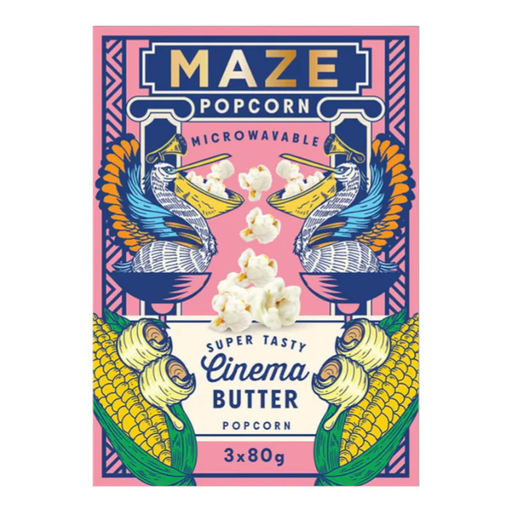 No image available
This ready-to-eat popcorn is designed as a film-night snack; the product description also suggests it for parties.
 No image available
The product title identifies this as 100 g of salted popcorn. If total fat is a deciding factor for you, check the nutritional values on the exact pack.
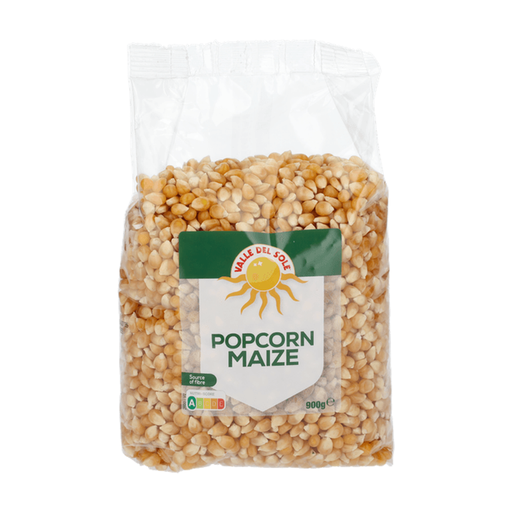 No image available
These popcorn kernels are suitable for popping at home; the product instructions describe preparing them in a pan with a lid.
The preparation method described uses 2 tablespoons of vegetable oil. Bear this amount in mind if you want to limit added fat.
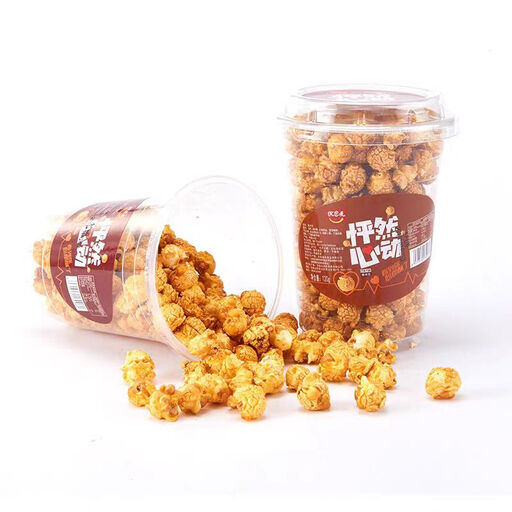 No image available
This ready-to-eat caramel popcorn is a sweet option. The product information lists 25 g of fat per 100 g, including 15 g of saturated fat, and 35 g of sugar.
Milk is listed as an allergen. The nutritional values given are not a basis for describing this product as low in fat.
No. The Netherlands Nutrition Centre lists 1.6 grams of fat per 40 grams of generic popcorn made without oil, or 4 grams per 100 grams. According to the European Commission, a ‘low fat’ claim for solid foods requires a maximum of 3 grams of fat per 100 grams; the generic figure doesn’t prove what’s in a specific branded variety.
The Netherlands Nutrition Centre’s recipe uses 1 teaspoon of oil for every 50 grams of popcorn kernels. Use a heavy-based pan with a well-fitting lid; take the pan off the heat once the popping has mostly stopped, then stir through the seasonings.
The product instructions for Jumbo Microwave Popcorn Salted 3 x 90 g say not to restart the cooking process after an interruption. For other products, follow the instructions on the pack.
Check both the popcorn label and the labels on the seasonings. The Netherlands Food and Consumer Product Safety Authority explains that allergens must be clearly listed on the label; check the ingredients of the exact products you’re serving.
Don’t serve popcorn to children under four. The American Academy of Pediatrics lists popcorn as a choking hazard and advises avoiding it until a child is four or older, depending on their development and maturity. This is US safety guidance, not a legal age limit in the Netherlands.